If you are asking why does my indoor succulent keep dying, the plant has probably been showing you the answer for weeks. Succulents rarely die overnight. They change color, texture and shape in ways that point to specific mistakes, and each mistake has a different fix.
This guide works backward from what your plant looks like now. Find the symptom that matches, read the likely cause, and follow the fix. If you have lost more than one succulent, you may find that two or three of these sections apply to you.
Start here: what your succulent is trying to tell you
Succulent leaves store water, so they work like a gauge. Plump and firm means the plant has enough. Soft and see-through means too much water. Wrinkled and thin means too little, or roots that can no longer take water in.
Before you diagnose anything, do three quick checks:
- Press a leaf gently. Is it firm, squishy or papery?
- Push a finger or a wooden skewer into the soil. Is it dry, damp or soggy, and how deep does the moisture go?
- Look at the shape of the whole plant. Is it compact and tight, or tall and stretched with gaps between leaves?
Those three answers narrow things down to one of a few causes. The sections below follow the same order, starting with the most common one.
Mushy, yellow or translucent leaves: overwatering and root rot
This is the most common reason a beginner’s succulent dies. Leaves turn yellowish, look glassy or see-through, and feel soft like a cooked grape. They often drop at the lightest touch. The base of the stem may turn dark or black, and the soil can smell sour or musty.
The cause is soil that stays wet. Succulent roots need air between waterings, and constantly damp soil rots them. Once the roots rot, they cannot move water to the leaves, which is why a plant sitting in wet soil can still look sick and thirsty.
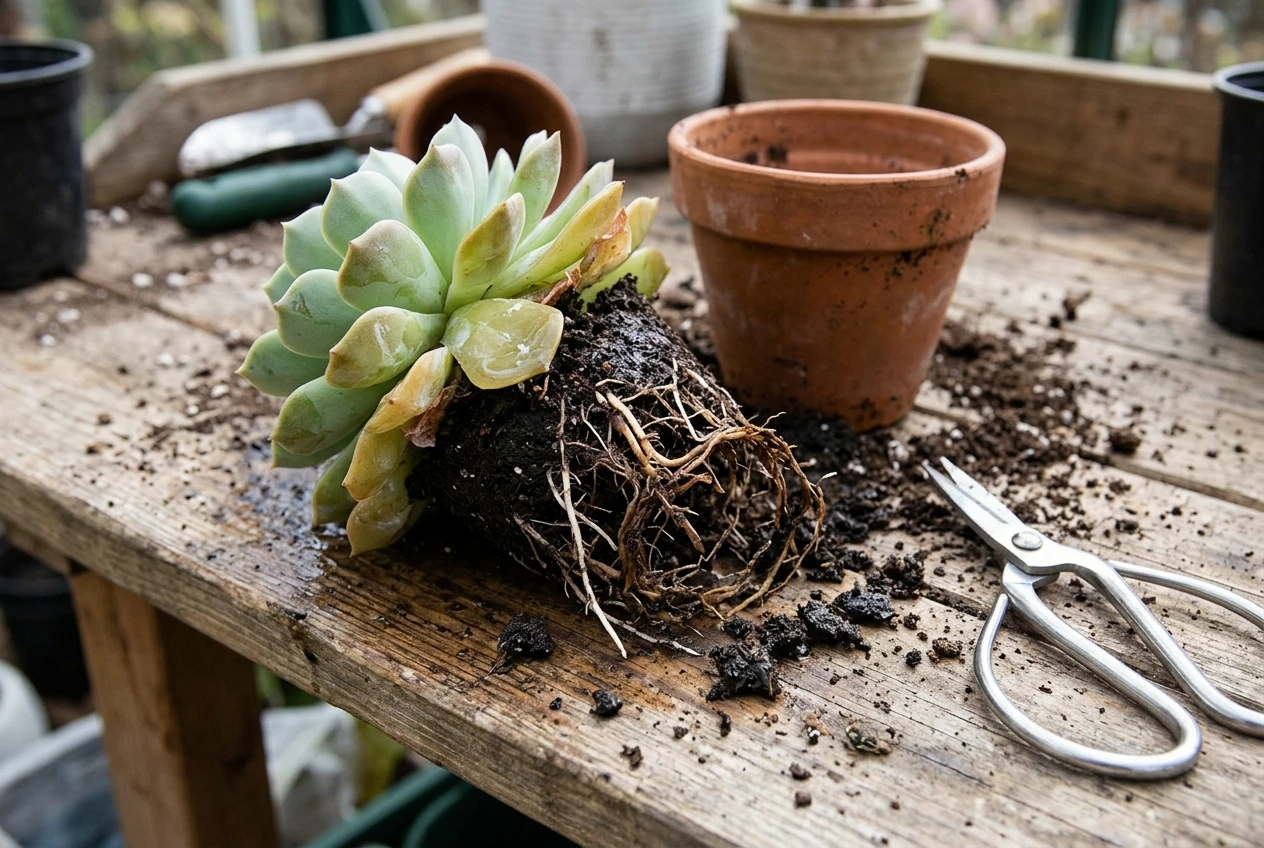
If the soil is wet and the leaves are mushy, act the same day:
- Take the plant out of its pot and shake off the wet soil.
- Look at the roots. Healthy roots are firm and pale. Rotted roots are brown or black, soft and sometimes slimy.
- Cut away all the rotted roots with clean scissors. If the stem base is black and mushy, cut up the stem until the inside looks clean and light-colored.
- Leave the plant on a dry surface, out of direct sun, for a few days so the cut end can dry and form a callus.
- Repot in fresh, dry, gritty succulent mix, and wait about a week before the first watering.
If most of the plant is mushy, you may only save a healthy leaf or the top of the stem. Healthy leaves and stem tops can be left to callus and then set on dry soil to grow new roots, which gives you a fresh start even when the original plant is gone.
Going forward, the fix is to water less often and to let the soil dry out fully between waterings. A watering schedule based on the calendar causes this problem. Water based on how dry the soil is.
Wrinkled, shriveled leaves: underwatering, or a root problem in disguise
Wrinkled leaves look like deflating balloons. They feel thin and sometimes soft but not slimy, and the lowest leaves often dry up and turn crispy first. The soil may be bone dry and pulling away from the edge of the pot.
When the soil really is dry, underwatering is the likely cause. The plant is using up the water stored in its leaves. Give it a thorough soak: water until it runs out of the drainage hole, let it drain completely, and do not water again until the soil is dry. Plump leaves usually return within a few days to a week.
Some drying of the lowest leaves is normal. As a succulent grows, it sheds old leaves at the bottom. If the rest of the plant is firm and new growth looks healthy, nothing is wrong.
Now the disguised version. If the leaves are shriveled but the soil is damp or wet, do not add water. A plant with rotted or damaged roots cannot absorb water even when the soil is wet, so it shrivels just like a thirsty plant. Unpot it and check the roots as described in the section above. Dry, brittle roots or very few roots can also be the cause, and in that case a fresh start in new soil with a careful watering helps the plant rebuild.
The dry soil test settles this quickly. Dry soil and wrinkled leaves mean water. Wet soil and wrinkled leaves mean roots.
Stretching and leaning toward the window: not enough light
A succulent that grows tall and thin, with wide gaps between leaves and a lean toward the glass, is reaching for light. This is called etiolation. The new growth is often paler than the old growth, and rosette-shaped plants like echeveria open up and flatten out instead of staying tight.
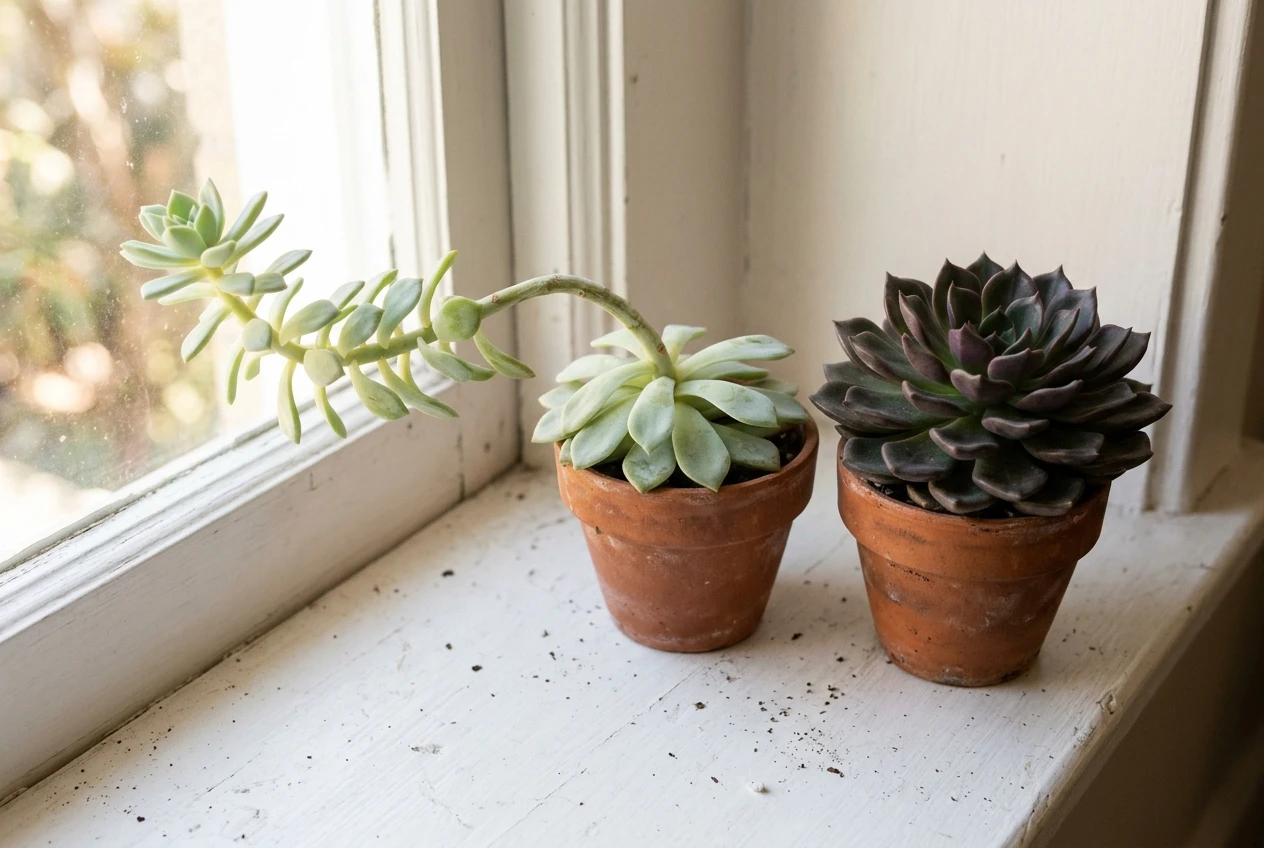
Most popular indoor succulents need much more light than a typical living room provides. A spot a few feet from a window can be dim to a succulent, even though it feels bright to you.
Here is what to do:
- Move the plant to the brightest window you have. In the northern hemisphere, a south-facing window is usually the brightest, with east and west next.
- If no window is bright enough, add a grow light. A full-spectrum LED grow light placed above the plant and run for several hours a day can replace or add to window light, especially in winter when days are short.
- Rotate the pot a quarter turn every week or so to keep growth even.
Stretched growth does not shrink back. The stem stays long. If the look bothers you, cut off the top of the plant, let the cut end callus for a few days, and set it on dry soil to root. The old stem often sprouts new small plants along its length when it gets better light.
Move plants toward more light gradually, over a week or two, because a sudden jump into strong sun can cause the burns described below.
Why the pot and soil you bought may be working against you
Sometimes the plant is not the problem. Many succulents are sold in pots without drainage holes, planted in dense potting soil that stays wet. Even a careful waterer will struggle with that setup.
Drainage holes matter most. Without a hole, water collects at the bottom and the roots sit in it. If you love a decorative pot with no hole, keep the succulent in a plain plastic nursery pot with holes, and set that inside the decorative one. Take it out to water, let it drain, then put it back.
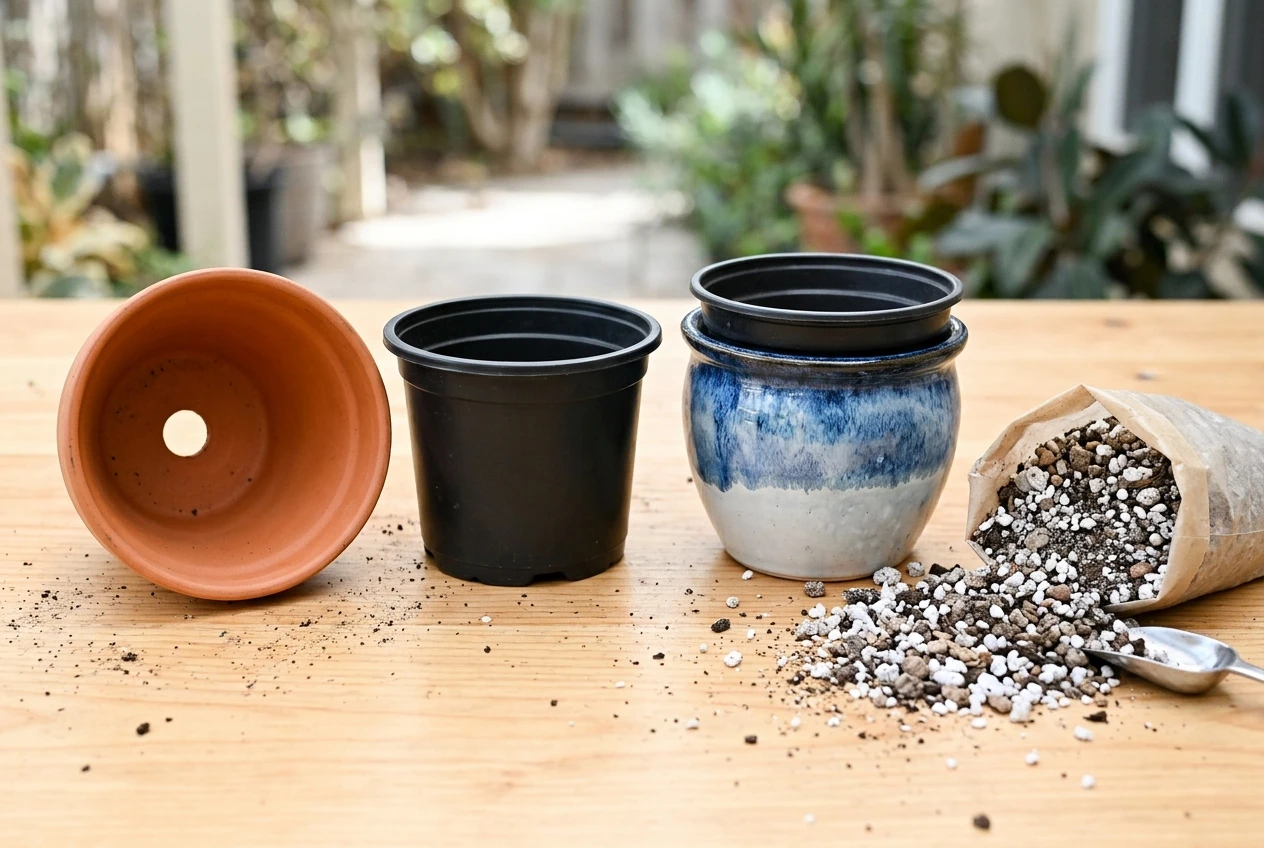
Terracotta helps beginners. Unglazed clay pulls moisture out of the soil through its walls, so the soil dries faster. This gives you more margin if you tend to overwater. Plastic and glazed ceramic hold water longer, so they suit people who forget to water.
Size should fit the roots. A big pot holds a lot of soil, and the soil stays wet long after the small root system has used what it can. Choose a pot only slightly wider than the plant.
Regular potting soil holds too much water. Use a cactus and succulent mix, or mix your own by adding perlite or pumice to the soil so water drains quickly. A good test: after watering, the water should run through quickly, and the soil should feel dry again within days, not weeks.
If your succulent keeps dying and nothing else fits, replace the pot and soil first. These are the places where a small purchase makes the biggest difference.
Brown or black spots, sunburn and cold damage
Spots and patches can come from several causes, so look at where they are and how they feel.
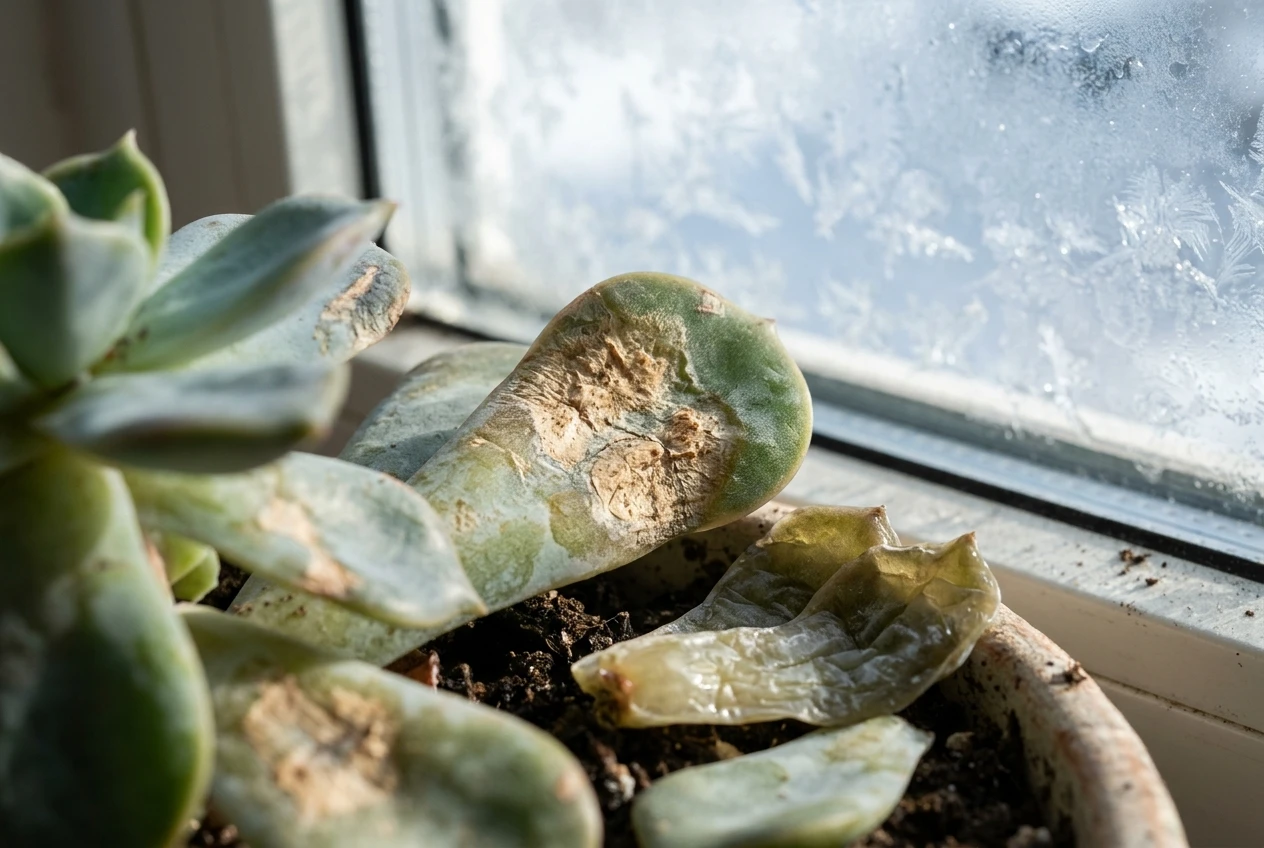
Sunburn shows up as white, tan, yellow or brown patches, usually on the side facing the window or on the leaf tops. The patches feel dry or crusty. It often happens when a plant moves suddenly from a dim spot to strong direct sun, or when midday summer sun comes through glass. The marks do not heal, but new growth will be clean. Move the plant to slightly less intense light, then ease it back toward brightness over a couple of weeks.
Cold damage looks like dark, soft, water-soaked patches, or leaves that turn translucent and collapse after a cold night. Windowsills in winter can get much colder than the room, and drafts from doors or vents hurt too. Move the plant away from the glass at night and keep it away from drafts.
Black or brown soft spots on a plant that has also been in wet soil usually mean rot, and you should follow the rescue steps in the overwatering section. Spots that are dry, hard and sunken are old damage that has healed over, and the plant can live with them.
Damaged leaves stay damaged. Judge the plant’s health by whether new growth is firm and the center of the plant is healthy, not by the marks on older leaves.
How to rescue a struggling succulent this week
Use this sequence whatever the symptom looks like:
- Check the soil and roots first. Wet soil with a sick plant calls for unpotting. Dry soil with wrinkled leaves calls for a soak.
- Cut off anything rotted. Use clean scissors and cut back to firm, healthy tissue.
- Let cuts dry for a few days before putting the plant in soil.
- Repot into a pot with a drainage hole and a fast-draining succulent mix. Use terracotta if you tend to overwater.
- Place the plant in your brightest spot, out of drafts and away from midday sun that comes through glass. Add a grow light if your windows are weak.
- Hold off on water after repotting for about a week, then water thoroughly and let the soil dry before the next watering.
- Skip fertilizer while the plant is recovering. A stressed plant does not need extra feeding.
Then wait. Succulents recover slowly, and new growth at the center is the sign that things are working. Do not check the roots again for a few weeks, because repeated disturbance sets recovery back.
A simple routine to stop it happening again
A routine takes the guesswork out of care. Once a week, spend a minute on each plant:
- Test the soil. Push a finger or skewer a couple of inches in. If any damp soil clings to it, wait.
- Water only when the soil is fully dry, and water deeply until it drains out of the bottom. Empty the saucer afterward so the pot does not sit in water.
- Water less in winter. Most indoor succulents grow slowly in the short, dim days of winter and use much less water.
- Look at the leaves. Firm and plump means you are on track. Soft means ease off the water. Wrinkled with dry soil means water.
- Rotate the pot a quarter turn, and check that new growth stays compact. Stretching means the light is too weak.
Keep the supplies simple: pots with drainage holes, a gritty succulent mix, and a grow light if your windows are dim. These three fix the most common causes, and they are the items worth spending on first.
Get beginner succulent care reminders and rescue tips
A reminder to check your soil before you water prevents more losses than any single trick. If you would like simple beginner succulent care reminders and rescue tips delivered to you, join the ThatSucculents! Newsletter.
The pot, soil and grow light picks that go with the fixes in this article are offered as affiliate links, which means the site may earn a commission if you buy through them. The affiliate disclosure explains how that works.