Creating a beautiful front yard doesn’t have to mean hours of watering and constant upkeep. Succulents offer the perfect solution for homeowners who want stunning curb appeal without the high maintenance demands of traditional gardens.
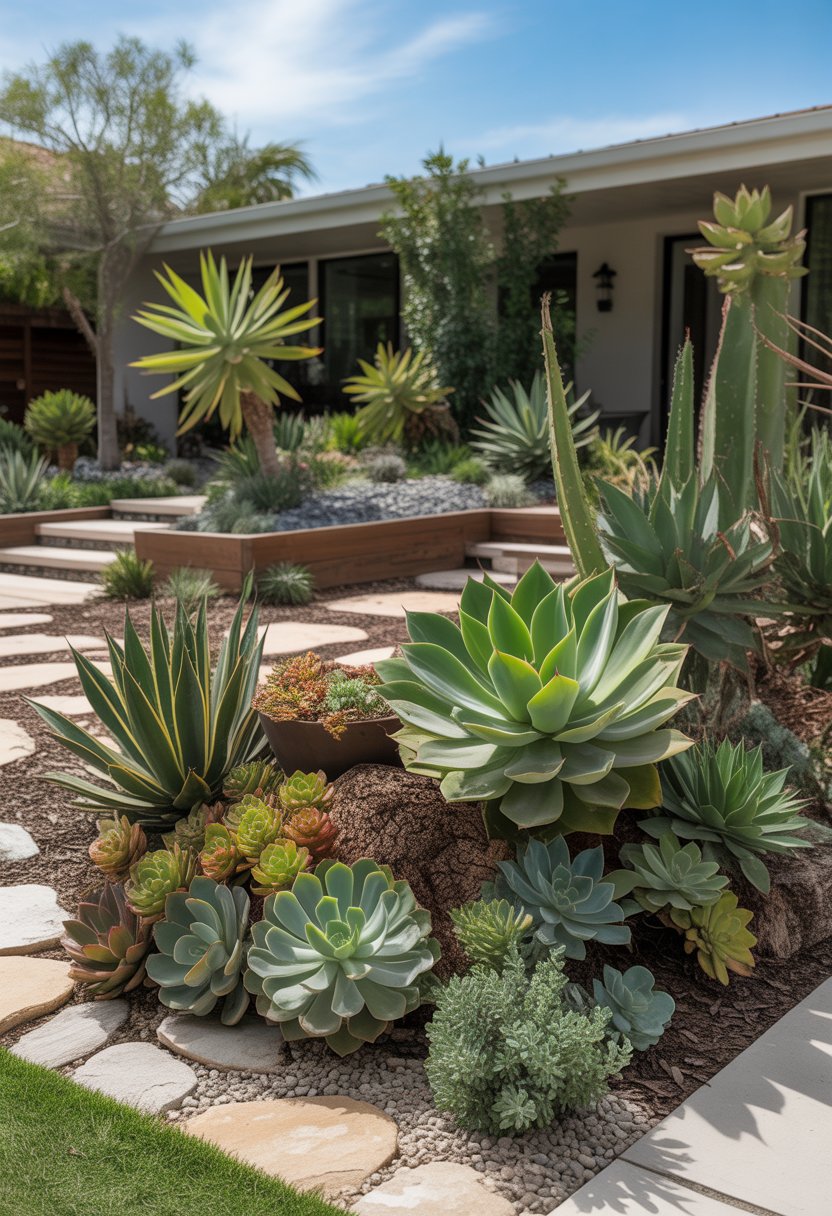
These low-water plants can boost your home’s curb appeal by up to 20% while requiring minimal care throughout the year. From rock gardens with colorful clusters to vertical displays that add height and interest, succulent landscaping opens up countless design possibilities. You can mix different textures, create eye-catching focal points, and even build desert-inspired themes that work well in various climates.
1) Create a rock garden with mixed river rocks and large boulders
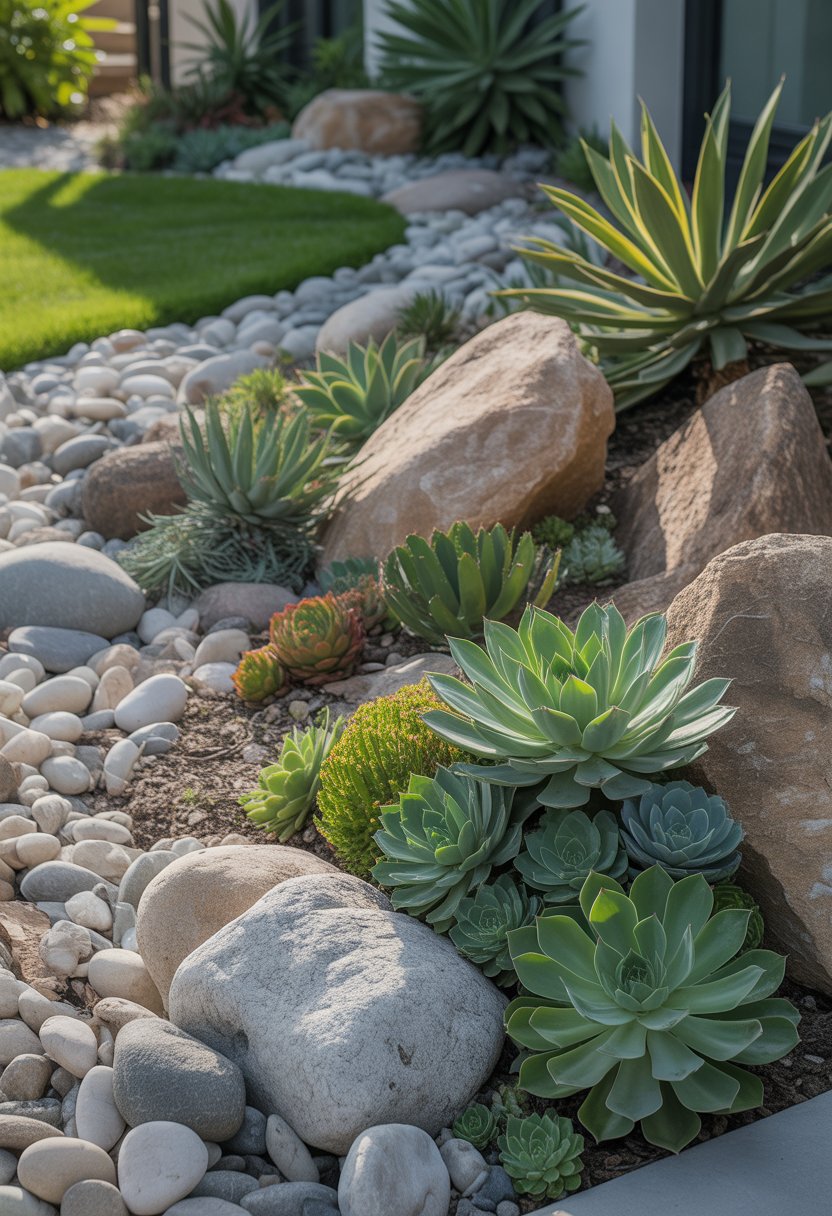
You can build a stunning succulent garden by mixing different sized rocks together. Start with large boulders as your main focal points.
Place smaller river rocks and pea gravel around the boulders. This creates layers and visual interest in your front yard.
River rocks work great because they have smooth, rounded edges. They look natural and complement succulents perfectly.
Use the large boulders to create height differences in your garden. Position them where you want to draw attention.
Fill the spaces between rocks with drought-tolerant succulents like aloe, agave, and echeveria. These plants love the drainage that rocks provide.
The mix of rock sizes adds texture to your landscape. Big boulders give structure while smaller rocks tie everything together.
This type of rock garden needs very little water once established. The rocks help prevent weeds and keep soil moisture in.
Choose rocks in colors that match your home’s style. Gray river rocks work with most houses, while red rocks add warmth.
2) Design a vibrant tapestry of layered succulents for dynamic color
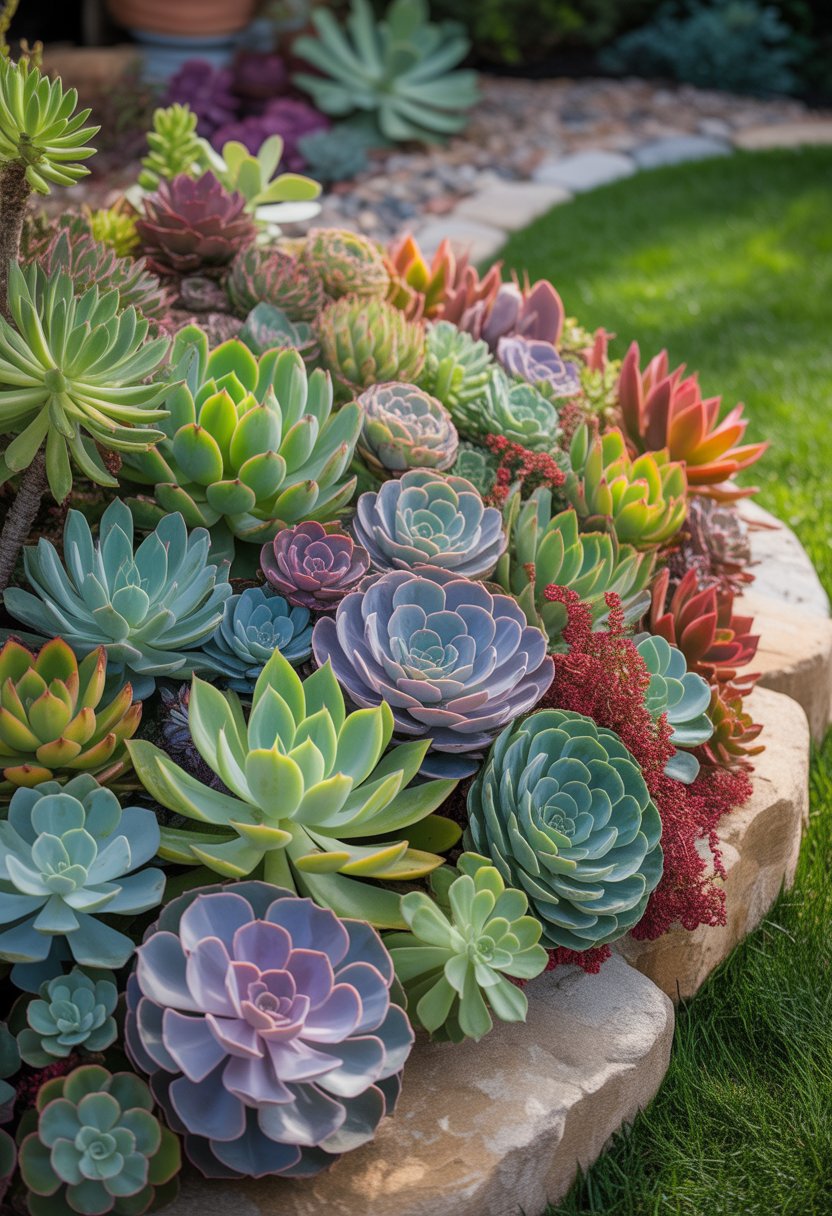
Creating a succulent tapestry means planting different types close together like a living carpet. This technique lets you mix colors, textures, and heights for a stunning visual effect.
Start by choosing succulents with different colors. Pick purple hens and chicks, blue-green echeveria, and bright green sedum. Add some red or orange varieties for bold contrast.
Plant your succulents at different heights to create depth. Put taller plants in the back and shorter ones in front. This layering makes your garden look full and interesting.
Group plants with similar water needs together. This makes care easier while keeping your design looking good. Leave small spaces between plants so they can grow without crowding each other.
Mix different leaf shapes and sizes for more visual appeal. Round rosettes look great next to spiky agave or trailing string of pearls. The variety keeps your eye moving through the garden.
Consider the mature size of each plant when designing. Some succulents spread quickly while others stay compact. Plan your spacing based on how big they’ll get in a year or two.
3) Build a vertical succulent garden using wooden frames for height
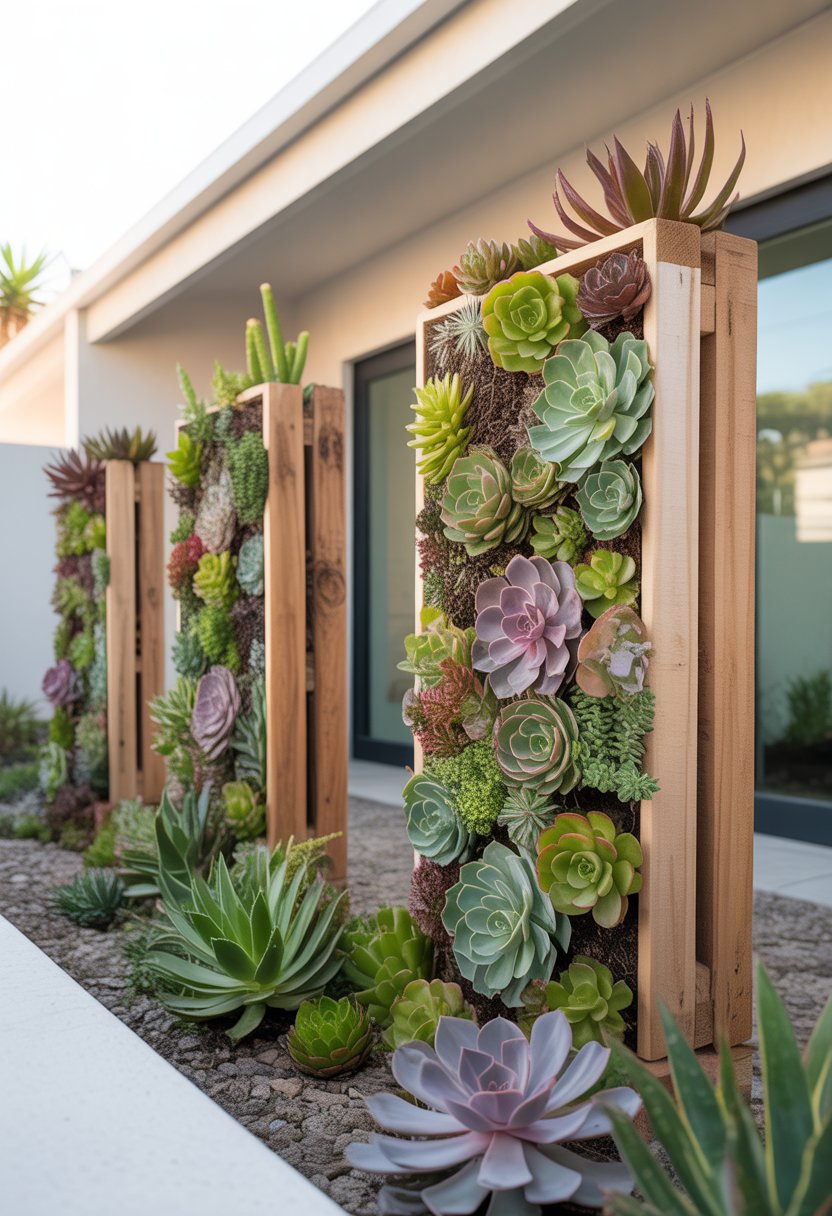
Wooden frames turn your front yard walls into living art. You can build a simple box frame about 2 inches deep to hold your succulents.
Keep your frame size under 18 by 24 inches. Larger frames get heavy and may lose soil or plants when mounted on walls.
Start with a shallow wooden frame and add wire mesh to the back. This mesh holds the soil and plants in place while they grow.
Fill the frame with well-draining succulent soil. Plant your succulents through the mesh openings, pressing them firmly into the soil.
Choose succulents in different colors and textures. Green, purple, and silver varieties create eye-catching displays when planted together.
Mount your finished frame on a fence, exterior wall, or garden structure. The vertical design saves ground space while adding height to your landscaping.
Water carefully to avoid soil spillage. Let the frame lay flat for a few weeks after planting so roots can establish before hanging vertically.
This project works great near entryways or along blank walls that need visual interest.
4) Use drought-tolerant succulents like Aloe Vera and Agave
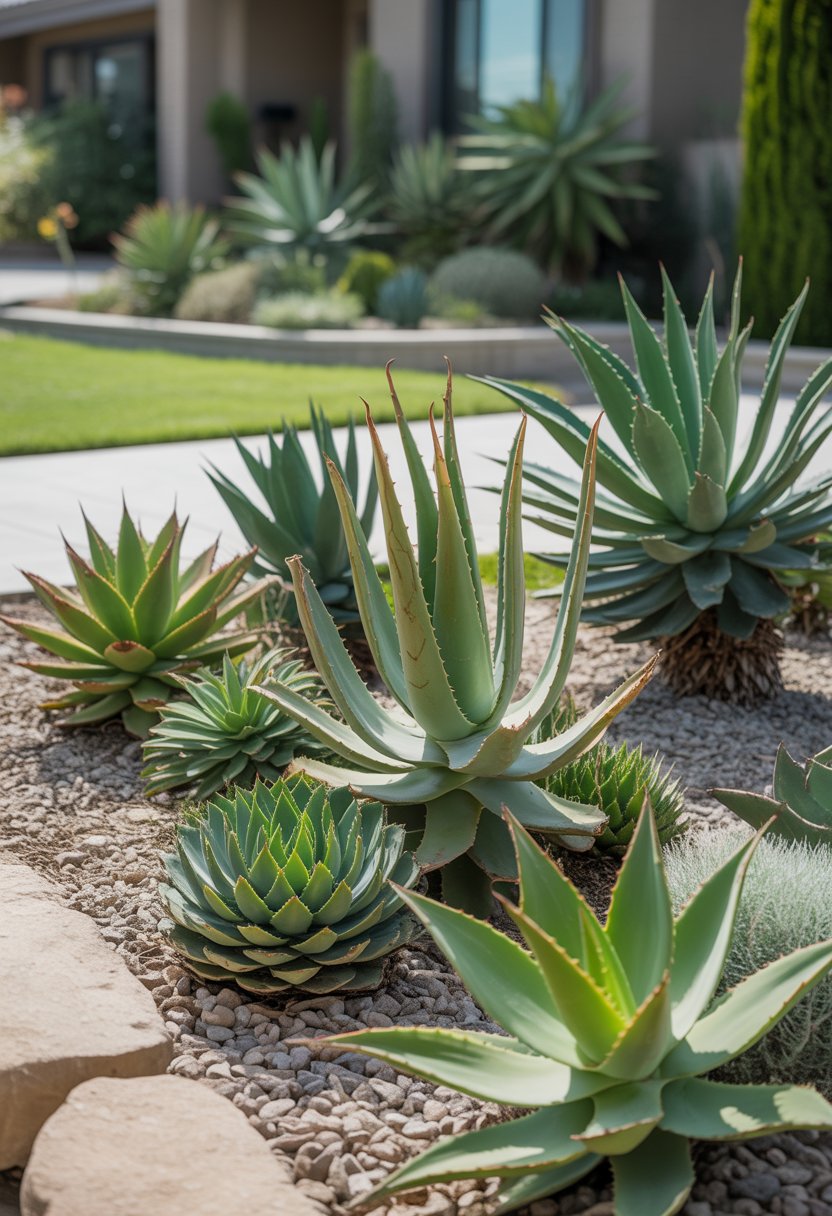
Aloe Vera and Agave are perfect choices for front yard landscaping. These plants need very little water once they get established.
Aloe Vera has thick, fleshy leaves that store water. You can use different types like Aloe barbadensis or Aloe arborescens. They work great as border plants or focal points.
Agave plants create bold, dramatic looks in your yard. Try Agave americana for larger spaces or Agave parryi for smaller areas. Their spiky leaves add interesting texture.
Both plants can cut your water use by half compared to regular grass. This saves money on your water bill and helps the environment.
Plant these succulents in well-draining soil with some sand or gravel mixed in. Space them far enough apart so they have room to grow.
You can combine Aloe Vera and Agave with other drought-tolerant plants. Add some ornamental grasses or other succulents for variety.
These plants look good all year long. They don’t need much care once they’re planted. Just water them occasionally during very dry periods.
5) Incorporate colorful echeveria clusters as focal points
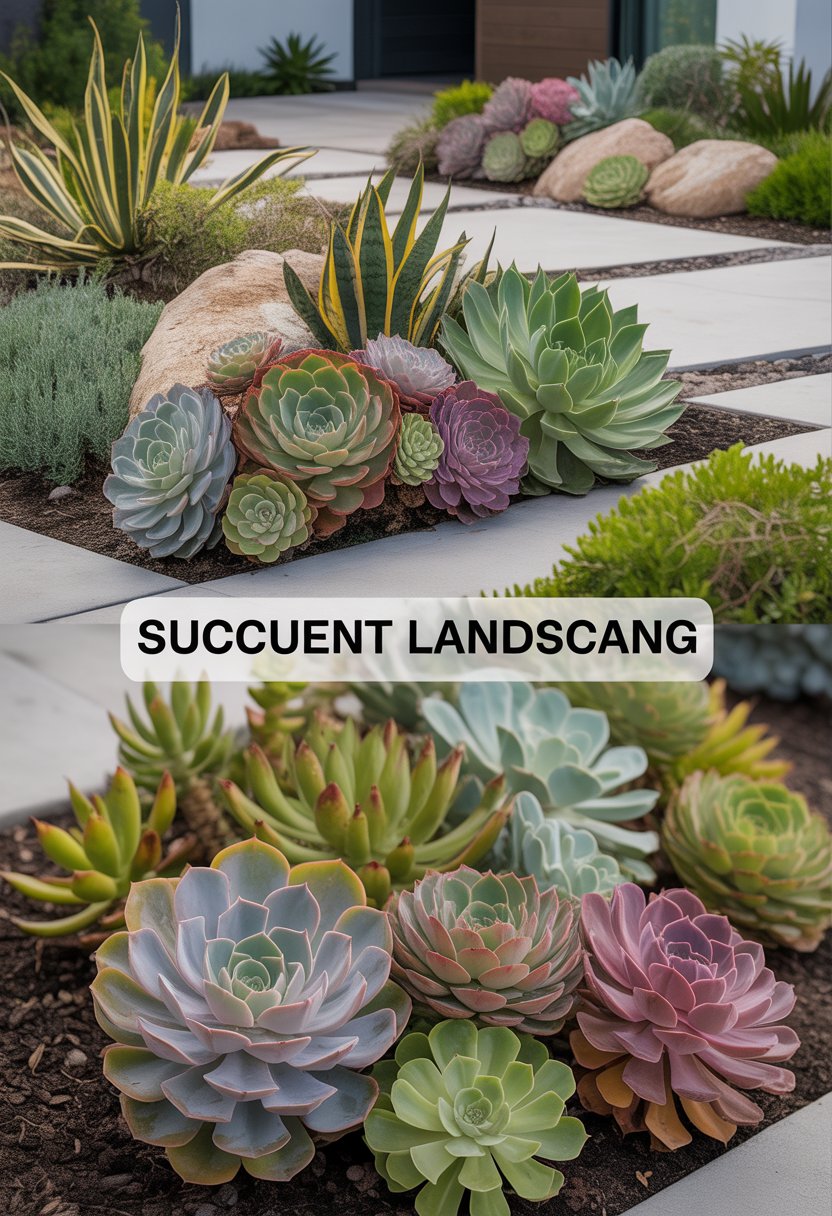
Echeveria plants make perfect focal points in your front yard succulent garden. Their rosette shapes and bright colors naturally draw attention to key areas.
Group different echeveria varieties together to create stunning color combinations. Mix purple, pink, blue-green, and orange varieties for maximum visual impact.
Place these clusters at garden entrances or corners where people will notice them first. The contrasting colors and geometric shapes will catch every visitor’s eye.
Plant echeverias in odd numbers like groups of three or five. This creates a more natural and pleasing arrangement than even numbers.
Choose varieties like ‘Bittersweet’ for orange tones or ‘Purple Pearl’ for deep purple colors. Different sizes within each cluster add texture and depth to your display.
Position taller echeverias in the back and shorter ones in front. This layering technique helps each plant stand out while creating a cohesive look.
These colorful clusters work especially well against neutral backgrounds like gravel or light-colored rocks. The contrast makes the vibrant succulent colors pop even more.
6) Mix succulents with ornamental grasses for texture contrast
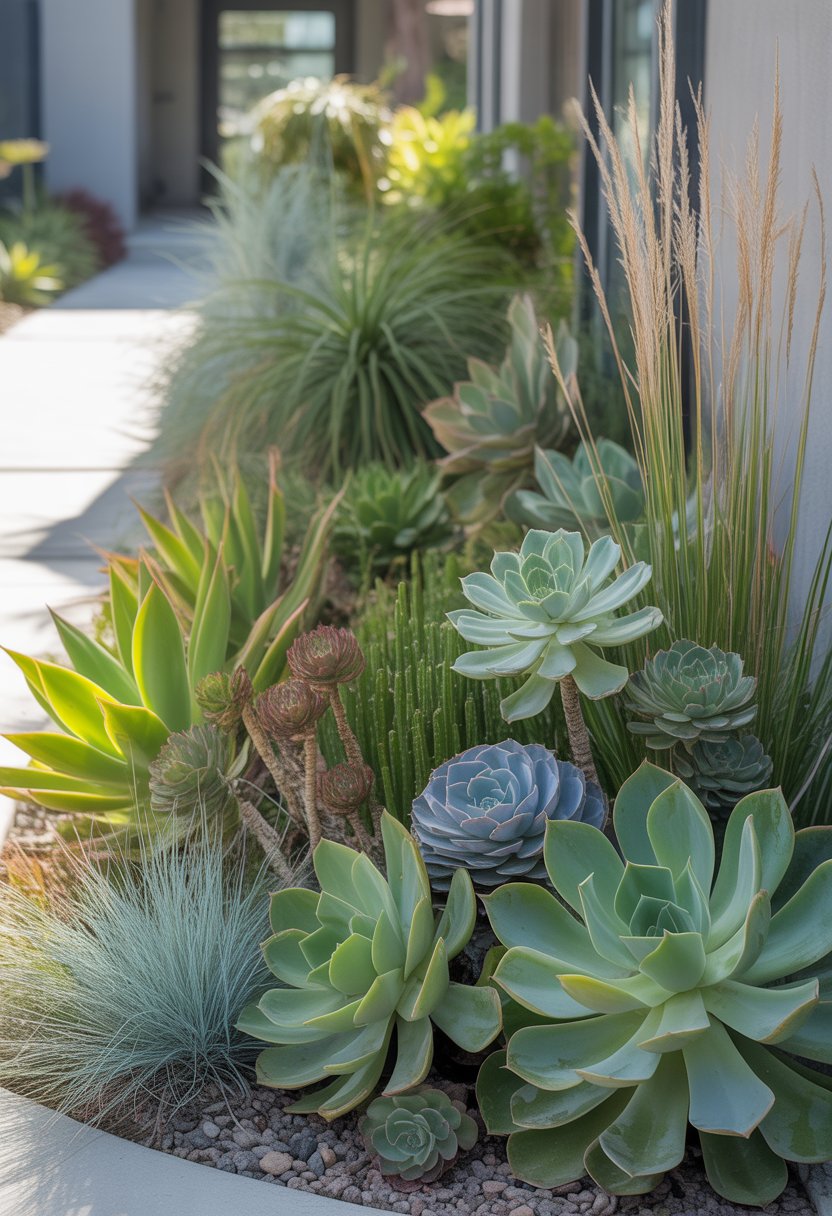
Adding ornamental grasses to your succulent garden creates amazing texture contrast. The soft, flowing grass blades make your thick, fleshy succulents stand out even more.
Try mixing agave plants with feather reed grass or fountain grass. The spiky succulent leaves look great next to the wispy grass movement.
Use low-growing grasses like mondo grass or sedge to edge your succulent beds. These shorter varieties won’t compete with your succulents for attention.
Plant tall grasses like pampas or blue fescue behind larger succulents. This creates layers that add depth to your front yard design.
The grasses move gently in the breeze while succulents stay still. This movement brings life to your garden without extra work.
Choose drought-tolerant grasses that need the same watering schedule as your succulents. Native grasses work best in most areas.
Place clumps of ornamental grass between groups of succulents rather than mixing them randomly. This creates a more organized look that’s easier on the eyes.
7) Add ground-cover succulents like Sedum for easy maintenance
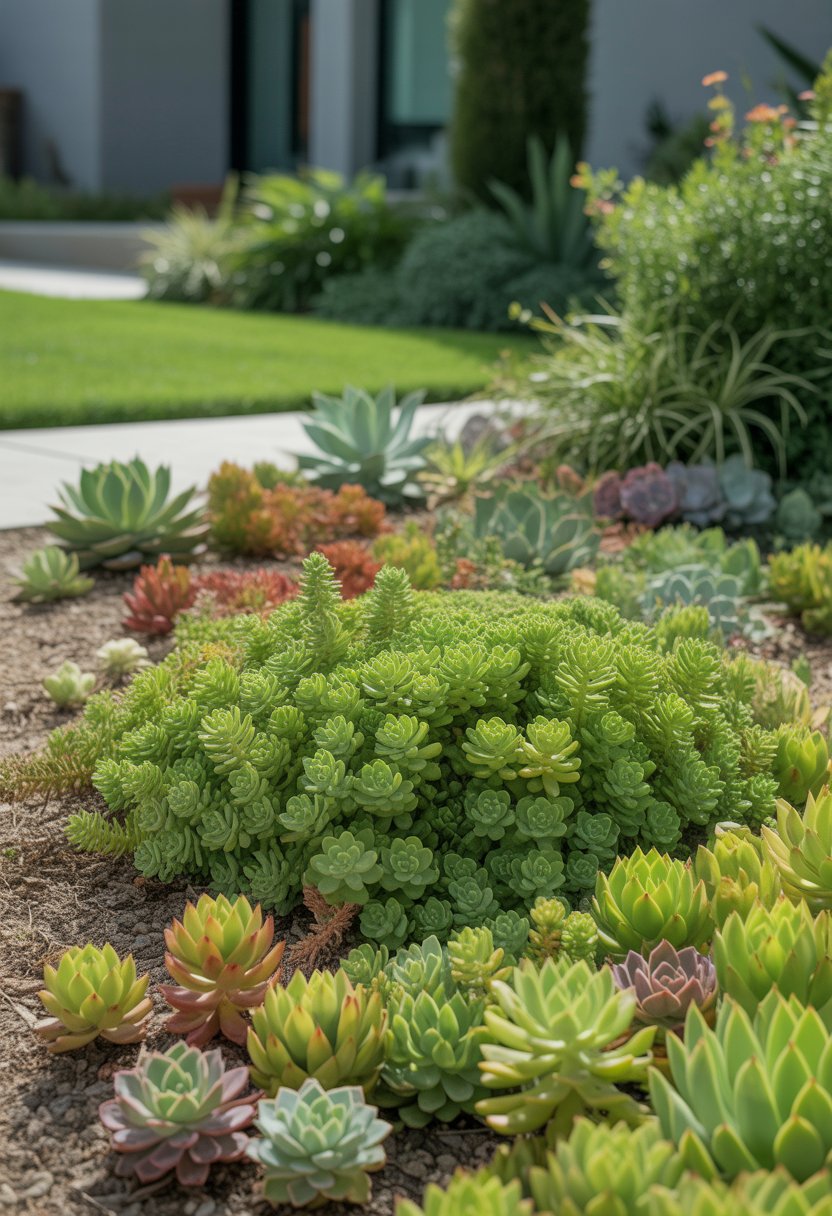
Ground-cover succulents are perfect for busy homeowners who want a beautiful yard without constant work. These plants spread naturally to fill empty spaces.
Sedum is one of the best choices for ground cover. It grows low and thick, creating a carpet effect across your front yard. This plant comes in many colors and textures.
You can plant Sedum between rocks or along walkways. It will slowly spread to cover bare spots where grass struggles to grow. The thick leaves store water, so you won’t need to water often.
Ground-cover succulents help stop weeds from taking over your garden. They block sunlight from reaching weed seeds in the soil below. This saves you time pulling weeds later.
Other good ground-cover options include Hens and Chicks and creeping varieties of Echeveria. These plants work well together to create interesting patterns and colors.
Plant your ground covers about 6 inches apart. They will fill in the gaps within a few months. Water them once a week until they get established, then reduce watering to once or twice per month.
8) Create a desert-inspired theme with cacti and succulents
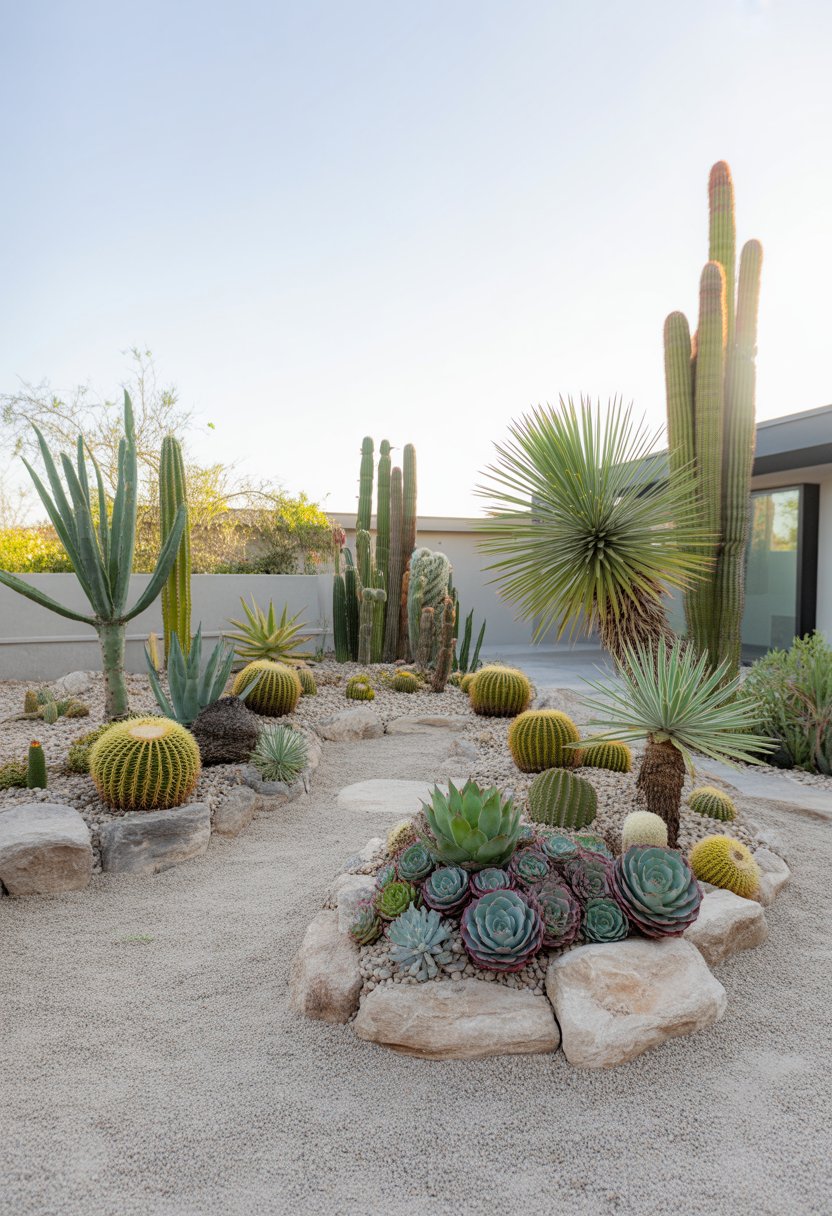
You can turn your front yard into a stunning desert oasis by mixing cacti and succulents together. This combination gives you many different colors, shapes, and sizes to work with.
Choose bold cacti like Golden Barrel Cactus or Santa Rita Prickly Pear for eye-catching focal points. These plants add height and interesting textures to your landscape.
Fill in around your cacti with smaller succulents in various colors. This creates layers and makes your garden look fuller without using much water.
Add rocks of different sizes between your plants to complete the desert look. The rocks help with drainage and make your cacti stand out even more.
Full sun and good drainage are key for this type of garden. Make sure water doesn’t sit around your plants’ roots.
This style works great if you want a low-maintenance yard that looks good all year. Desert plants need very little care once they’re established in the right spot.
9) Use succulents alongside stepping stones for a pathway effect
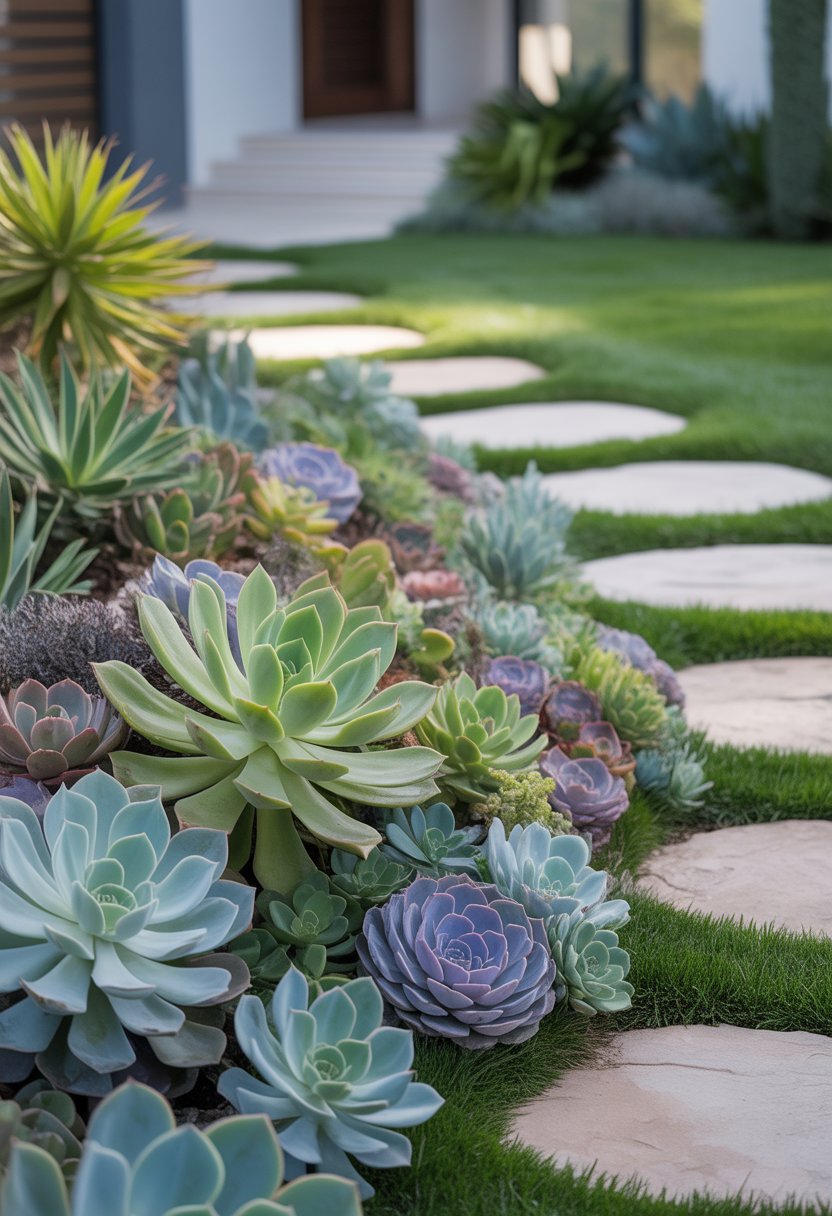
Stepping stones create natural spots for adding succulents to your front yard. You can plant small succulents between the stones or along the edges of your pathway.
Choose low-growing varieties that won’t get too tall. Hens and chicks work well because they stay compact and spread slowly. These plants can handle being stepped on occasionally.
Tuck succulents into the cracks between stones for a seamless look. This creates texture and adds pops of green or colorful foliage to break up the hardscape.
Plant larger succulents along the sides of your pathway. This frames the walkway and guides visitors toward your front door. Mix different sizes and colors for visual interest.
Pick hardy varieties that match your climate. Echeveria and sedum are good options that come in many colors and shapes.
Make sure your succulents get proper drainage around the stones. Add gravel or sand if water pools in these areas. This prevents root rot and keeps your plants healthy.
The combination of stone and succulents creates a modern, low-maintenance pathway that looks great year-round.
10) Combine succulents with low-water shrubs for variety
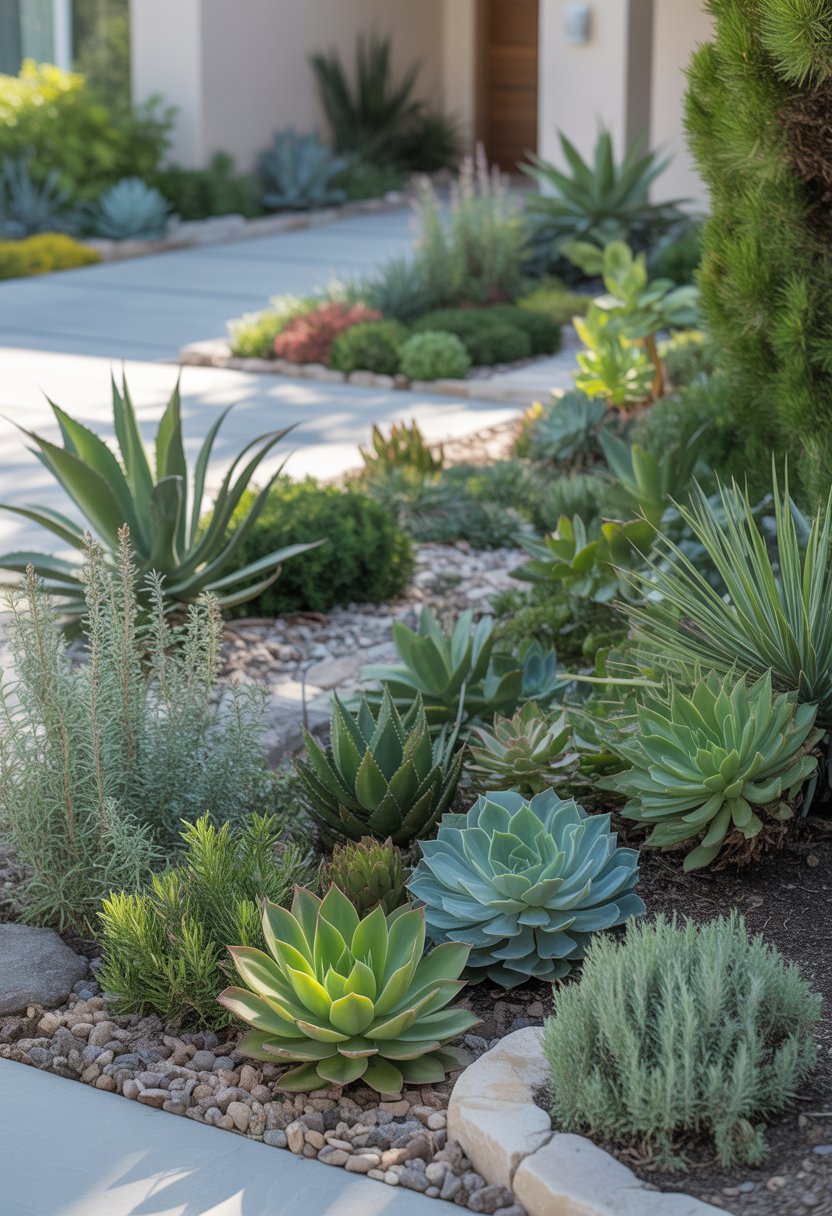
You can create a richer landscape by mixing succulents with drought-tolerant shrubs. This combination adds height and texture that succulents alone can’t provide.
Choose shrubs like lavender, rosemary, or sage. These plants need little water and smell great too. They work well with most succulent types.
Plant taller shrubs in the back of your garden bed. Put medium-sized succulents in the middle. Add smaller succulents at the front edge.
Gray-green shrubs pair nicely with colorful succulents. Try purple sage with bright yellow aeoniums. Or plant silver-leafed shrubs next to red echeveria.
Your shrubs will bloom at different times than succulents. This gives you flowers throughout more of the year. The varied leaf shapes also make your garden more interesting.
Space plants properly so each gets enough room to grow. Most low-water shrubs spread wider than they look when young. Leave about three feet between larger plants.
This mix creates a fuller, more complete look than using only succulents. Your front yard will have better structure and visual appeal year-round.
Planning Your Front Yard Succulent Landscape
Success with front yard succulents starts with picking plants that match your climate and design goals. You’ll need well-draining soil and the right sun exposure for healthy growth.
Choosing the Right Succulent Varieties
Start by checking your climate zone. Cold-hardy succulents like hens and chicks work great in zones 4-8. For warmer areas, try agave, barrel cactus, or jade plants.
Think about size when mature. Small varieties like echeveria stay compact at 6-12 inches. Medium plants like aloe reach 1-3 feet. Large specimens like century plants can grow 6+ feet wide.
Popular Front Yard Options:
- Agave – Bold, architectural look
- Sedum varieties – Ground cover and upright forms
- Barrel cactus – Round, sculptural shape
- Jade plants – Classic green with thick leaves
- Hens and chicks – Spreads naturally in clusters
Mix different textures and colors. Combine spiky agaves with soft, rounded sedums. Add blue-green echeveria next to burgundy aeoniums for contrast.
Consider bloom times too. Many succulents flower at different seasons, giving you year-round interest.
Soil and Drainage Essentials
Succulents hate wet feet. Your soil must drain water quickly or roots will rot. Test drainage by digging a hole and filling it with water – it should drain within a few hours.
Clay soil needs major help. Mix in coarse sand, perlite, or small gravel. Add compost sparingly since too much holds moisture.
Soil Mix Recipe:
- 40% native soil
- 30% coarse sand
- 20% perlite or pumice
- 10% compost
Build raised beds or mounds for better drainage. Even 6-8 inches of height helps water flow away from roots.
Mulch with gravel or small stones instead of wood chips. Organic mulches hold too much moisture and can cause stem rot where they touch plants.
Sunlight and Placement Tips
Most succulents need 6+ hours of direct sun daily. Morning sun is gentler than harsh afternoon rays, especially in hot climates.
Check your yard’s sun patterns through the day. South-facing areas get the most light. East sides get morning sun with afternoon shade.
Place taller plants on the north side so they don’t shade shorter ones. Put sun-loving varieties in the brightest spots. Shade-tolerant types like haworthia work under trees or eaves.
Sun Requirements by Type:
- Full sun – Agave, barrel cactus, sedum
- Partial shade – Jade plants, some aloes
- Bright shade – Haworthia, some echeveria
Watch for sunburn signs like brown or white patches. You can move container plants, but transplanting is stressful. Getting placement right from the start saves trouble later.
Consider seasonal sun changes. Deciduous trees create more shade in summer when leaves are full.
Maintaining a Healthy Succulent Yard
Your succulent yard needs specific care to stay healthy year-round. Focus on proper watering techniques and watch for common problems that can harm your plants.
Watering Strategies for Outdoor Succulents
Water your succulents deeply but less often. This helps them grow strong roots and prevents rot.
Check the soil before watering. Stick your finger about 2 inches down into the soil. If it feels dry, it’s time to water.
Best watering times:
- Early morning (6-8 AM)
- Late evening after sunset
- Avoid midday watering
Water at the base of each plant. Don’t spray water on the leaves. This can cause fungal problems and sunburn.
Most succulents need water every 7-14 days in summer. In winter, water every 3-4 weeks. Adjust based on your local weather.
Use a soaker hose or drip system for large areas. This saves time and waters evenly. Hand watering works well for smaller gardens.
Stop watering if you see yellowing or mushy leaves. These are signs of overwatering.
Dealing With Common Pests and Issues
Watch for aphids on your succulents. These tiny green or black bugs cluster on stems and leaves. Spray them off with water or use insecticidal soap.
Mealybugs look like white cotton on your plants. Remove them with rubbing alcohol on a cotton swab. Check plants weekly during warm months.
Fungal rot happens when plants stay too wet. Remove affected parts with clean scissors. Let cut areas dry for a few days before replanting.
Sunburn causes brown or white spots on leaves. Move sensitive plants to partial shade. Gradually move them to sunnier spots over several weeks.
Scale insects appear as small brown bumps on stems. Scrape them off or use horticultural oil spray.
Keep your garden clean. Remove dead leaves and debris where pests can hide.