Fairy gardens bring a touch of magic to any space, and when you combine them with succulents, you create something truly special. These tiny worlds mix the beauty of small plants with whimsical decorations to make charming displays that catch everyone’s eye.
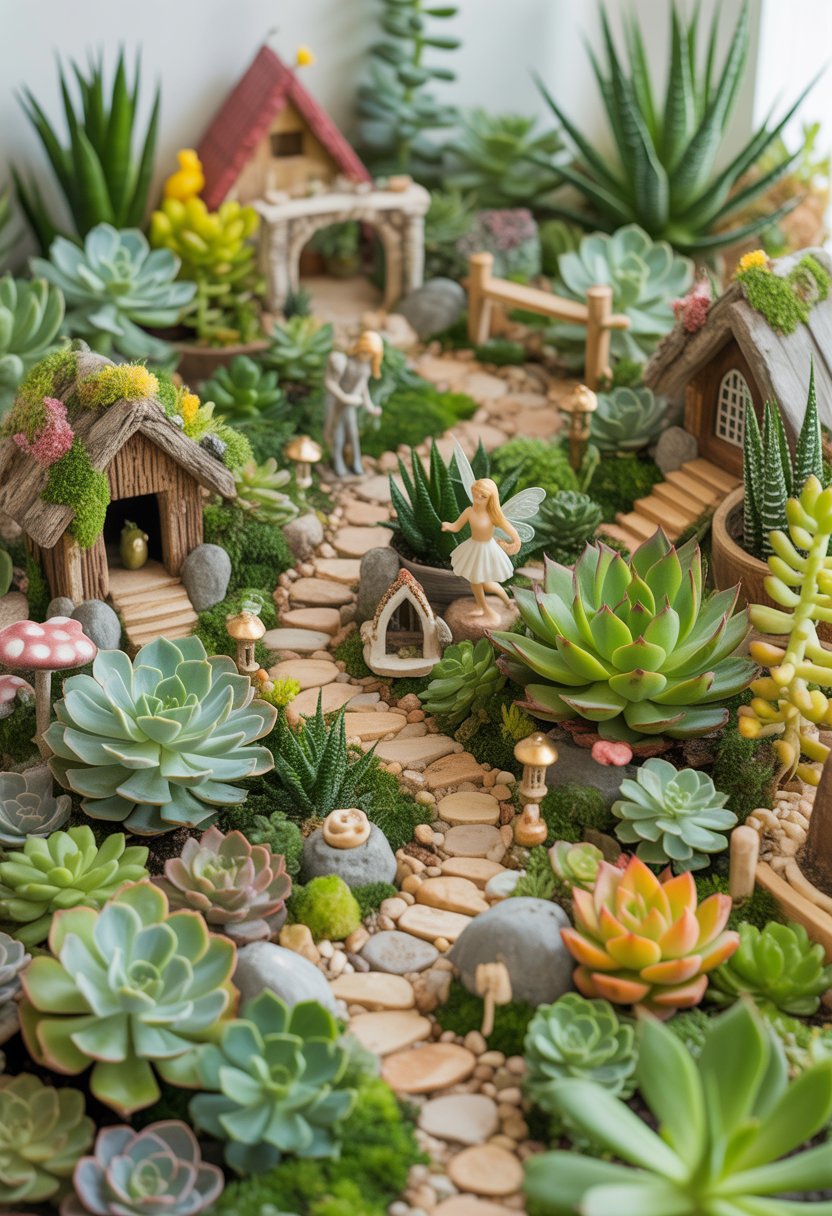
Succulent fairy gardens are perfect for beginners because they’re easy to care for and let you be creative with containers, plants, and decorations. Whether you want to use a shallow dish, vintage teacup, or wooden box, you can build your own miniature landscape. With the right plants, accessories, and setup, you’ll have a delightful fairy garden that needs little care but brings lots of joy.
1) Choose a shallow container with good drainage
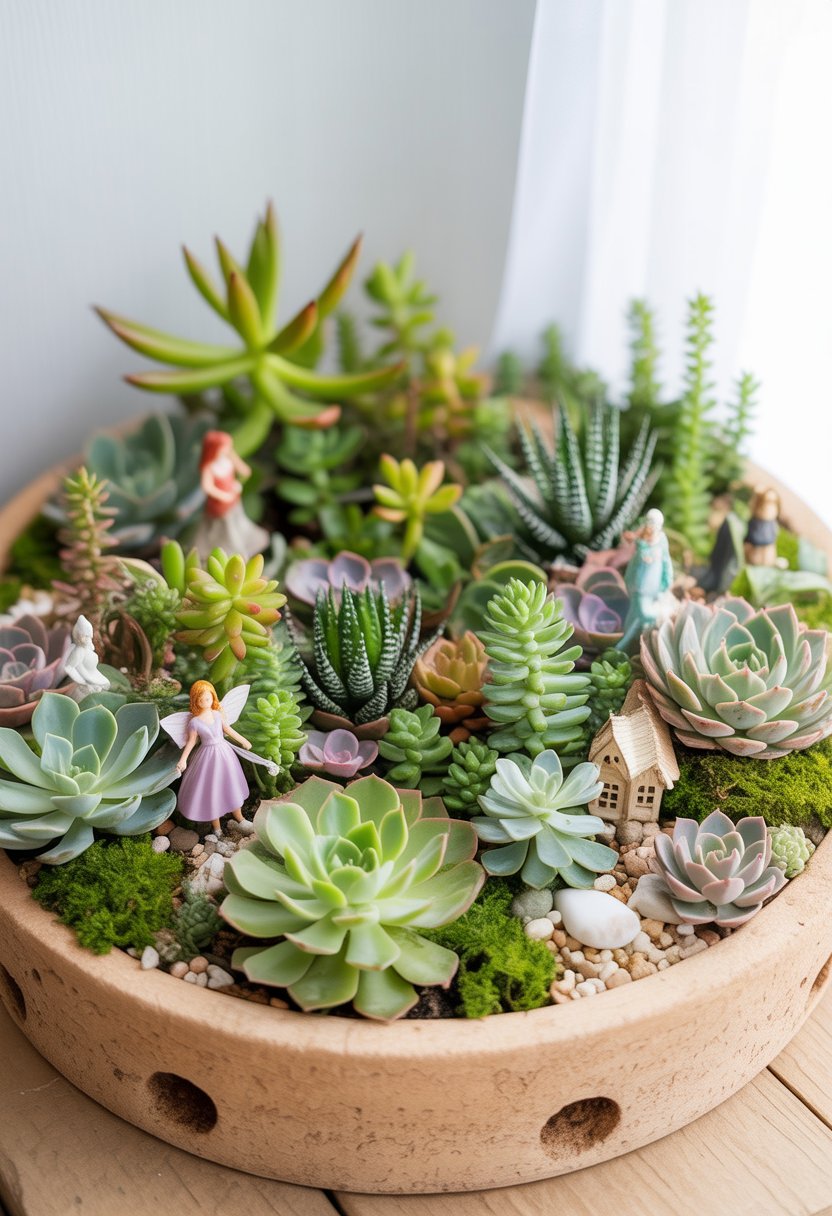
You need a shallow container for your succulent fairy garden. Succulents have small root systems that don’t need deep soil.
Look for containers that are wide but not very tall. This gives your plants room to spread without too much soil depth.
Drainage holes are super important. Water sitting in the bottom will kill your succulents quickly. Make sure your container has holes in the bottom.
If your container doesn’t have holes, you can drill some yourself. Use a small drill bit to make several holes.
Good container options include shallow clay pots, ceramic dishes, or old birdbaths. You can even use fun items like vintage suitcases or large teacups.
Clay and terracotta containers work great because they let air flow to the roots. They also dry out faster than plastic containers.
Whatever you pick, make sure it’s at least 3-4 inches deep. This gives your succulents enough soil to grow in while keeping things shallow.
2) Use a variety of small succulents like Echeveria and Sedum
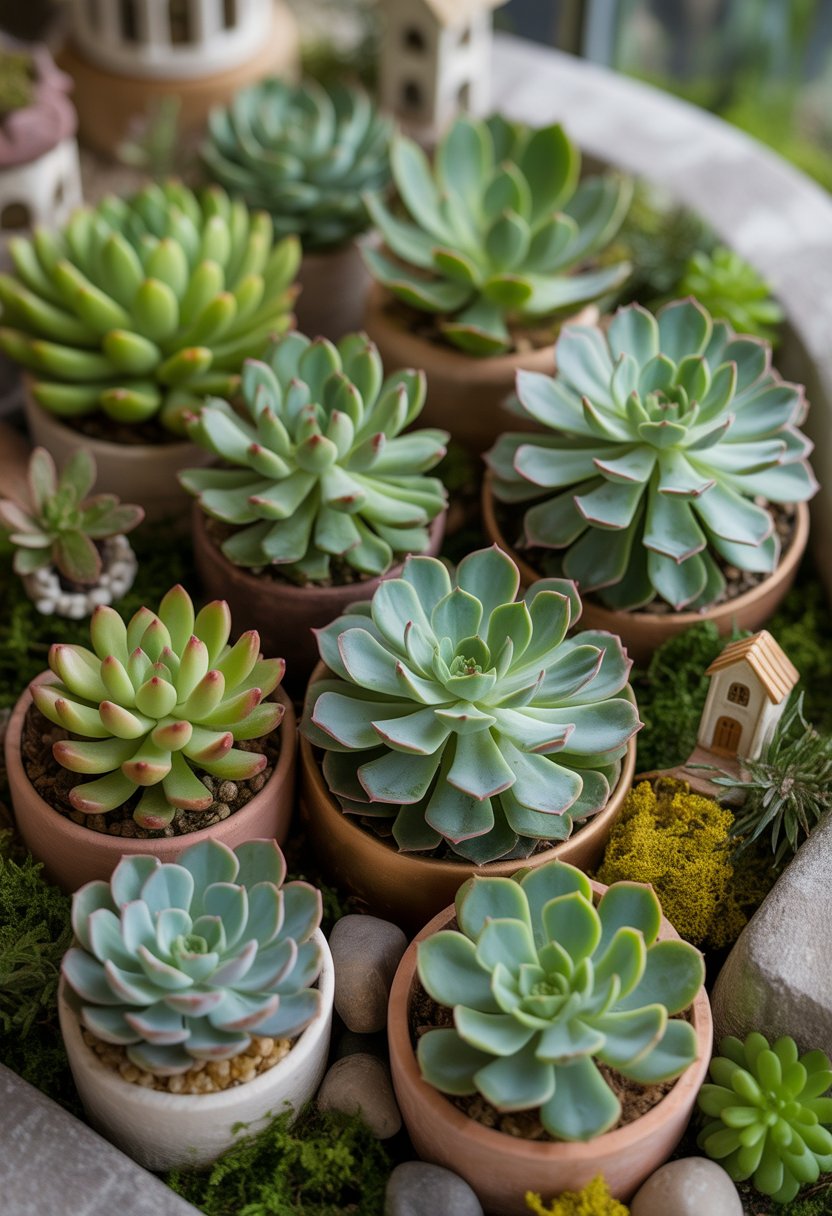
Small succulents work best in fairy gardens because they stay tiny. Echeveria and Sedum are perfect choices for your miniature world.
Echeveria plants look like little roses. They come in many colors from green to purple to blue. Their rosette shape adds beauty to any fairy garden.
Sedum offers lots of variety too. You can find different colors and textures. Some types trail over edges while others stay compact.
These succulents need very little care. They don’t require much water or special soil. This makes them ideal for beginners.
Mix different types together for the best look. Use tall ones in the back and short ones in front. This creates depth in your fairy garden.
Choose succulents that stay small when they grow. Haworthia is another good option with spiky leaves. Jade plants add a tree-like feel to your design.
The key is picking plants that won’t outgrow your container quickly. Small varieties will keep your fairy garden looking neat for months.
3) Add miniature fairy accessories like tiny benches and cottages
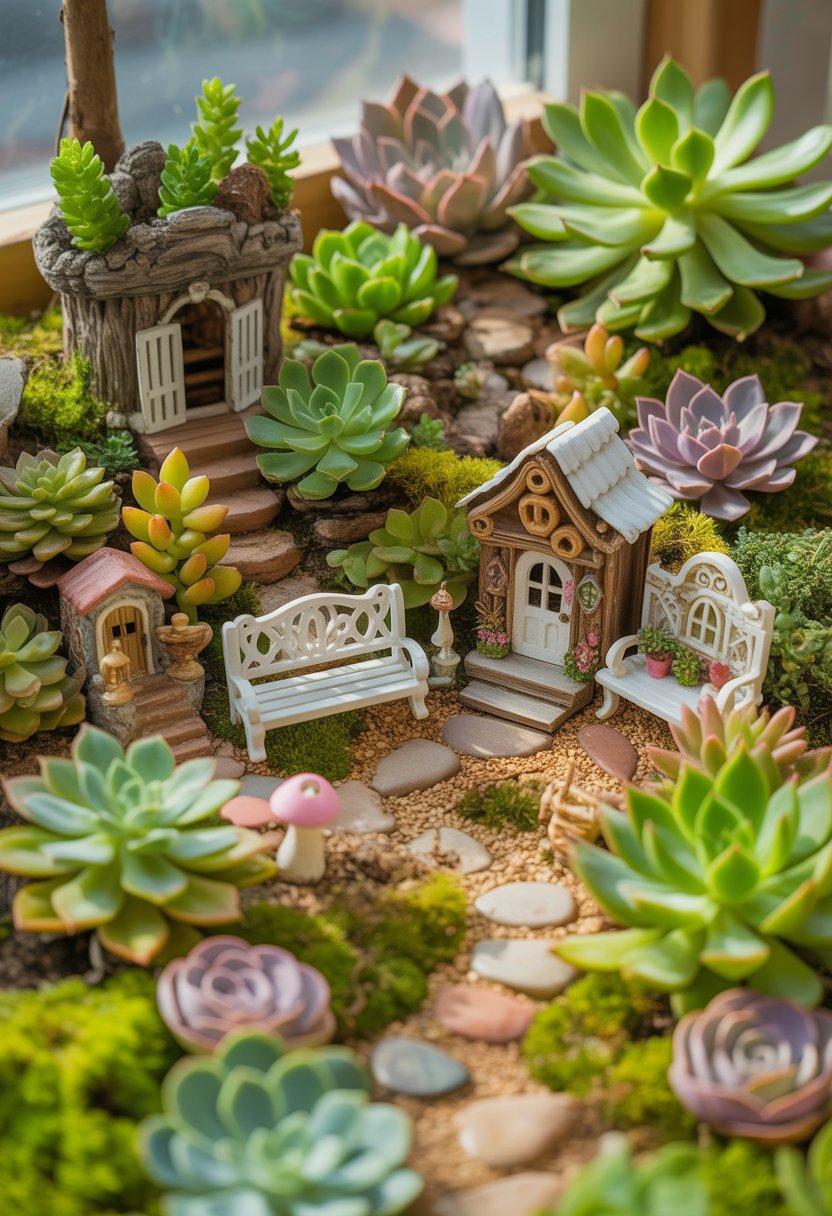
The right accessories make your succulent fairy garden feel alive. Small fairy houses create perfect focal points between your plants.
Place tiny cottages near larger succulents. The plants act like trees around the little homes.
Miniature benches work great in open spaces. Put them where fairies might sit and enjoy the garden view.
Look for accessories that match your garden size. Too-big items will crowd out your succulents.
Ceramic mushrooms add color and whimsy. Tuck them between succulent leaves for a natural look.
Small bridges connect different garden areas. They work well when placed over decorative stones or moss.
Tiny lanterns and pathways guide the eye through your garden. Place them to create little walkways around your plants.
You can buy ready-made accessories or make your own. DIY items often fit better with your garden’s style.
Keep accessories simple so your succulents stay the main attraction. A few well-placed pieces work better than crowding everything together.
4) Incorporate natural elements like small pebbles and moss
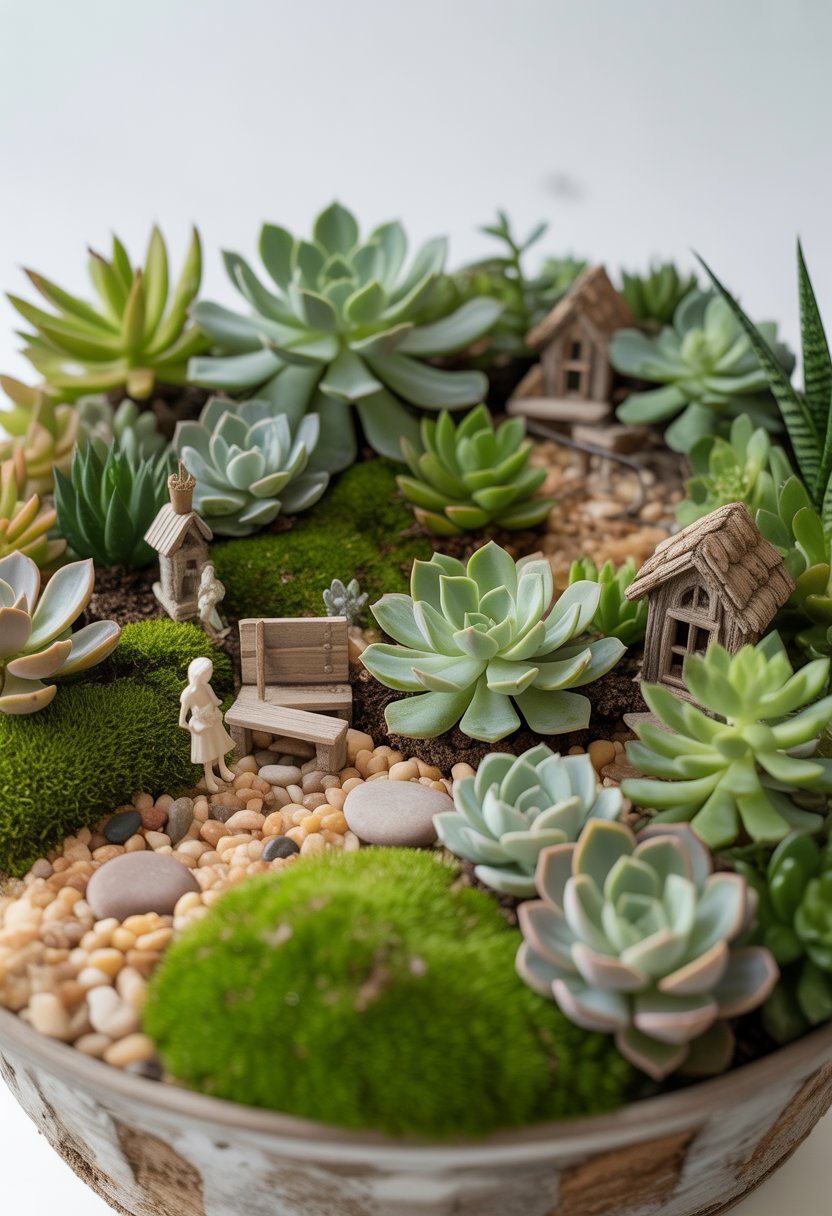
Small pebbles make perfect pathways in your fairy garden. You can create winding trails that lead to tiny houses or sitting areas. Choose pebbles that match your garden’s color scheme.
Moss adds a magical forest feel to your succulent fairy garden. It grows well in the same conditions as many succulents. Place small patches of moss around rocks or at the base of plants.
Mix different colored pebbles to create patterns. White, gray, and brown stones work well together. You can also use colored aquarium gravel for a brighter look.
Moss works great as ground cover between your succulents. It fills empty spaces and makes your garden look more natural. You can find moss at craft stores or collect it from your yard.
Use larger stones as focal points or fairy furniture. Flat rocks can become tables or stepping stones. Stack small pebbles to make tiny walls or borders around planted areas.
5) Create textured hillsides using stonecrop varieties
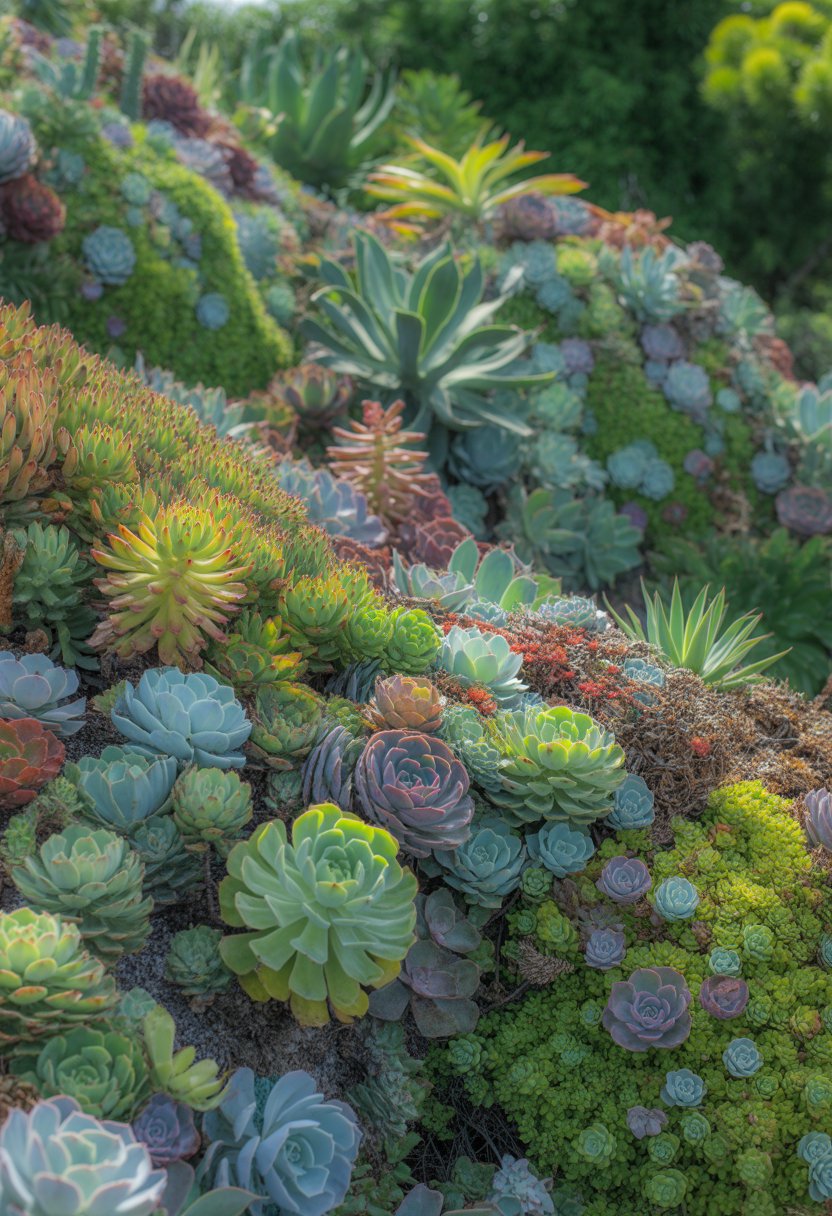
Stonecrop plants are perfect for building mini hills in your fairy garden. These thick-leaved succulents come in many shapes and sizes.
You can use tall stonecrop varieties at the back of your container. Plant medium-sized ones in the middle. Add short, spreading types at the front.
This creates layers that look like real hillsides. The different heights give your fairy garden depth and interest.
Goldmoss stonecrop works great as groundcover. It spreads out and fills spaces between other plants. The bright green color adds a natural look.
Try mixing stonecrop with different textures. Some have round, fat leaves. Others have thin, pointed ones. This variety makes your hills look more realistic.
Plant stonecrop varieties close together. They will grow and blend into each other over time. This creates a natural flowing look across your fairy garden landscape.
The best part is stonecrop needs very little care. These tough plants can handle dry soil and bright light. Your textured hills will stay beautiful without much work from you.
6) Plant in well-draining soil for healthy roots
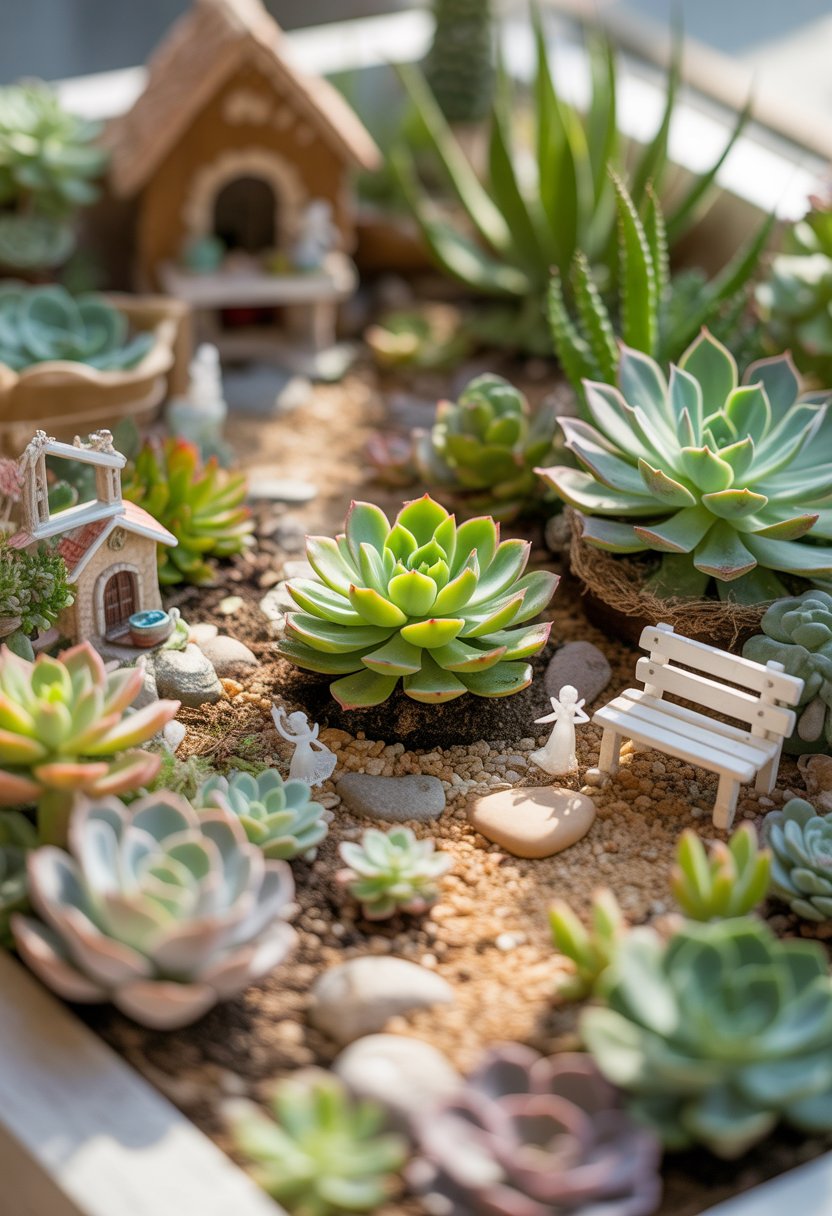
Your succulent fairy garden needs the right soil to thrive. Regular garden soil holds too much water and will kill your plants.
Succulents hate sitting in wet soil. Their roots will rot quickly if they stay waterlogged. This is the biggest mistake people make when growing succulents.
You need soil that drains water fast. The soil should dry out completely between waterings. This lets air reach the roots.
Buy pre-mixed succulent soil from garden centers. It’s already made for these plants and works great right out of the bag.
Want to make your own mix? Combine regular potting soil with sand or perlite. Use equal parts of each ingredient.
Add pumice or small gravel to improve drainage even more. This creates air pockets in the soil that roots love.
Never use heavy clay soil or regular potting mix alone. These soils hold too much moisture and compact easily.
Test your soil by watering it. Good succulent soil should drain within minutes, not hours.
The right soil keeps your fairy garden healthy and beautiful for years to come.
7) Include a tiny fairy house made from twigs or stones
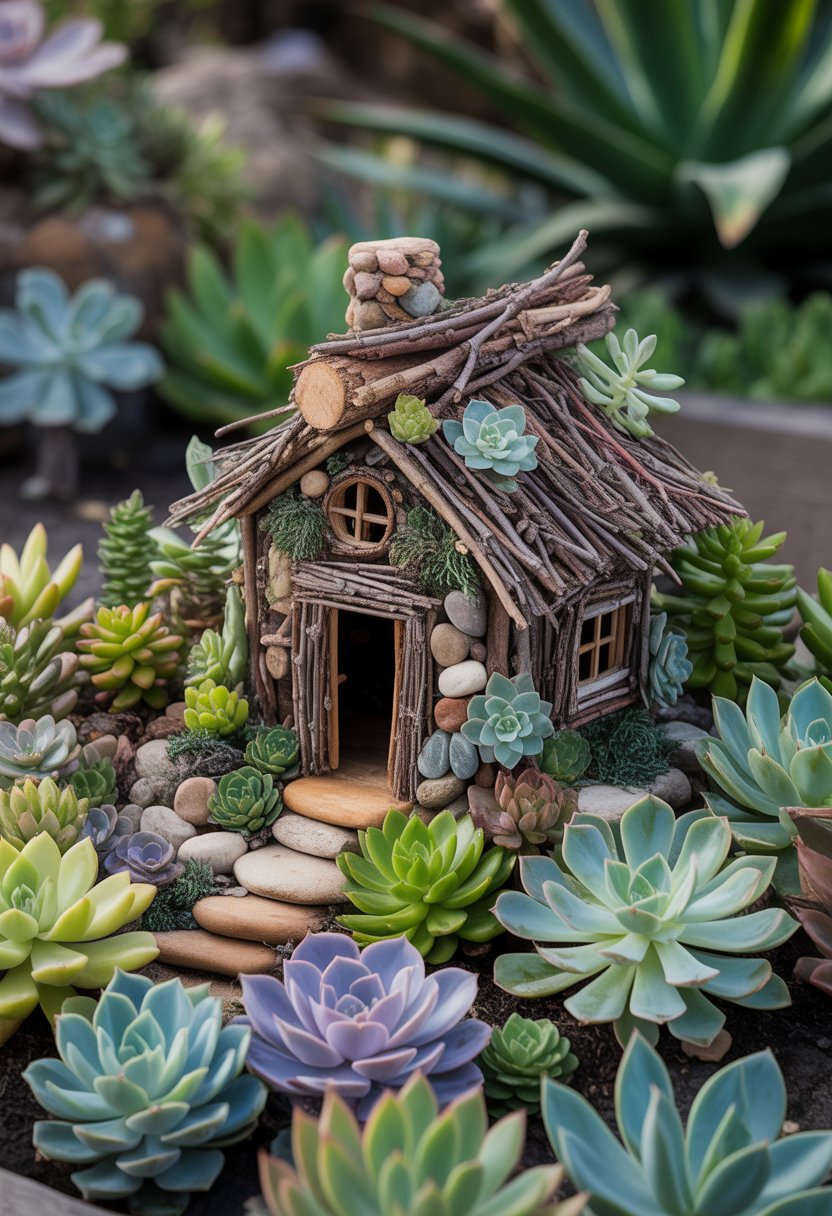
A tiny fairy house makes the perfect centerpiece for your succulent fairy garden. You can build one using natural materials you find in your yard.
Start by gathering small twigs from your garden. Glue them together to create walls and an A-frame roof. This gives your house a rustic log cabin look that fits perfectly among succulents.
For the roof, add some moss or small leaves. Use a pinecone as a front door or create tiny windows from clear plastic pieces.
Stone houses work great too. Stack small pebbles to build walls. Flat stones make good roofing material. The earthy colors match well with succulent plants.
Add a tiny door cut from bark or cardboard. You can make small steps leading to the entrance using flat stones or wood chips.
Place your fairy house between larger succulents so it looks tucked into the landscape. The house should feel like a natural part of your garden, not something that stands out too much.
Keep the house small enough that it doesn’t overwhelm your succulents. The plants should still be the main focus of your fairy garden.
8) Arrange succulents to mimic trees and shrubs
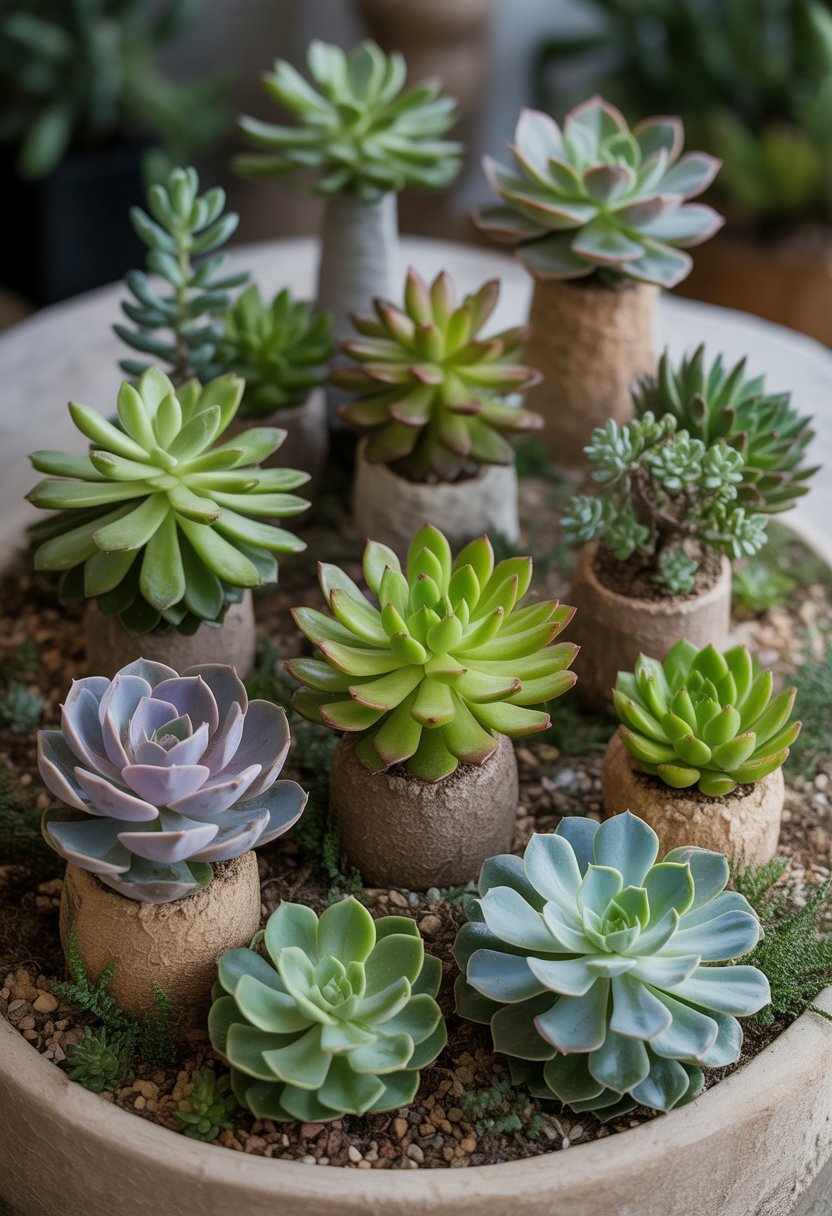
You can create a realistic forest scene in your fairy garden by using succulents that look like trees and bushes. Pick tall, branching succulents for your main trees.
Jade plants work great as miniature trees. Their thick stems and small leaves look like tiny oak trees. You can also use small rosemary or lavender plants.
Place your tallest “trees” in the back of your garden. Put medium-sized succulents in front of them. This creates depth and looks more natural.
Use small, round succulents like hens and chicks for bushes. Group them around the base of your tree succulents. This mimics how shrubs grow under real trees.
Add some trailing succulents like string of pearls. Let them cascade over rocks or the edge of your container. They look like hanging vines or moss.
Create different heights by placing some succulents on small rocks. This makes your fairy forest look more varied and interesting.
Leave small open spaces between your plants. Real forests have clearings and paths where fairies might walk or play.
9) Use vintage teacups or small teapots as planters
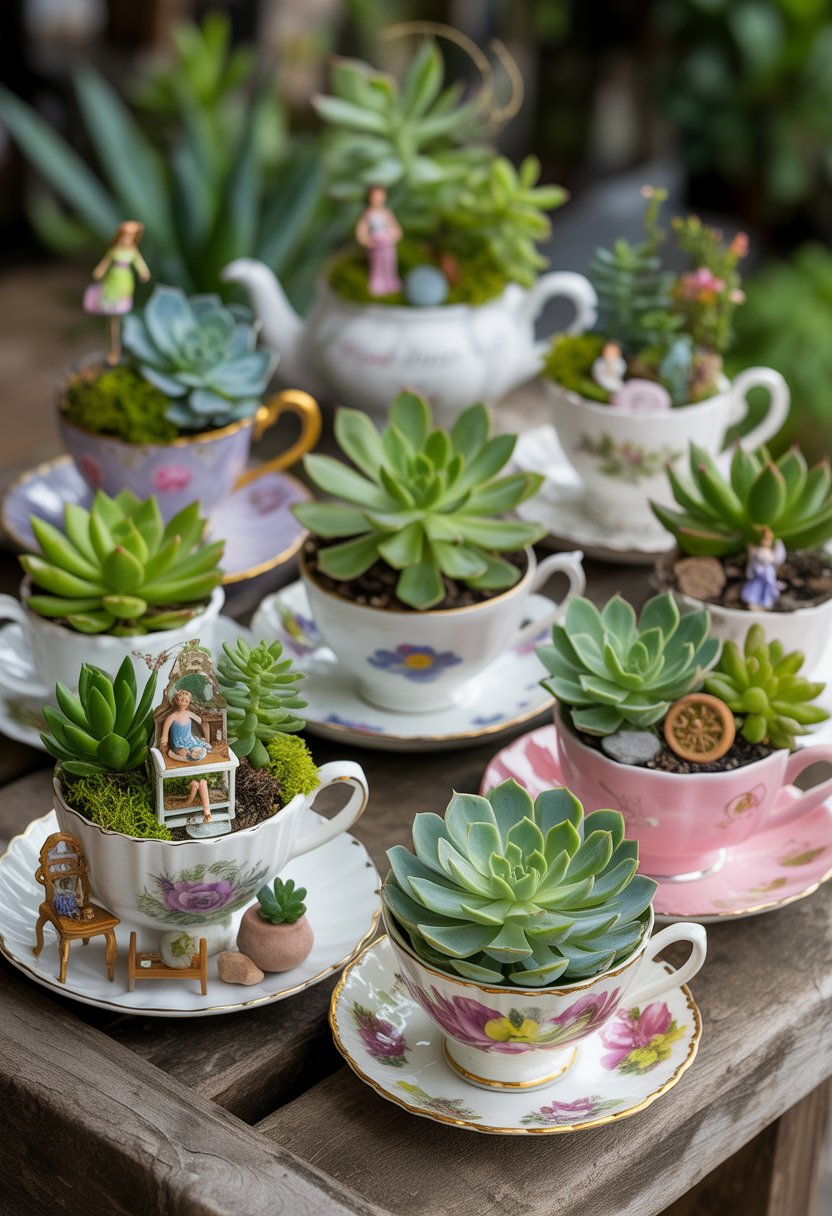
Old teacups and teapots make perfect fairy garden planters. Look for them at thrift stores, flea markets, or in your family’s cupboards.
The pretty designs on vintage china add charm to your succulent display. Floral patterns work especially well for fairy gardens.
You’ll need to drill a small drainage hole in the bottom. This stops water from sitting in the cup and hurting your plants.
Fill your teacup with succulent soil from the garden store. Choose tiny succulents that fit the small space.
Small rosettes work best in teacups. Pick colorful varieties that match or contrast with your cup’s design.
Teapots give you more room for multiple tiny plants. You can create a whole mini scene inside a larger teapot.
Place these on windowsills, shelves, or outdoor tables. The delicate china creates a whimsical fairy garden feel that guests will love.
Clean your vintage pieces well before planting. This gives your succulents the best fresh start in their new home.
10) Provide bright but indirect sunlight
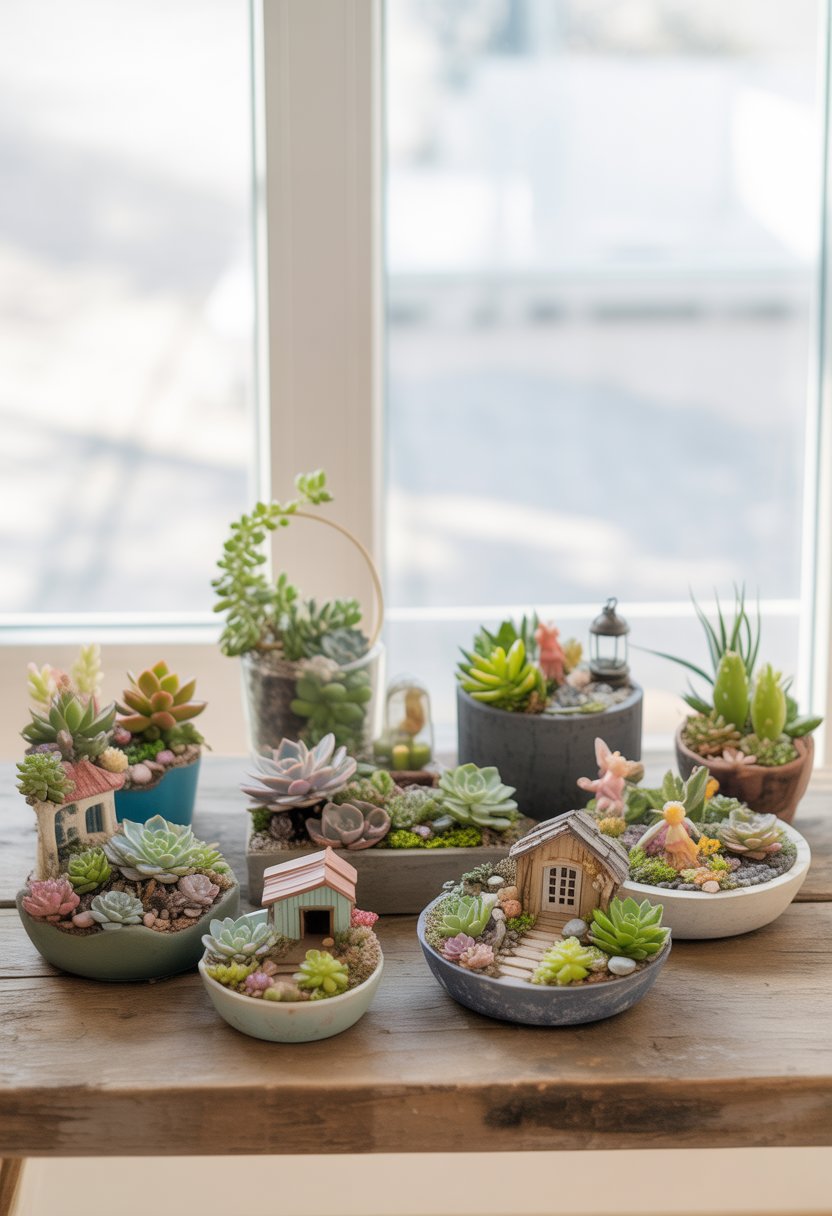
Your succulent fairy garden needs the right amount of light to stay healthy. Most succulents love bright light but can get burned by direct sun.
Place your fairy garden where it gets 4-6 hours of sunlight each day. A spot near a window or on a covered patio works well.
If your garden sits in direct sun for hours, you might need to move it. Too much harsh sunlight can damage the leaves and make them turn brown.
Indoor fairy gardens do best near bright windows. South-facing windows give the most light throughout the day.
You can also use grow lights if your home doesn’t get enough natural light. LED grow lights work well and don’t get too hot.
Watch your succulents for signs they need more or less light. If they stretch out and look pale, they need more light. If the leaves turn red or brown, they might be getting too much direct sun.
Moving your fairy garden around helps you find the perfect spot. Each location in your home or yard gets different amounts of light during the day.
Choosing the Right Succulents for Fairy Gardens
The best fairy garden succulents are small, slow-growing plants with interesting shapes and colors. Pairing different textures and sizes creates a magical miniature world that looks natural.
Best Succulents for Miniature Settings
Echeveria varieties work great in fairy gardens. They form perfect rosettes that look like tiny flowers. Most stay small and come in different colors like blue-green, purple, and pink.
Hens and Chicks (Sempervivum) are perfect for beginners. They grow in tight clusters and produce small babies around the main plant. This creates a natural village feel in your fairy garden.
String of Pearls makes excellent ground cover. The small, round leaves look like tiny beads scattered on the ground. It trails nicely around fairy houses and pathways.
Jade plants work well as miniature trees. Choose young plants or smaller varieties like Crassula ovata ‘Minima’. Their thick stems and small leaves create the perfect fairy-sized tree.
Sedum varieties offer lots of options. Sedum rubrotinctum (Jelly Beans) has plump, colorful leaves. Sedum morganianum (Burro’s Tail) creates beautiful trailing effects.
Baby Toes (Fenestraria) look like tiny succulents poking out of the soil. They add a whimsical touch to any fairy scene.
How to Pair Succulents for Visual Impact
Choose succulents with different heights to create layers. Put taller plants like small jade plants in the back. Place medium-height rosettes in the middle. Use trailing plants in front.
Mix different textures for interest. Combine smooth Echeveria leaves with fuzzy Panda Plant leaves. Add spiky plants next to round, plump succulents.
Pick a color scheme that works together. Try cool colors like blue-green and purple. Or go with warm colors like red, orange, and yellow. Green plants work with any color scheme.
Use the rule of three when placing plants. Group plants in odd numbers like 1, 3, or 5. This looks more natural than even numbers.
Consider growth rates when planting. Put fast-growing plants where they have room to spread. Place slow growers in tight spots where you want them to stay small.
Size matters in fairy gardens. Choose plants that will stay proportional to your decorations. A huge succulent will make tiny fairy houses look silly.
Creative Decoration Tips for Succulent Fairy Gardens
The right decorations turn your succulent garden into a magical world. Small accessories and natural materials create the perfect fairy tale setting.
Incorporating Miniature Accessories
Tiny fairy houses are the heart of any good fairy garden. You can buy ready-made houses or make your own from clay pots and craft supplies.
Small benches and chairs give fairies places to sit and rest. Look for accessories that match your garden’s theme. A beach theme needs tiny umbrellas and shells. A forest theme works well with mushroom houses and wooden signs.
Essential Miniature Items:
- Fairy houses and cottages
- Mini furniture (benches, tables, chairs)
- Tiny garden tools
- Small figurines and animals
- Miniature pathways and stepping stones
- Little bridges and gates
Pathways help connect different areas of your garden. Use tiny pebbles or mini stepping stones to create walking paths. Small tea sets and garden tools add cute details that make the space feel lived-in.
Scale matters when picking accessories. Everything should look right next to your succulents. Items that are too big will make your garden look crowded.
Using Natural Materials for Realistic Effects
Natural materials make your fairy garden look more real and blend better with plants. Small rocks and pebbles work great as pathways or garden borders.
Moss creates the look of tiny grass lawns around fairy houses. You can find moss growing in shady spots or buy it from craft stores. Spray it with water to keep it fresh and green.
Natural Materials to Try:
- Small river rocks for pathways
- Moss for miniature lawns
- Twigs for tiny fences
- Acorns and pinecones for decoration
- Small shells for beach themes
- Bark pieces for rustic elements
Twigs make perfect tiny fences when you break them into small pieces. Acorns and pinecones add forest touches that look natural next to succulents.
Small pieces of driftwood create benches or bridges. Sand works well if you want to make a desert or beach scene. These materials cost less than store-bought items and look more realistic.