Welcome to That Succulents
Welcome, and congratulations on your first succulent. Maybe you bought one on impulse, maybe someone gave you a small pot with a rosette of fat leaves, or maybe you have been planning a windowsill collection for a while. Whichever it was, you are in the right place.
This site covers one subject: keeping succulents healthy indoors, written for people who are new to it. The advice is practical and plain, and it explains the reason behind each step so you can adjust when your home is different from the example.
You do not need a green thumb for this. Most early problems with succulents come from a few causes, mainly too much water and too little light, and you can learn to handle both quickly.
Why indoor succulents are great for beginners
Succulents store water in their leaves and stems, which is why they look plump. That storage lets them tolerate a missed watering far better than a fern or a herb would. If you forget them for a while, they usually cope.
They also suit small spaces. A single pot fits on a desk, a shelf or a windowsill, and many varieties stay compact for years. You can start with one plant and add more when you feel ready.
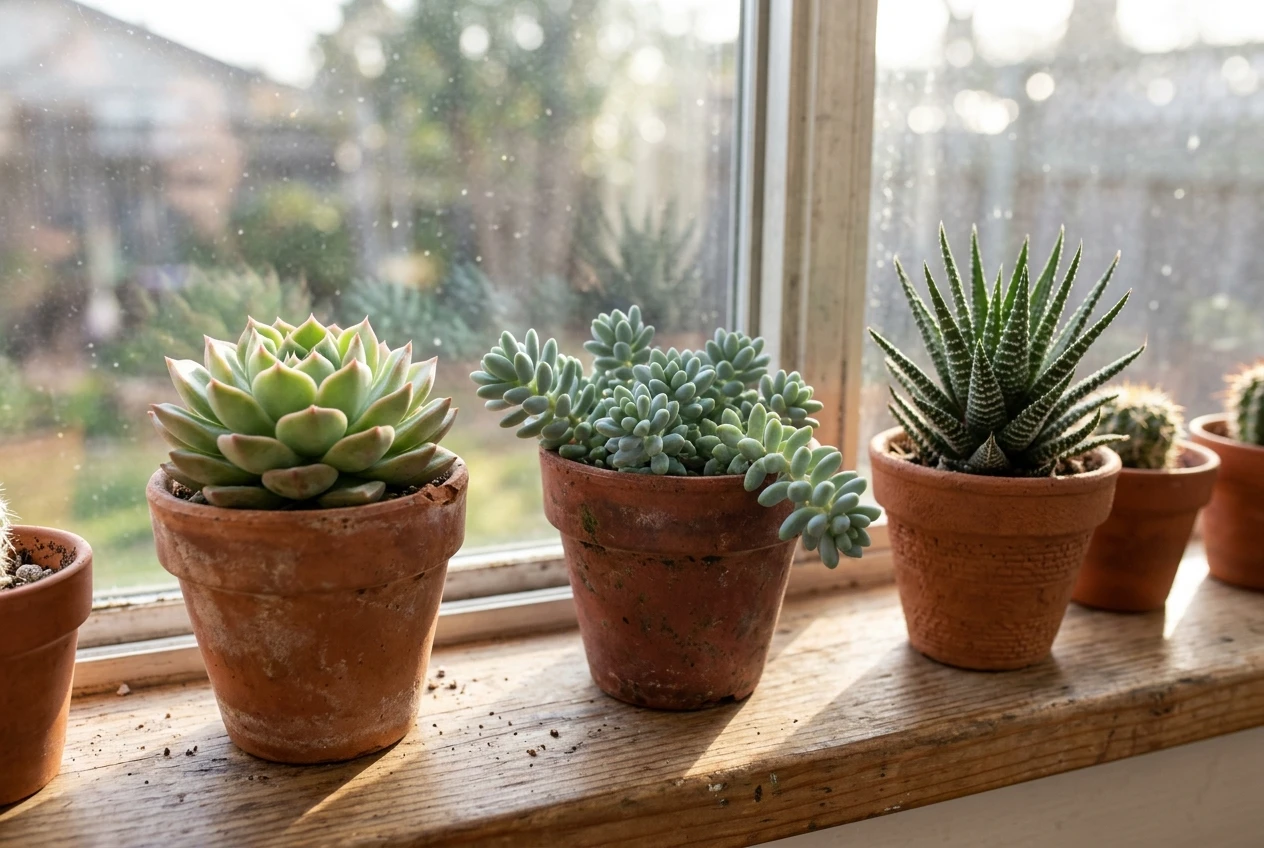
A few other reasons they work well indoors:
- They do not need frequent watering. Checking the soil every so often replaces a daily routine.
- They show you what is wrong. Stretched stems, wrinkled leaves and soft, translucent patches each point to a specific cause, so the plant gives you feedback you can act on.
- They are easy to expand. Many succulents can be propagated from a leaf or a cutting, so one plant can become several.
- They come in a wide range of shapes and colors. You can find one that suits your taste without needing special equipment.
Indoor conditions do ask for some attention. Light is usually weaker inside than outdoors, and a pot without a drainage hole holds water the plant cannot use. Both are easy to fix once you know to look for them.
How to navigate this site for the best advice
Start with the succulent care guides. They cover the basics in the order you will need them: light, soil, pots, watering and what to do when something looks off. If you read them once, you will have a working routine for most common indoor succulents.
If a plant already looks unhealthy, go straight to why your indoor succulent keeps dying. It helps you work out which mistake you made by comparing what you see on the plant with the likely cause, so you fix the right thing instead of guessing.
A few other places are worth knowing about:
- The newsletter sends care advice to your inbox if you prefer to learn a little at a time.
- The contact page is where you can send a question or tell us what you would like to see covered.
- When we recommend products such as pots, soil or grow lights, some links may earn a commission at no extra cost to you. The affiliate disclosure explains how that works.
Recommendations here aim to keep your plants alive. If a product is not necessary, you will be told that.
Getting started with basic care
You can set up a healthy routine with four decisions: where the plant sits, what it is potted in, how you water it and when you check it.
Give it bright light
Succulents want as much light as you can give them indoors. A spot right beside a bright window is usually the best choice. If the plant grows tall and thin with wide gaps between leaves, it is stretching toward a light source and needs more of it.
When a window is not bright enough, a grow light is a reasonable alternative. It is an optional purchase, not a requirement, and many people manage with a good window alone.
Use fast-draining soil and a pot with a drainage hole
Regular potting soil stays wet for a long time, which can rot succulent roots. A cactus and succulent mix drains faster, and you can improve it further by mixing in perlite or pumice. The pot should have a drainage hole so extra water can leave. Terracotta is a common choice because it dries out faster than glazed ceramic or plastic.
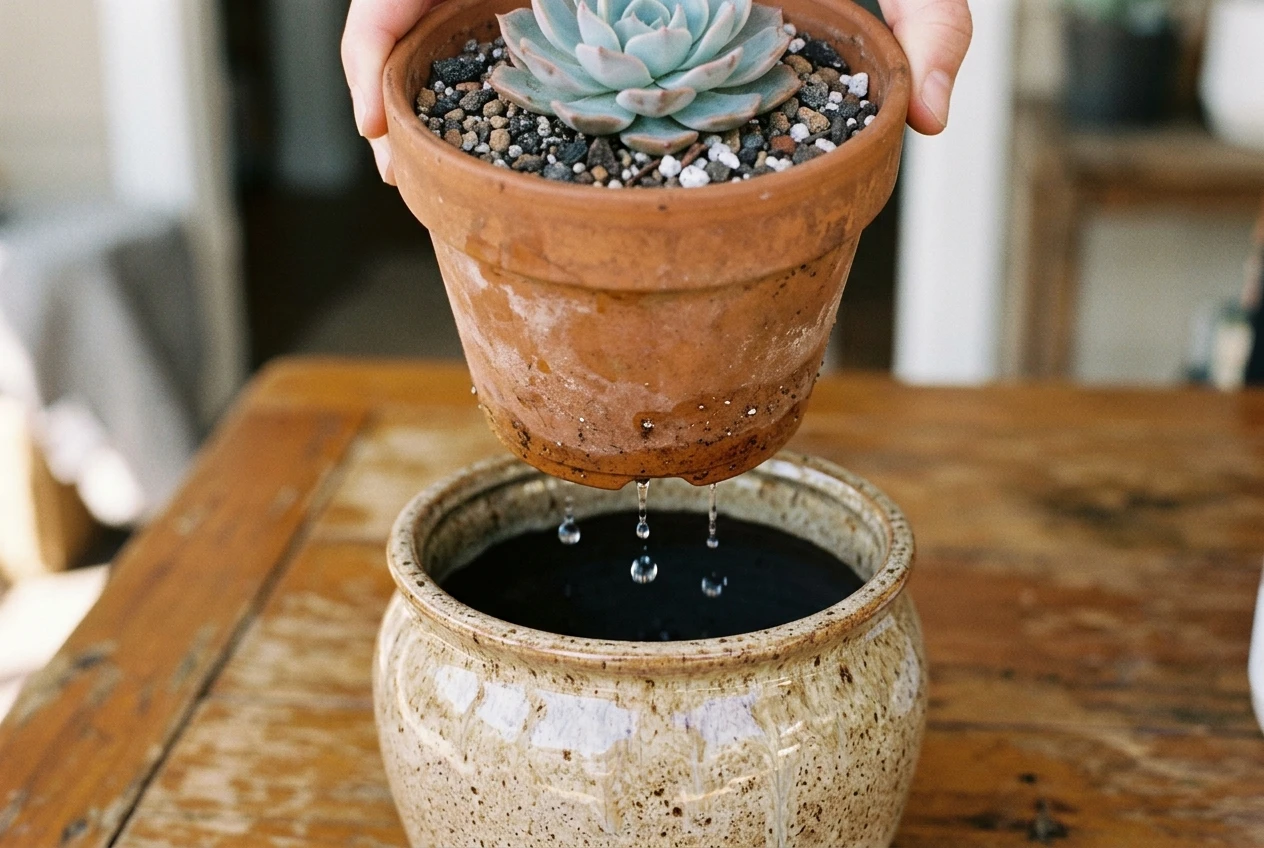
If you love a decorative pot without a hole, you can keep the plant in a plain pot with a hole and set that inside the decorative one. Remove it to water, let it drain fully, then put it back.
Water deeply, then wait
Watering well and then leaving the soil to dry out completely is the pattern that suits most succulents. Pour water onto the soil until it runs out of the bottom, let the pot drain, and do not water again until the soil is dry all the way through. Pushing a finger or a wooden skewer into the soil tells you more than the calendar does.
Plants need less water in cooler, darker months because they grow more slowly, so expect to water less often in winter than in summer.
Learn to read the leaves
The leaves tell you what the plant needs:
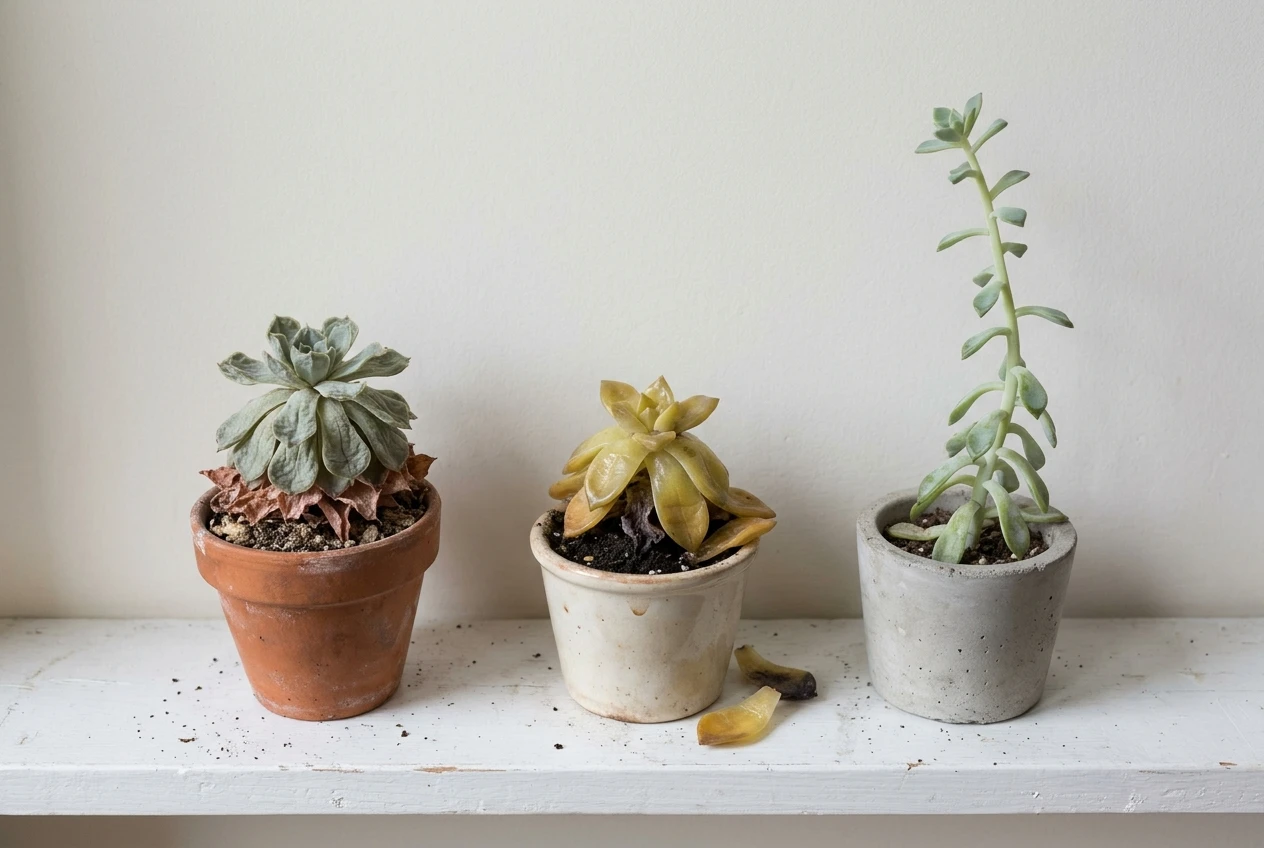
- Wrinkled, deflated leaves usually mean the plant is thirsty. Water it thoroughly.
- Soft, mushy or see-through leaves usually mean too much water. Let the soil dry, and check the roots if the problem continues.
- Stretched, pale growth points to low light. Move the plant closer to a bright window or add a grow light.
Overwatering is the most common mistake among new succulent owners, so when you are unsure, wait another few days before adding water.
Your next step
You now know enough to give your first plant a good start: bright light, a pot with drainage, a gritty soil mix and watering only when the soil is dry. The rest comes with practice, and each plant you keep teaches you something about your home’s conditions.
Explore the succulent care guides to get started.