Succulents are perfect plants for creative container projects because they’re small, easy to care for, and work well in almost any type of pot. Whether you want to add some green to your home or create an outdoor display, the container you choose can make your succulents look even better.
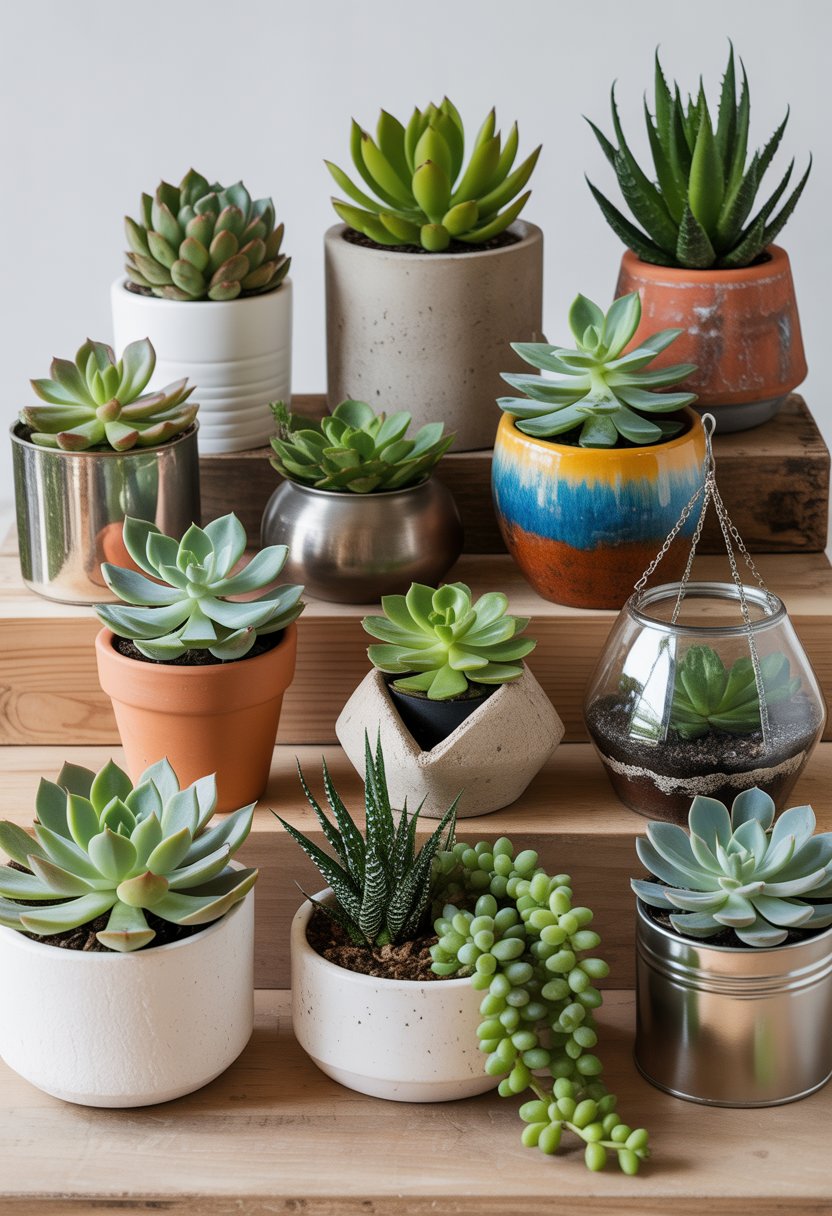
You can turn everyday items like teacups, metal buckets, and even pumpkins into unique succulent planters that show off your style. From vintage finds to handmade pots, there are many ways to display these hardy plants that go beyond basic terra cotta pots.
1) Repurposed Vintage Teacup Planter
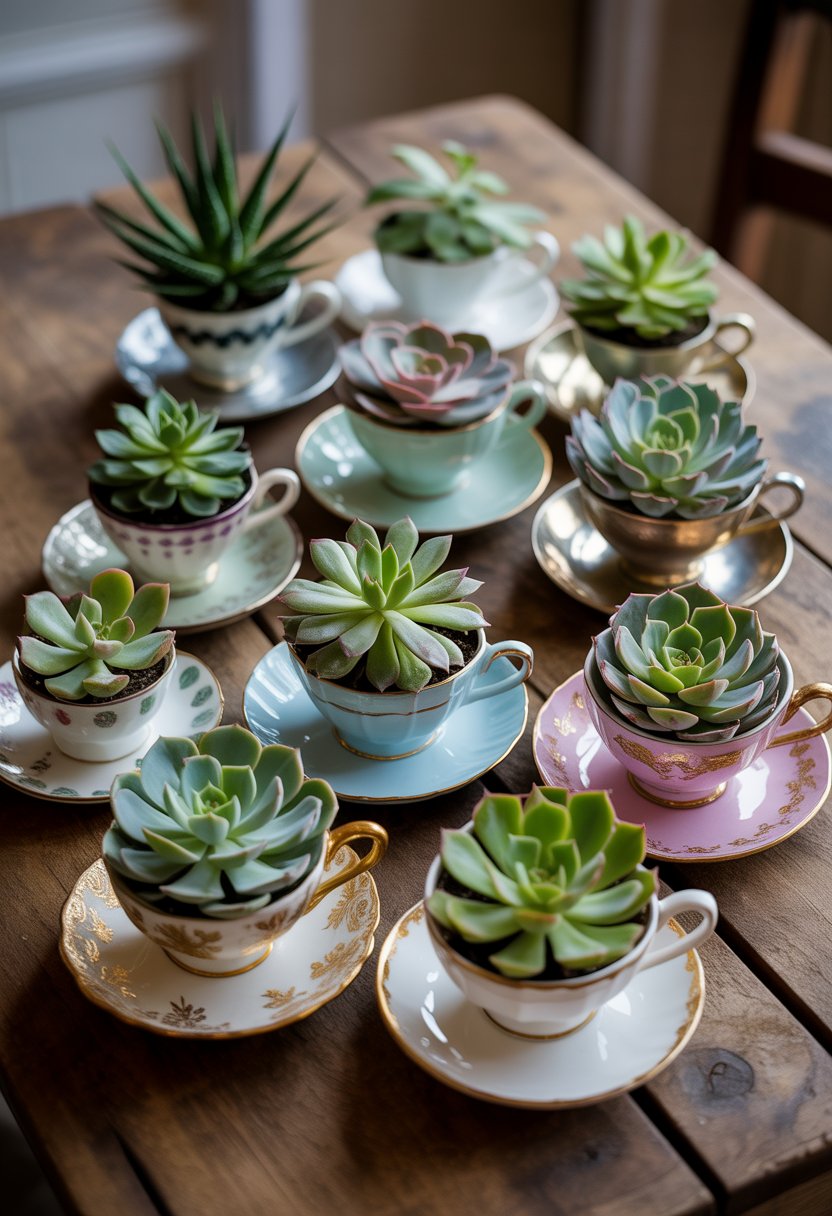
Turn your old teacups into charming succulent planters. These vintage containers are the perfect size for small succulents and add character to any space.
You can find teacups at thrift shops or use ones you already have at home. Look for cups with interesting patterns or colors that match your style.
First, you’ll need to drill a small drainage hole in the bottom of the cup. This prevents water from sitting in the soil and harming your plants.
Fill the teacup with succulent potting mix. This special soil drains well and keeps your plants healthy. Regular potting soil holds too much water for succulents.
Choose small succulent varieties that fit well in the cup. Hens and chicks, jade plants, or small echeveria work great for this project.
Place your teacup planters on windowsills, desks, or shelves. They make great gifts and conversation starters too.
The charm of vintage teacups gives your succulents a unique home. Each cup tells its own story while showing off your plants.
2) Concrete Geometric Pot
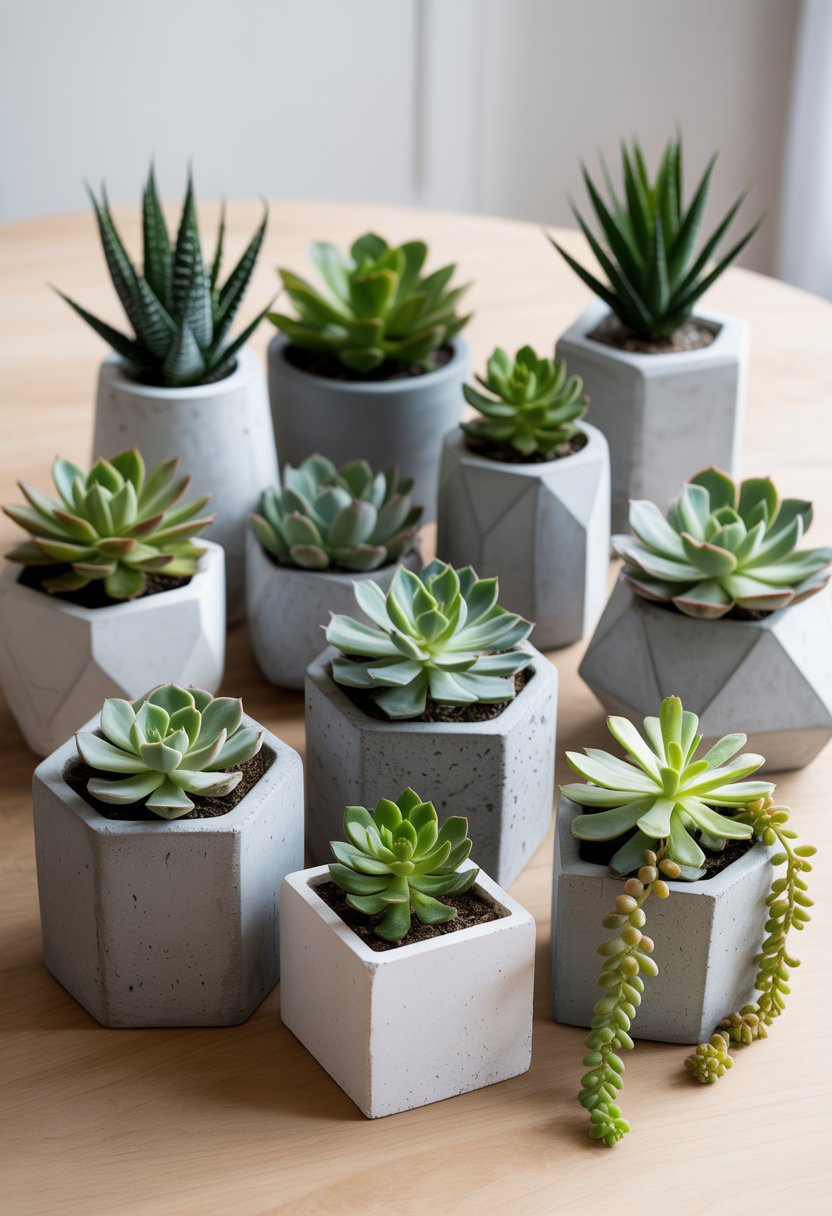
Concrete geometric planters give your succulents a modern look. These angular shapes make great eye-catching pieces for any room.
You can make these planters yourself with concrete mix and molds. Any kind of box works if you don’t have special molds.
The geometric shapes offer endless ways to arrange your plants. You can create new patterns each time you move them around.
These planters work best with small succulents and air plants. The concrete material keeps roots cool and drains water well.
Your friends will ask where you bought these stylish containers. The clean lines and sharp angles look expensive but cost very little to make.
Concrete planters last much longer than plastic pots. They won’t crack or fade in sunlight like other materials.
You can paint concrete planters to match your decor. Leave them natural gray for an industrial look or add color for something fun.
3) Birdcage Succulent Display
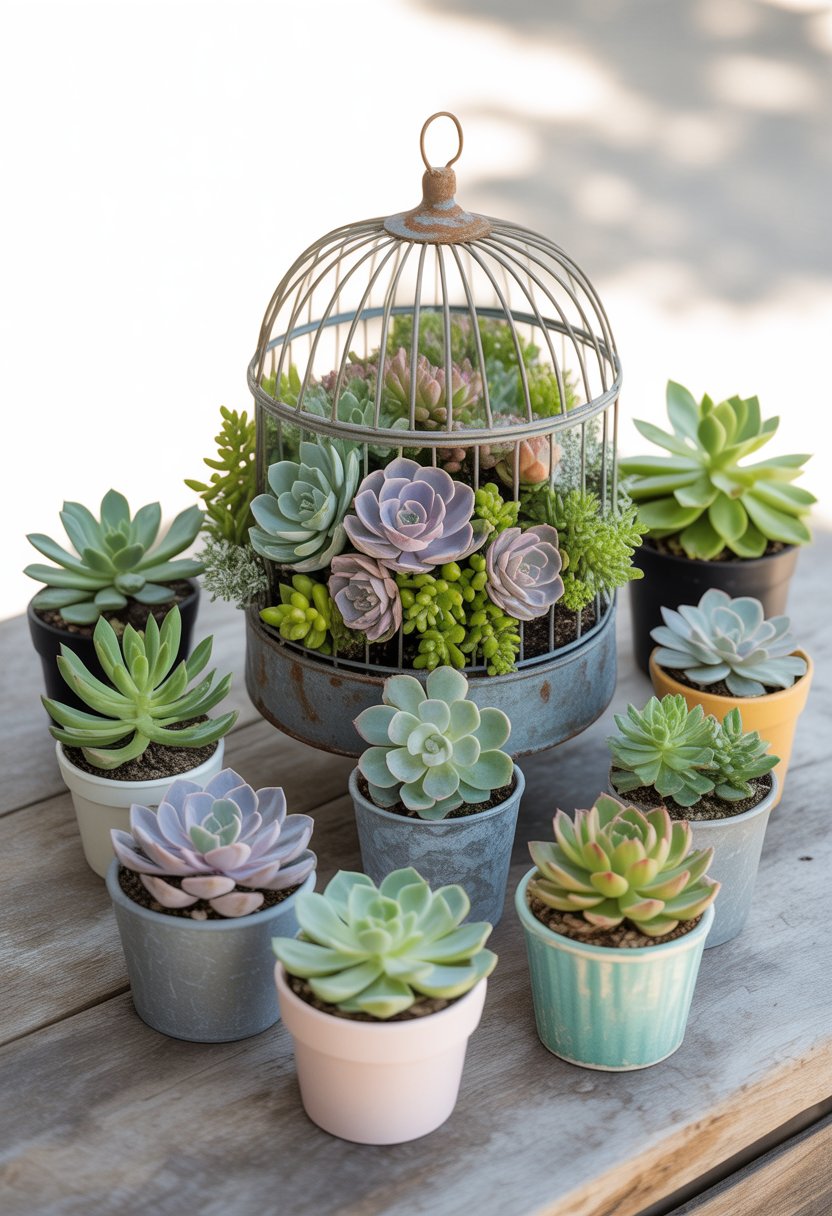
Old birdcages make perfect planters for succulents. You can find vintage cages at thrift stores or use ones you already have at home.
The metal bars let your succulents get plenty of air flow. This helps prevent root rot and keeps plants healthy.
Start by lining the bottom of the cage with moss or landscape fabric. This stops soil from falling through the bars while letting water drain out.
Fill the cage with cactus soil mix. Plant different types of succulents inside for variety. Small succulents work best in most birdcages.
You can hang the cage from a hook or set it on a table. Both ways look great and add charm to any room.
Mix colors and textures by choosing succulents with different leaf shapes. Try combining spiky plants with round, smooth ones.
The contrast between the metal cage and soft plants creates an eye-catching display. Your guests will love this unique planter idea.
4) Colorful Resin Planter
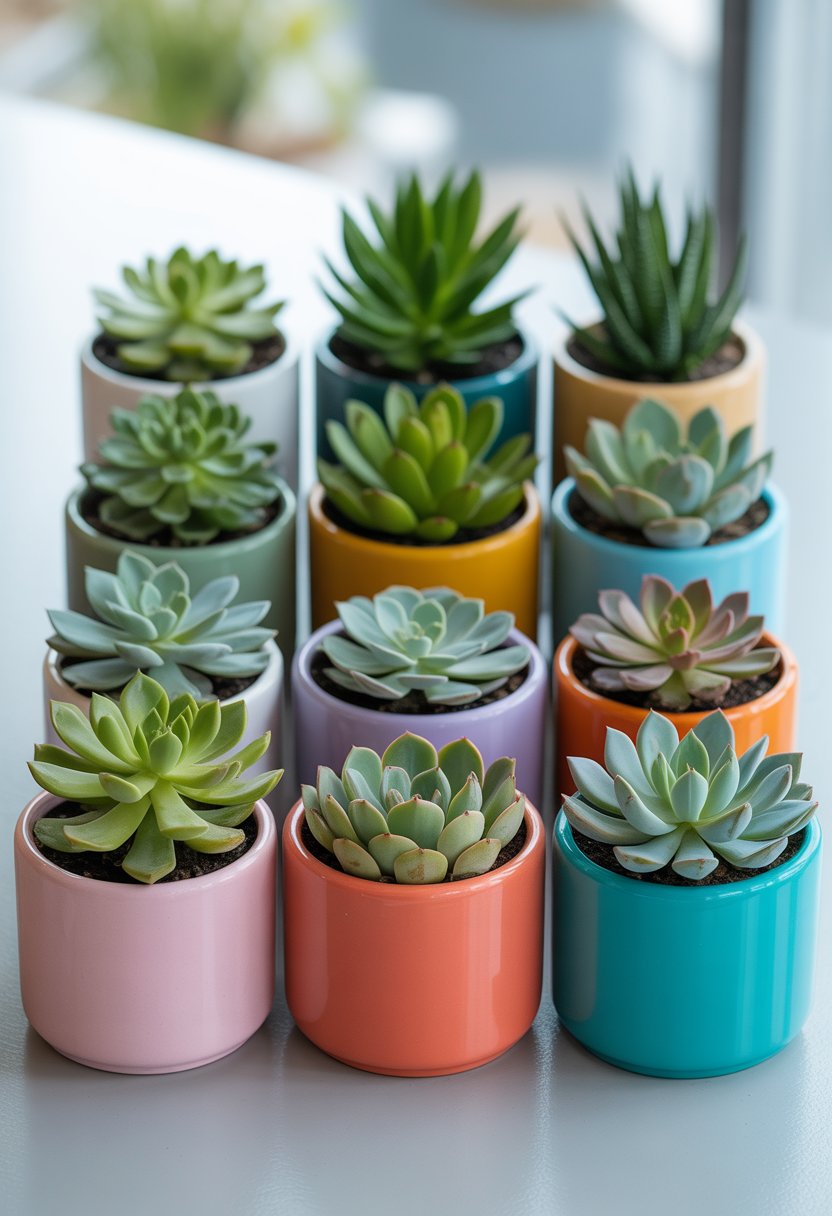
Resin planters bring bold colors to your succulent display. These bright containers make your plants pop with eye-catching shades.
The smooth surface of resin creates a nice contrast with your succulent’s texture. You get a modern look that works well in any space.
Weather-resistant resin handles outdoor conditions easily. Rain and sun won’t damage these sturdy planters.
You can find resin pots in many bright colors. Pick shades that match your garden style or home decor.
These planters are lightweight but strong. Moving them around your space is simple when you want to change things up.
Resin doesn’t crack like clay pots might. Your investment lasts longer with less worry about damage.
The non-porous surface means less water loss through the pot walls. Your succulents stay happy with more consistent soil moisture.
Clean-up is easy with resin planters. A quick wipe removes dirt and dust to keep them looking fresh.
Mix different colored resin pots for a fun display. Group them together or spread them around your garden for splashes of color.
5) Old Pie Tin Garden
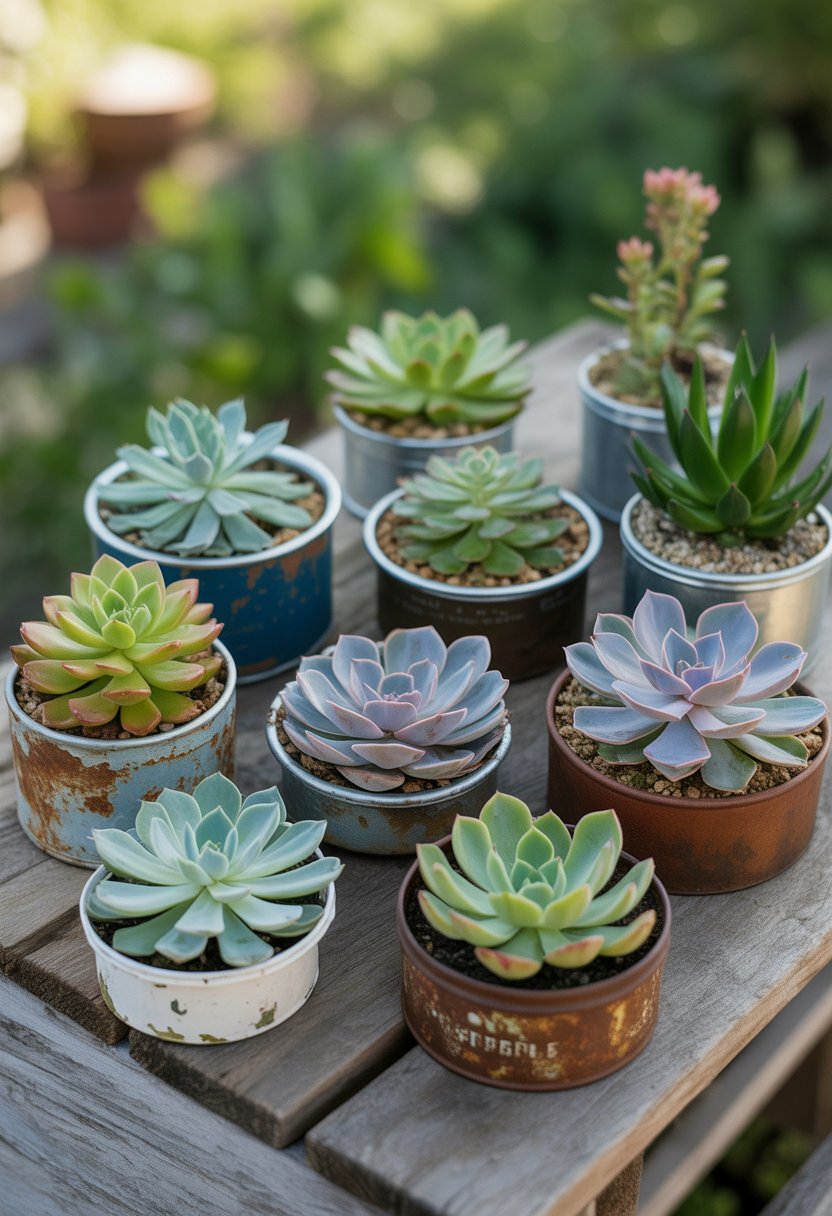
Old pie tins make perfect containers for small succulent gardens. These metal tins are just the right depth for most succulent roots.
You can find pie tins at thrift stores or use ones from your kitchen. The round shape gives you plenty of space to arrange different plants.
Make sure to poke drainage holes in the bottom with a hammer and nail. Without drainage, your succulents will get root rot.
Fill the tin with cactus potting mix or regular soil mixed with sand. Plant your succulents leaving space between each one.
Pie tins work great on windowsills, outdoor steps, or patio tables. You can move them around easily to find the best light.
Try painting the outside of the tin for extra style. Chalk paint or spray paint both work well on metal surfaces.
Group several pie tin gardens together for a bigger display. Mix different succulent types and colors for visual interest.
The vintage look of old pie tins adds charm to any space. This budget-friendly option costs almost nothing but looks amazing.
6) Hand-Painted Terra Cotta Pot
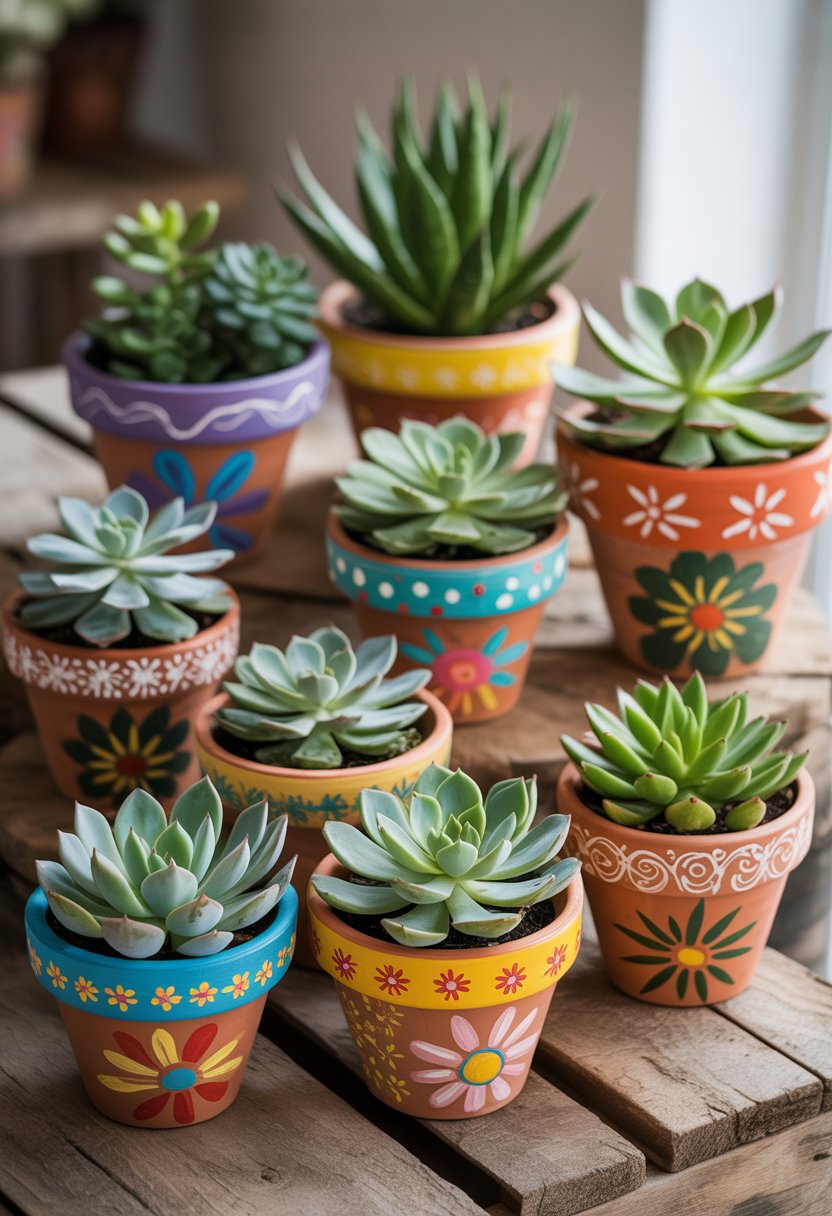
Terra cotta pots give you a blank canvas for your creativity. You can paint them with simple colors or create detailed patterns that match your style.
Start with basic supplies like acrylic paint and brushes. Clean your pot first and let it dry completely before painting.
Try painting geometric shapes like stripes or dots. These patterns look great with small succulents and are easy for beginners.
You can also paint quotes or words on your pots. Use a marker to sketch your design first, then fill it in with paint.
Dip the bottom half of your pot in paint for a simple two-tone look. This technique works well with bright colors that pop against the natural clay.
Consider painting flowers or leaves around the rim. These designs add charm without being too busy for your succulents.
Use chalk paint for a matte finish that looks modern. Regular acrylic paint gives you a shinier surface that’s easier to clean.
Always seal your painted pot with mod podge or another sealer. This protects your artwork from water damage and fading.
Let each coat dry completely between steps. This prevents smudging and helps your design last longer.
7) Rusty Metal Bucket
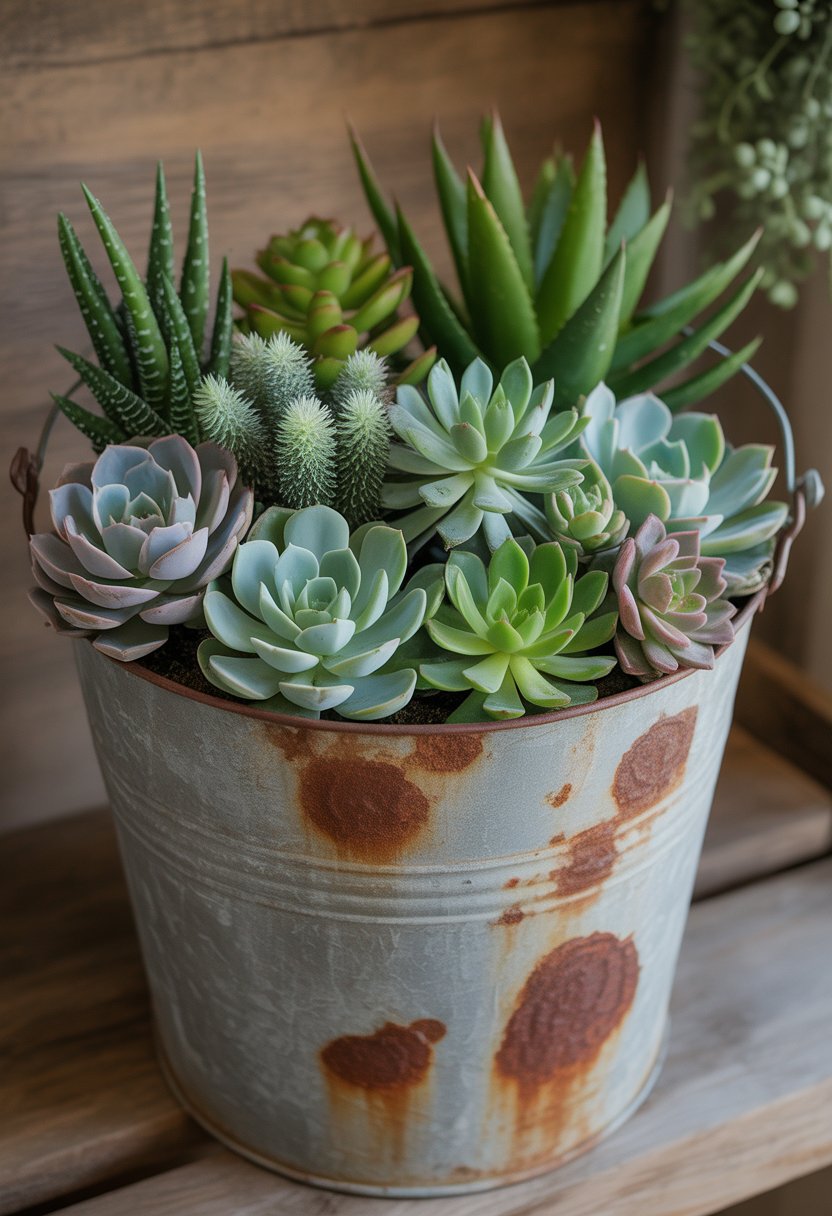
Old rusty buckets make perfect succulent planters. The weathered metal adds a charming vintage look to your garden.
You can find these buckets at thrift stores or use old ones from your garage. The rust creates natural texture and character.
Drill small drainage holes in the bottom if your bucket doesn’t have any. Good drainage keeps your succulents healthy.
Fill the bucket with well-draining cactus soil mix. This prevents root rot in your plants.
Choose hardy succulents like sedum or echeveria. These plants handle different weather conditions well.
The rusty metal pairs beautifully with green and purple succulents. The contrast makes both colors pop.
You can hang your rusty bucket or place it on the ground. Either way works great for displaying your plants.
Add some small rocks on top of the soil for decoration. This gives your planter a finished look.
Rusty buckets work well indoors and outdoors. They bring rustic charm to any space you choose.
8) Miniature Pumpkin Planter
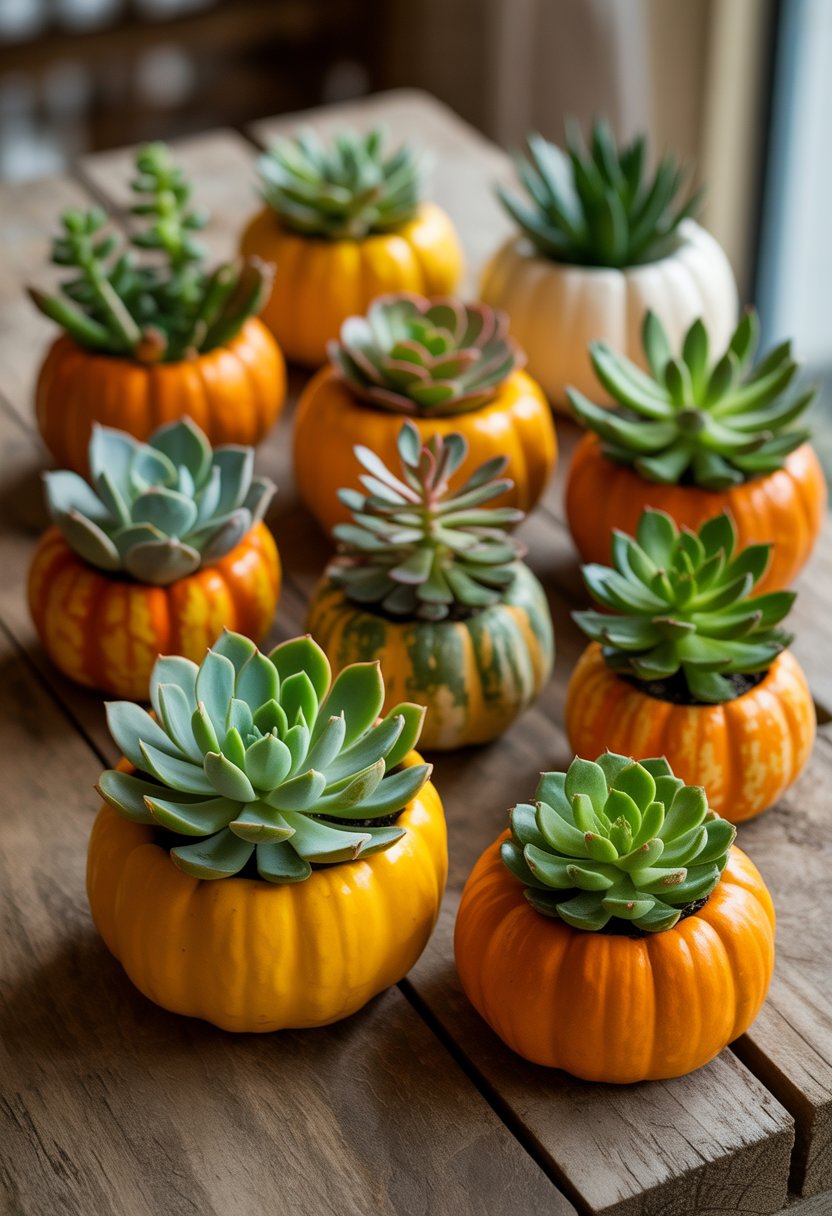
Mini pumpkins make cute fall planters for small succulents. You can find them at most stores during autumn season.
Pick out small white or orange pumpkins that fit in your palm. Make sure they’re firm and don’t have soft spots.
Cut off the top of the pumpkin like you would for carving. Scoop out all the seeds and pulp inside.
Place a plastic bag inside the pumpkin before adding soil. This keeps the soil from touching the pumpkin walls and helps prevent rotting.
Add potting soil and plant your tiny succulents. Small varieties like hens and chicks work best in these mini spaces.
These planters look great on dinner tables or windowsills. You can make several and group them together for a bigger display.
Your guests will love taking home these succulent party favors. They work perfectly for fall parties or Thanksgiving dinner.
When the pumpkin starts to rot, just remove the plastic bag with your plant inside. You can repot your succulent in a regular container.
9) Stacked Succulent Tower
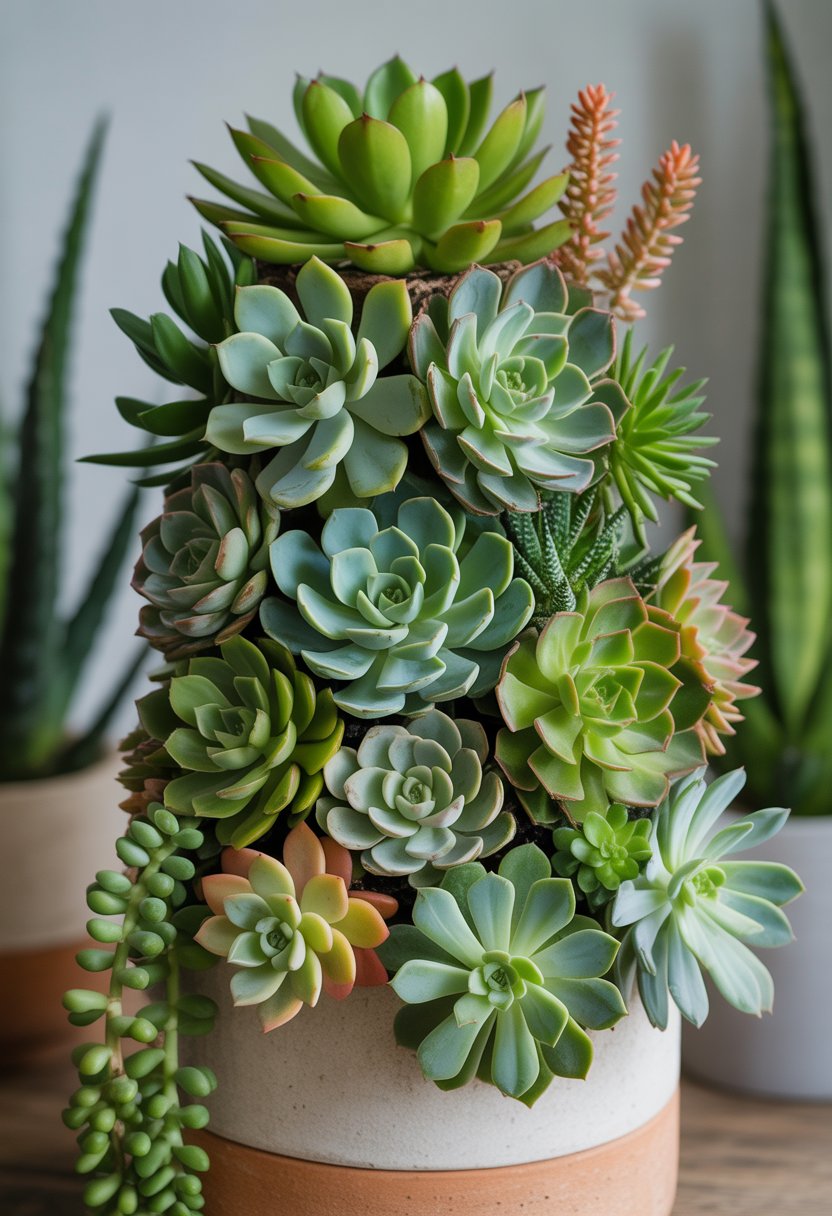
A stacked succulent tower creates a stunning vertical garden that takes up minimal space. You can build this tower by stacking different sized pots on top of each other.
Start with a large pot at the bottom and work your way up with smaller pots. Each pot needs drainage holes to keep your succulents healthy.
Use different succulent varieties in each level. Try echeveria, crassula, and kalanchoe for a colorful mix. String of bananas and calico kitten also work great for cascading effects.
Terracotta or ceramic pots work best for this project. The natural materials help with proper drainage and air flow.
Fill each pot with well-draining succulent soil. This prevents root rot and keeps your plants thriving.
The tower design is perfect if you’re busy and don’t water plants often. Succulents need less water than other plants.
You can place your tower on patios, porches, or indoors near a sunny window. The vertical design adds interest to any space while showing off multiple succulent types in one compact display.
10) Driftwood Planter
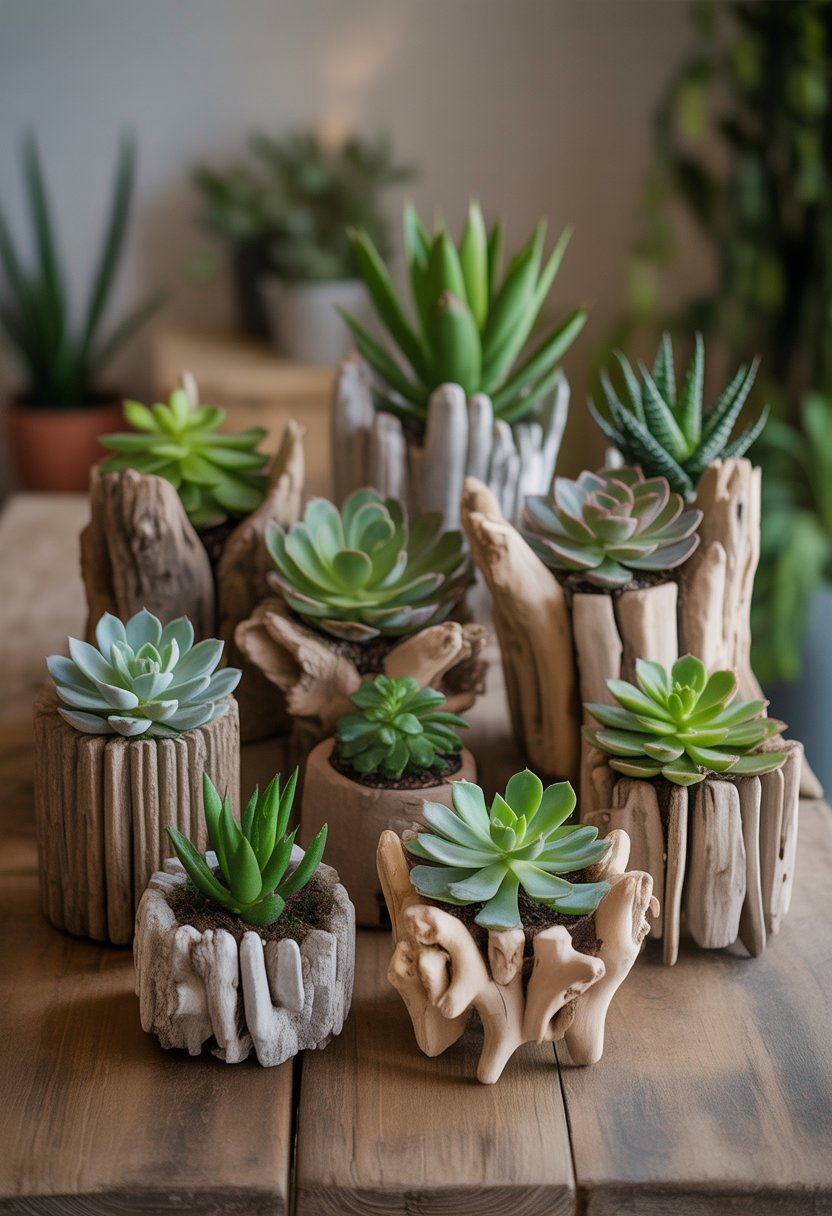
Driftwood planters bring a natural coastal vibe to your succulent display. The weathered wood creates a rustic look that works with any home decor style.
You can find driftwood pieces at beaches or craft stores. Look for pieces with natural holes or hollows where you can place your plants.
The organic shapes of driftwood make each planter unique. No two pieces will look exactly the same, giving your space a one-of-a-kind feel.
These planters work great for small succulents like echeveria or jade plants. The wood’s texture contrasts nicely with the smooth, fleshy leaves.
You can use driftwood planters indoors or outdoors. They’re perfect for patios, living rooms, or as table centerpieces.
The natural drainage in weathered wood helps prevent root rot. Just make sure there are enough holes for water to escape.
Driftwood planters are eco-friendly since you’re using materials from nature. This makes them a sustainable choice for plant lovers who care about the environment.
Choosing The Right Pots For Succulents
Good drainage and proper size are the most important factors when picking succulent containers. The material you choose affects how well water drains and how long your pot lasts.
Pot Material And Drainage
Terracotta and clay pots work best for succulents. These materials let air flow through the walls and help soil dry out faster.
You can also use concrete pots, wooden planters, or woven baskets. These materials breathe well and don’t hold too much water.
Drainage holes are required. Your pot needs holes in the bottom so extra water can escape. Without drainage, your succulent roots will rot.
Avoid plastic and glazed ceramic pots if possible. These materials trap moisture and make it harder for soil to dry out.
If you love a pot without drainage holes, you can drill holes yourself. Use a masonry bit for ceramic or concrete pots.
Size And Space Considerations
Pick a pot that’s slightly bigger than your succulent’s root ball. Too much extra space holds too much water and can cause problems.
Small succulents need pots about 4-6 inches wide. Medium plants work well in 6-8 inch containers. Large succulents need 8+ inch pots.
The pot should be deep enough for roots but not too deep. Most succulents have shallow root systems and don’t need very tall containers.
Leave about 1-2 inches of space around your plant. This gives it room to grow without making the pot too big.
Caring For Succulents In Decorative Containers
Good drainage and proper soil are the most important parts of keeping succulents healthy in containers. Bright light and the right placement will help your plants grow strong and colorful.
Soil And Watering Tips
Use well-draining soil made for succulents or cacti. Regular potting soil holds too much water and can kill your plants.
Make your own mix by combining potting soil with coarse sand and perlite. Use equal parts of each ingredient.
Check for drainage holes in your decorative containers. If there aren’t any, you’ll need to be extra careful with watering.
Water deeply but less often. Wait until the soil is completely dry before watering again.
Pour water slowly until it runs out of the drainage holes. Empty any water that collects in saucers after 30 minutes.
Most succulents need water every 1-2 weeks in summer and every 3-4 weeks in winter. The soil should feel dry when you stick your finger into it.
Light And Placement Advice
Most succulents need at least 6 hours of bright light each day. Place containers near south-facing windows for best results.
If your succulents start stretching or losing their color, they need more light. Move them to a brighter spot.
Rotate your containers every few weeks so all sides get equal light. This keeps plants growing evenly.
Outdoor containers can handle full sun to partial shade. Start with morning sun and gradually move to brighter spots.
Bring outdoor containers inside when temperatures drop below 50°F. Most succulents can’t handle frost.
Keep containers away from heating vents and air conditioners. Sudden temperature changes stress the plants.