Succulent gardens offer a perfect solution for anyone wanting a beautiful outdoor space without the hassle of high-maintenance plants. These hardy plants come in countless shapes, colors, and sizes, making them ideal for creative garden designs that work in any climate.
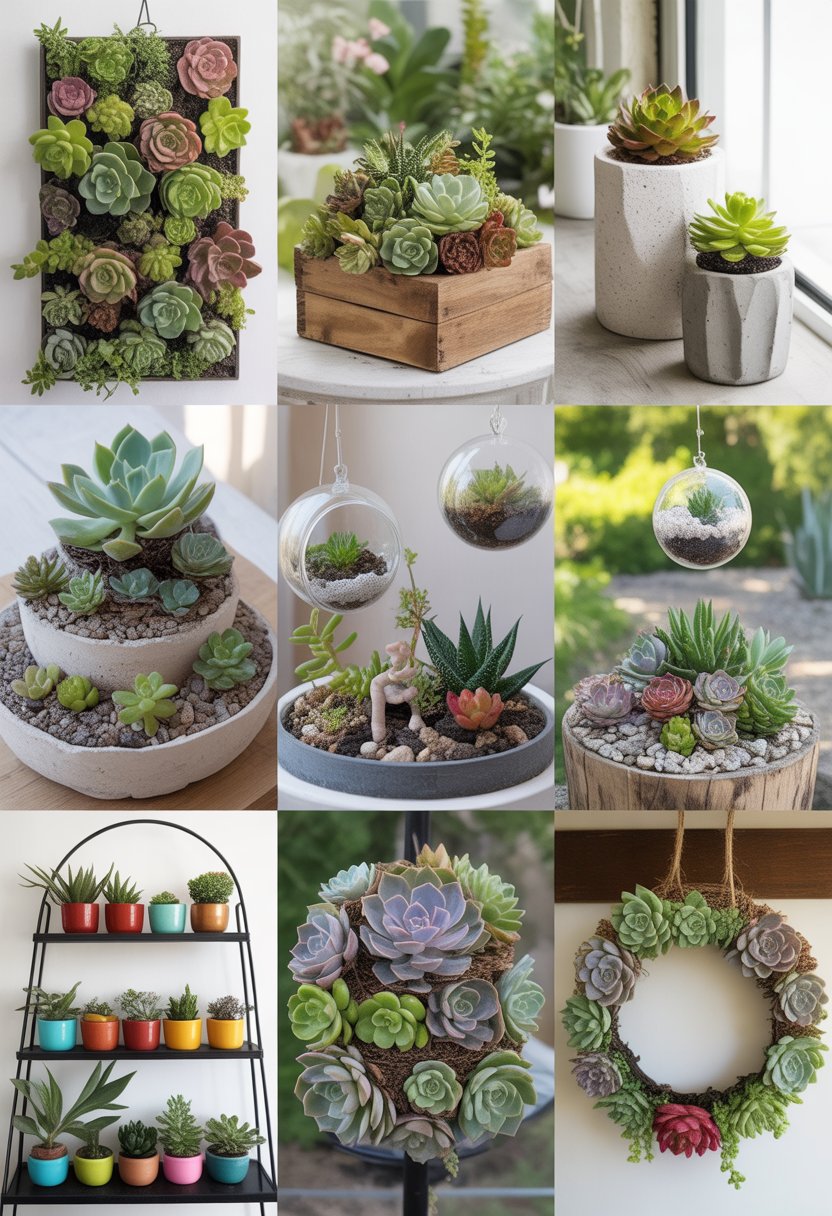
With the right design approach, you can transform any space into a stunning succulent garden that requires minimal water and care while delivering maximum visual impact. Whether you have a large backyard or just a small patio, succulents adapt to your space and style preferences with ease.
1) Create a rock garden base with different-sized stones
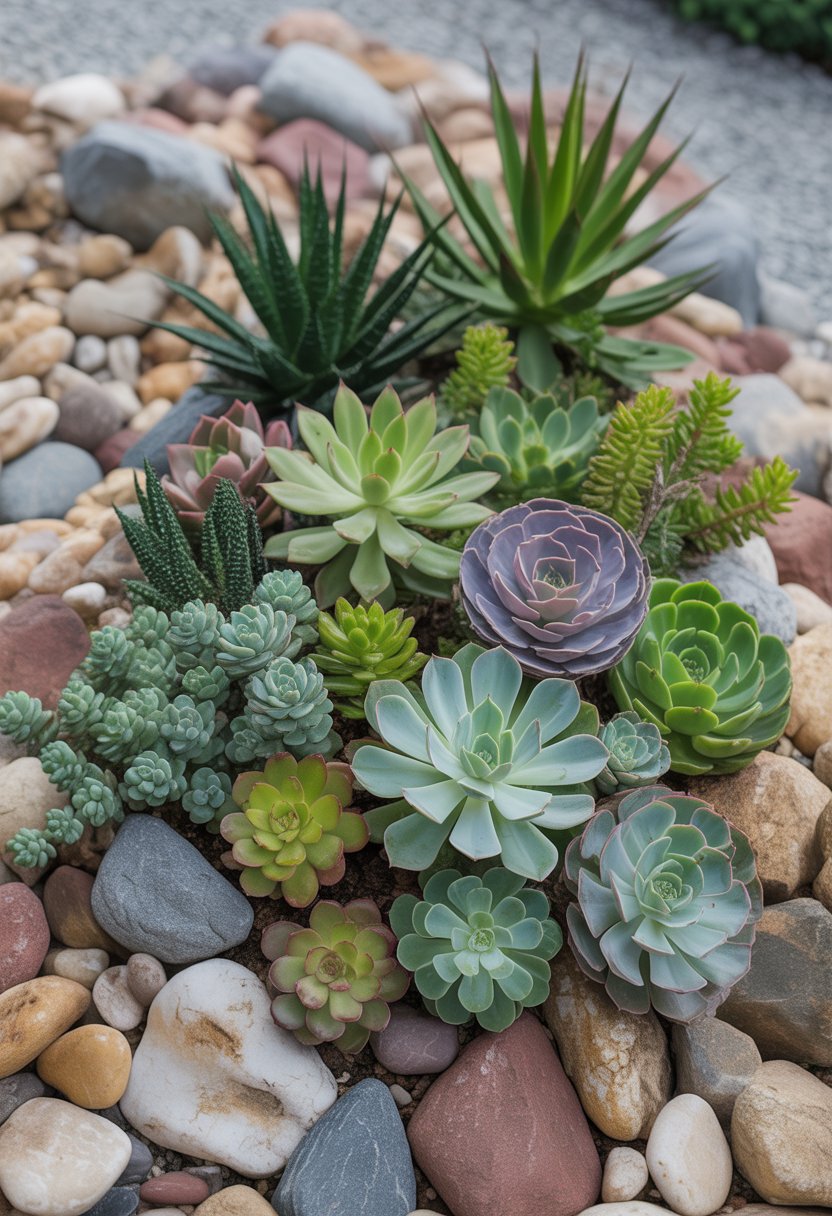
Start your succulent garden by mixing rocks of different sizes. This creates natural texture and visual interest.
Use small pebbles for pathways and filling gaps between plants. Add medium-sized stones around your succulents for accent pieces.
Place large boulders as focal points throughout your garden. These bigger rocks help create natural-looking slopes and terraces.
The different sizes mimic how rocks appear in nature. This variety gives your garden depth and makes it look more realistic.
You can use the larger stones to build raised areas. This helps with drainage, which keeps your succulents healthy.
Small rocks work great as mulch around your plants. They help retain moisture while preventing weeds from growing.
Arrange the stones before planting your succulents. This lets you see how everything looks together and make changes easily.
The mix of sizes also creates different planting pockets. You can tuck smaller succulents between rocks or place larger ones near boulders for contrast.
2) Use a mix of colorful Echeveria varieties
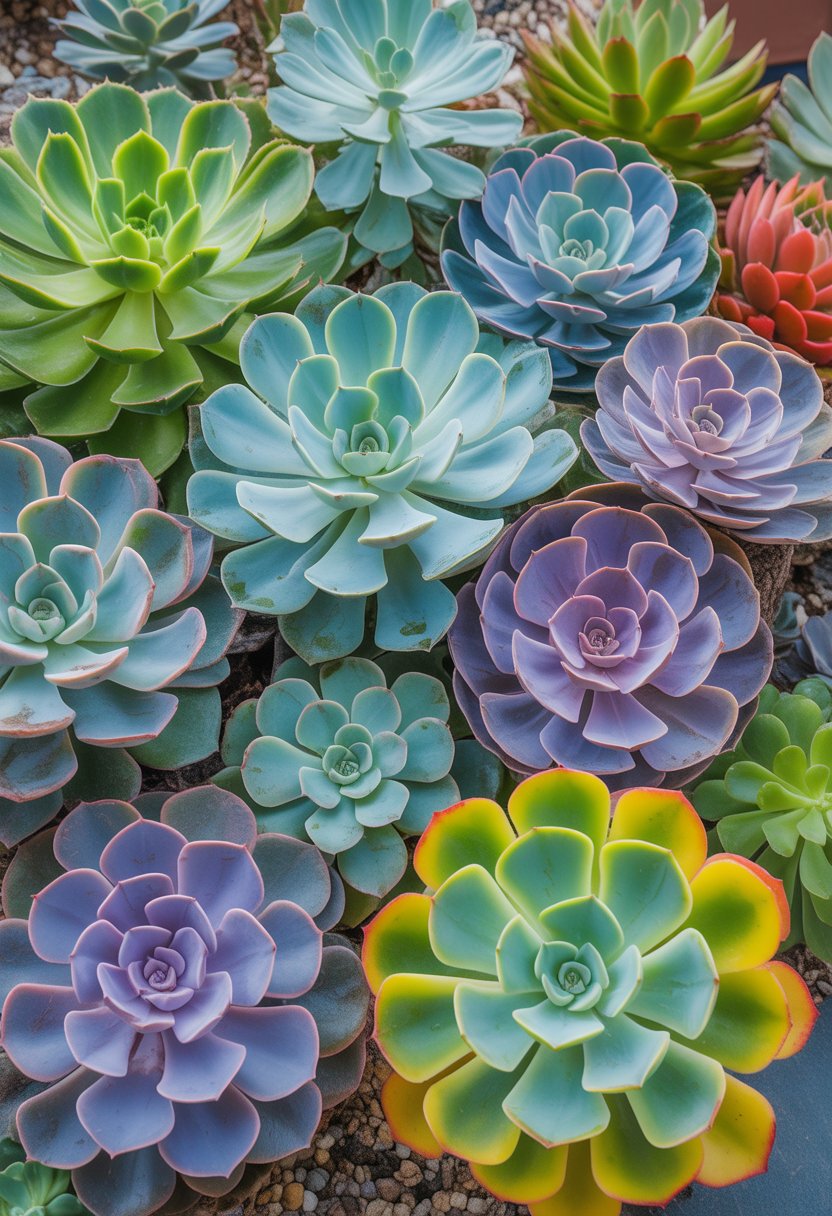
Echeverias come in amazing colors that make any garden pop. You can find them in pink, blue, purple, and green shades.
Try mixing different types together for the best look. Plant Echeveria ‘Perle von Nurnberg’ next to Echeveria ‘Atlantis’ for a nice contrast.
Group them in small clusters rather than spacing them far apart. This creates better color impact and makes your design look planned.
Put your Echeverias in sunny spots to bring out their brightest colors. More sunlight makes the pink and purple tones much stronger.
You can use them as borders along walkways or garden edges. Their rosette shapes create clean lines that look great next to other plants.
Mix taller succulents behind shorter Echeverias to create layers. This helps every plant get enough light while adding depth to your garden.
Try combining them with other drought-loving plants too. Ornamental grasses and small flowering plants work well with colorful Echeverias.
3) Incorporate trailing succulents like String of Pearls
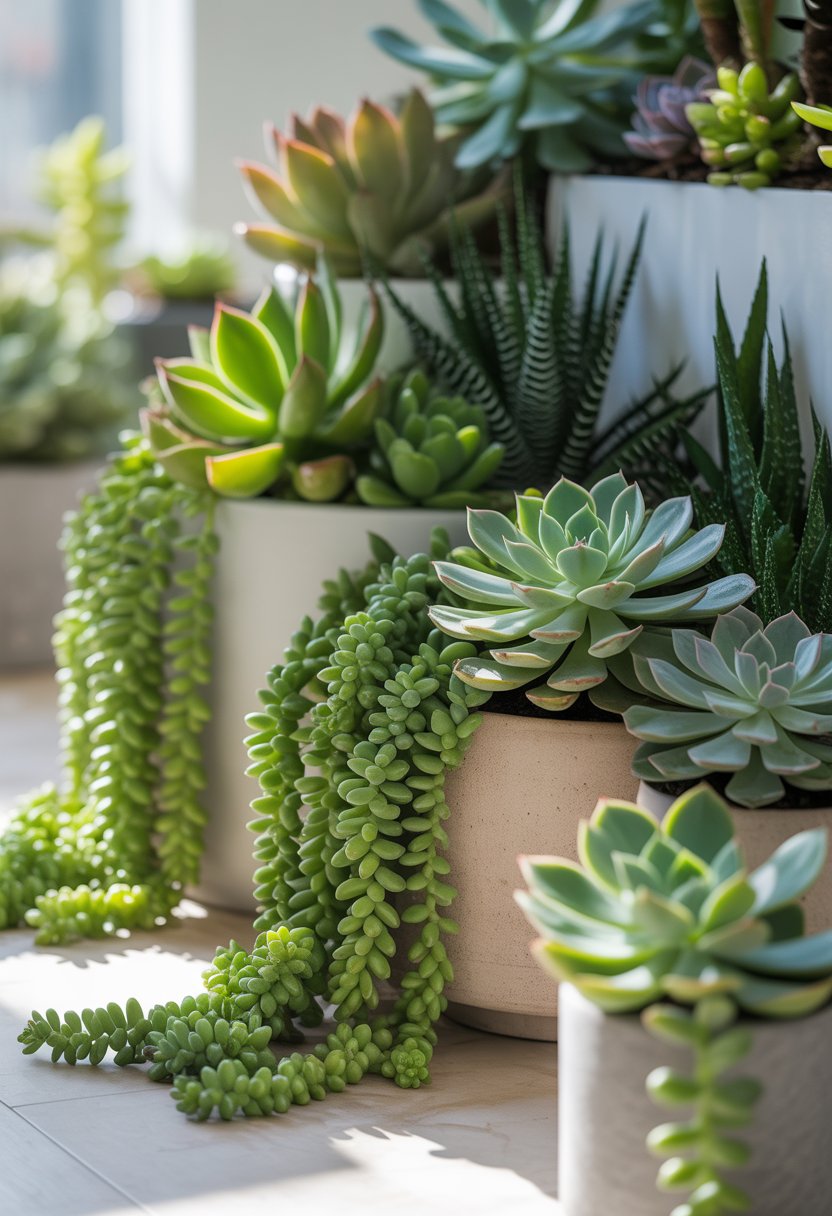
Trailing succulents add movement and flow to your garden design. String of Pearls is one of the most popular choices for this look.
These plants have small, round leaves that look like green beads on a string. The stems cascade down gracefully from containers or shelves.
You can use String of Pearls in hanging baskets on your porch or patio. Let the stems spill over the edges for a soft, flowing effect.
Place them on tall planters or garden walls where they can trail downward. This creates visual interest at different heights in your garden.
String of Pearls works well in bright, indirect light. It needs very little water, making it perfect for busy gardeners.
Try mixing String of Pearls with other trailing varieties like Burro’s Tail. This gives you different textures and colors in one display.
Plant several stems together in one pot for a fuller look. The more stems you use, the more dramatic the cascading effect will be.
These trailing succulents also work great as ground cover in warm climates. They spread naturally along the ground.
4) Build a tiered succulent planter for dimension
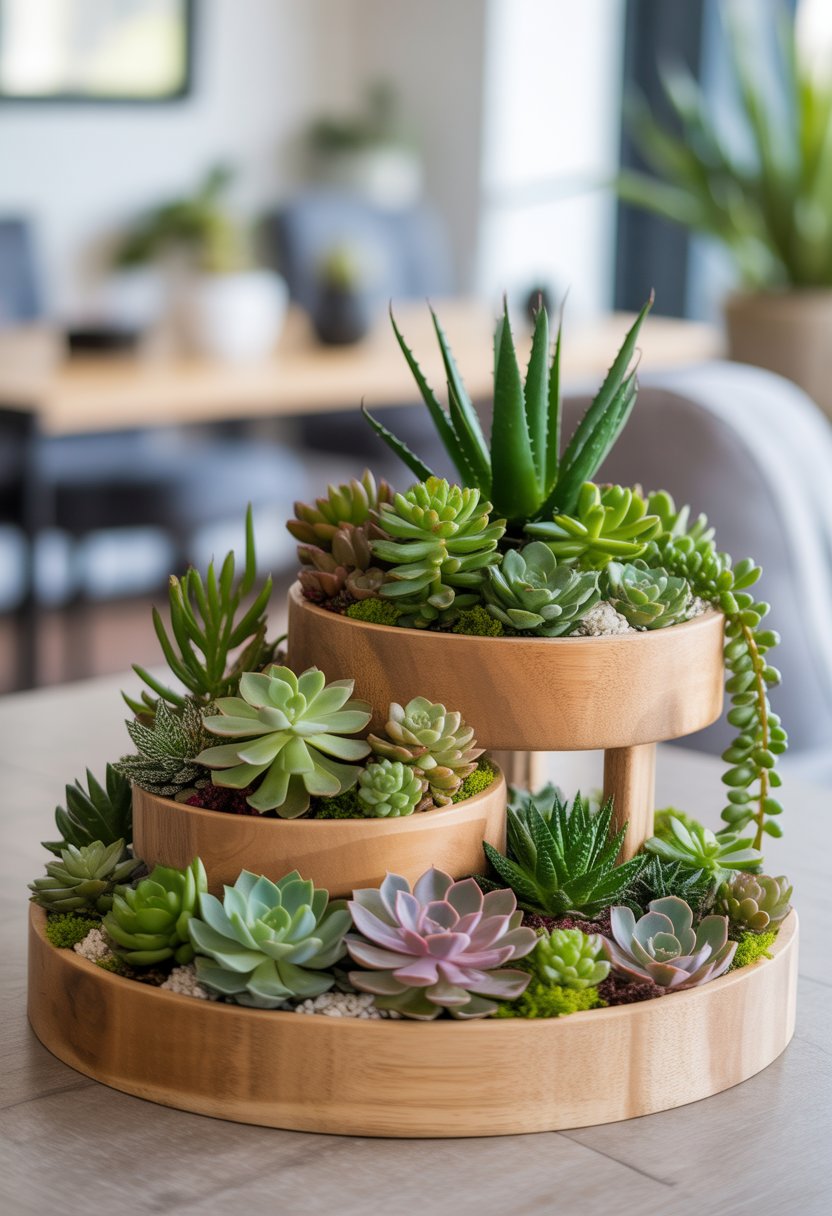
A tiered succulent planter adds height and visual interest to your garden. You can create this look by stacking different sized pots or building a tower structure.
Start with three pots of different sizes. Place the largest pot on the bottom and stack smaller ones on top. This creates natural layers for your plants.
You can use matching terra cotta pots for a clean look. Or mix different colors and materials for more style.
Fill each tier with different types of succulents. Put taller plants in the back and shorter ones in front. This way all your plants get light.
The top tier works well for trailing succulents. They will spill over the edges and soften the hard lines of the pots.
Make sure each pot has drainage holes. Water needs to flow out or your succulents will get root rot.
This design works great on patios, decks, or as a garden centerpiece. The height draws your eye up and makes small spaces look bigger.
5) Add sculptural Aloe plants for height
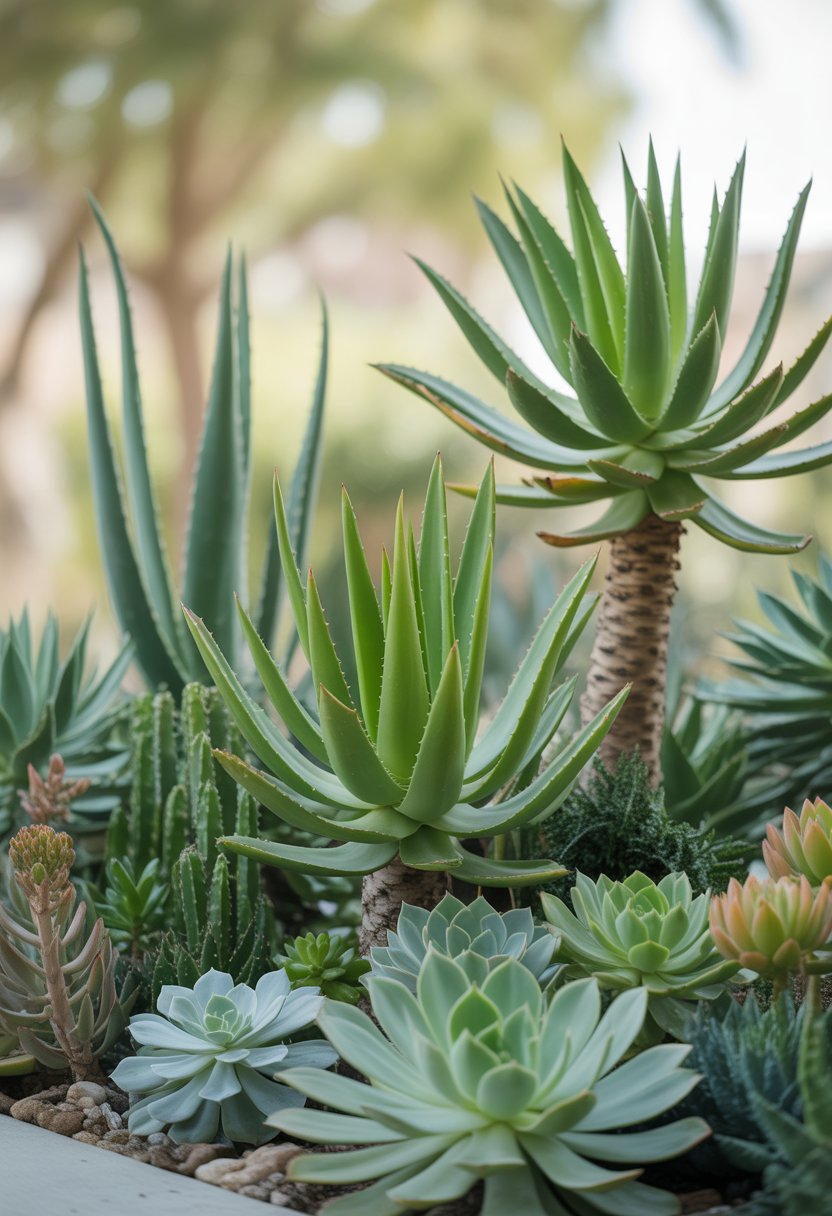
Aloe plants bring vertical interest to your succulent garden. Their tall, spiky leaves reach upward and create natural focal points.
You can use large aloe varieties like Aloe arborescens or Aloe ferox as statement pieces. These plants grow several feet tall and add drama to flat garden beds.
Place your tallest aloe plants toward the back or center of your design. This creates layers and depth in your garden layout.
Mix different aloe sizes for the best effect. Use medium-sized aloes in the middle areas and smaller ones near the edges.
Aloe vera works great for smaller spaces. It grows about 1-2 feet tall and has thick, fleshy leaves that stand out against other succulents.
The rosette shape of aloe plants adds sculptural beauty. Their geometric form looks striking next to round or trailing succulents.
You can group several aloe plants together for more impact. Choose varieties with different leaf colors like green, blue-green, or reddish tones.
Aloe plants thrive in bright, sunny spots with good drainage. They need very little water once established, making them perfect for low-maintenance gardens.
6) Mix textures with spiky Agave and smooth sedums
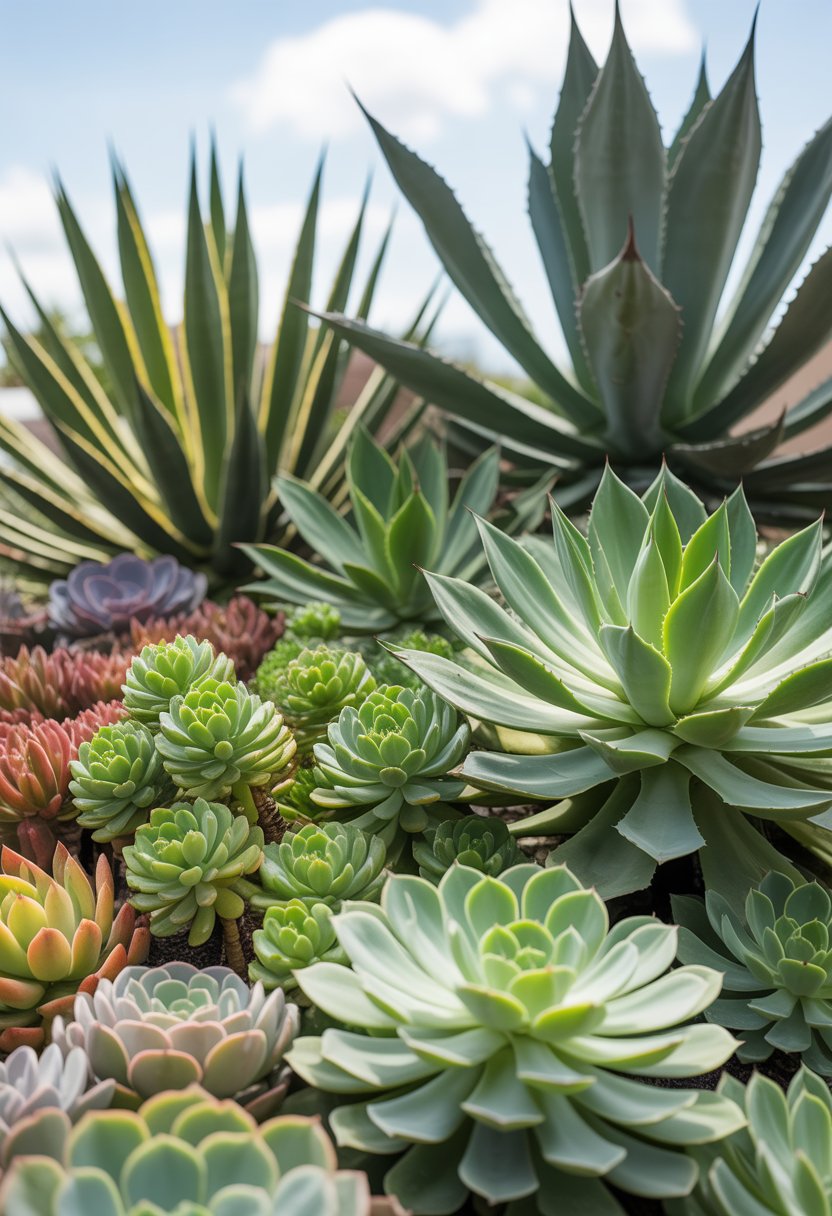
Combining spiky agave with smooth sedums creates amazing contrast in your garden. The sharp, pointed agave leaves look striking next to the soft, rounded sedum shapes.
This mix adds visual interest without much work. You get two very different textures that make each plant stand out more.
Place larger agave plants as focal points first. Then fill in around them with low-growing sedums in different colors and sizes.
Try pairing blue-gray agave with green or purple sedums. The color differences make the texture contrast even stronger.
This combination works great in rock gardens or desert-style landscapes. Both plants need similar care and handle dry conditions well.
Space your plants so each one has room to show off its unique shape. Don’t pack them too tightly together or you’ll lose the textural impact.
7) Use weathered terracotta pots for a rustic vibe
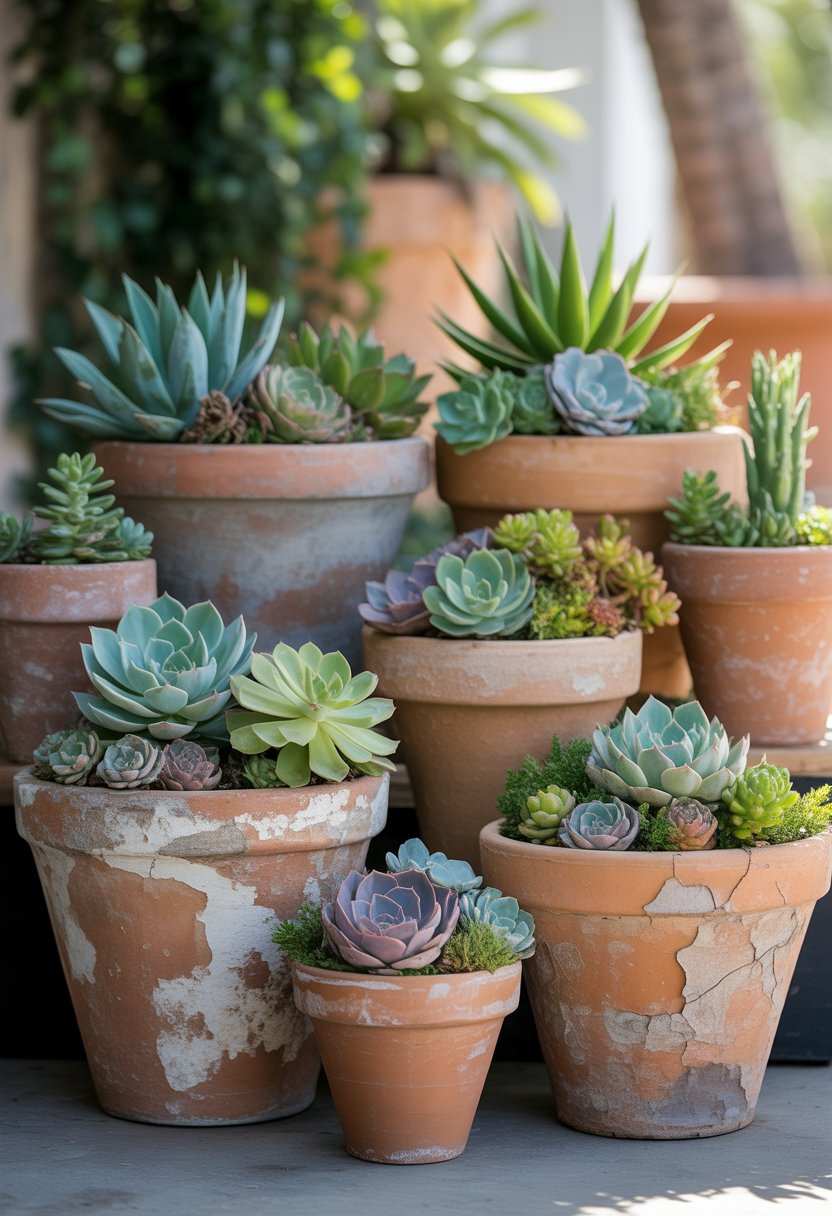
Weathered terracotta pots give your succulent garden an aged, rustic look. The natural clay material adds warmth and earthy tones to your outdoor space.
You can buy pre-aged pots or create your own weathered look at home. New terracotta pots can be easily transformed with simple techniques.
Choose different sized pots to create visual interest. Mix small, medium, and large weathered containers throughout your succulent display.
The rough, aged texture of weathered terracotta pairs perfectly with succulents. These hardy plants complement the natural, rustic appearance of worn clay pots.
Place weathered terracotta pots along garden paths or group them together. This creates a charming focal point in your yard.
The neutral brown and orange tones of aged terracotta work well with any succulent colors. Green, purple, and silver succulents all look great in these rustic containers.
Weathered pots also provide good drainage for succulents. The porous clay material helps prevent water from sitting too long around plant roots.
8) Combine succulents with drought-tolerant grasses
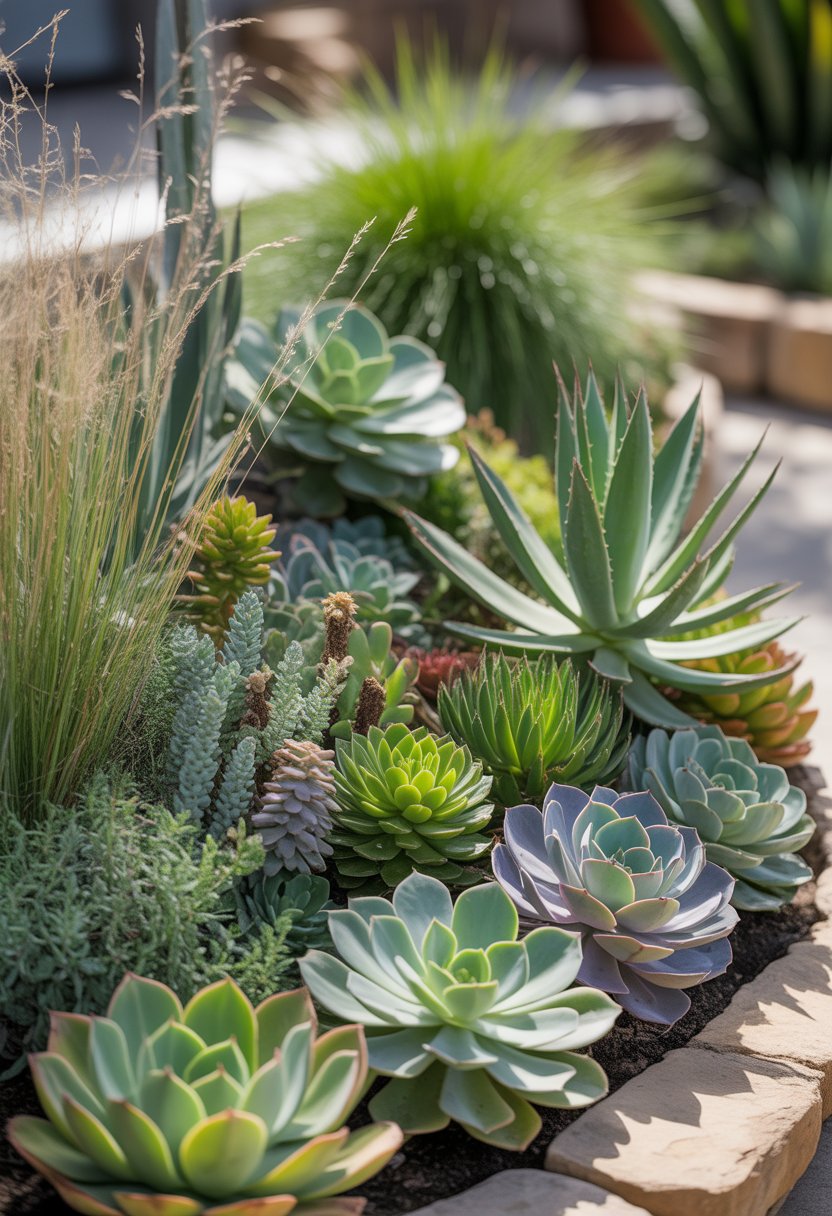
Mixing succulents with ornamental grasses creates stunning contrast in your garden. The soft, flowing texture of grasses pairs beautifully with the bold, structured shapes of succulents.
Choose drought-tolerant grasses that match your succulents’ water needs. Fountain grass, feather grass, and blue fescue work well together.
Plant grasses as backdrop plants behind shorter succulents. This creates depth and visual interest in your garden beds.
You can also use grasses to fill gaps between larger succulent clusters. They add movement when the wind blows through them.
Try planting tall grasses like pampas grass with agave or yucca plants. The combination looks striking and requires little water.
For smaller spaces, use compact grasses with your succulent containers. Ornamental sedges or dwarf fountain grass work perfectly.
The different textures create year-round appeal. Grasses stay interesting even when not flowering, and succulents provide constant structure.
Both plant types thrive in similar conditions. They love full sun and well-draining soil, making maintenance easy for you.
9) Design a minimalist succulent centerpiece for patios
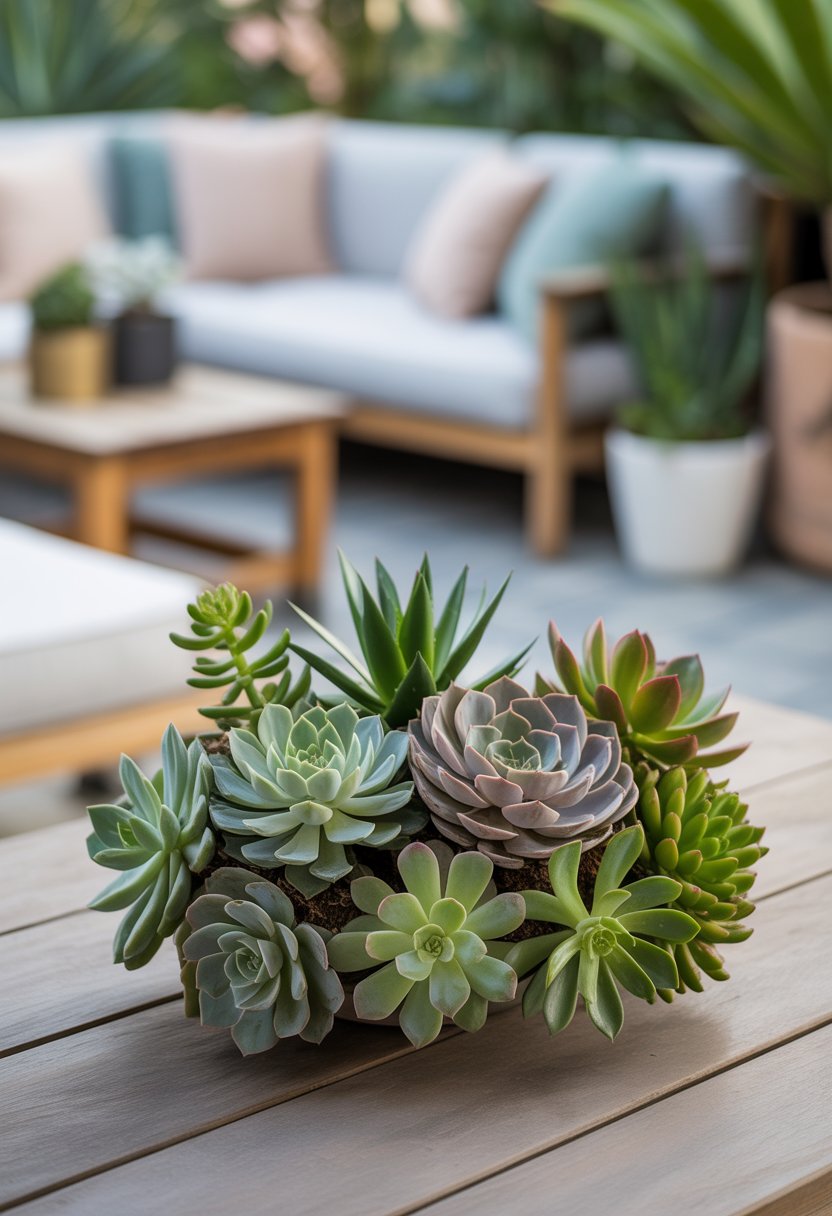
A simple succulent centerpiece can transform your patio into a calm space. Choose three matching containers in neutral colors like white, gray, or black.
Pick succulents with similar shapes but different sizes. Small rosette varieties work well together. Stick to two or three types to keep the look clean.
Arrange your containers in a triangle or straight line on your patio table. This creates balance without looking too busy.
Use succulents in soft colors like green, blue-green, or pale purple. Avoid bright reds or oranges for a true minimalist feel.
Add small white stones or sand around each plant. This gives your centerpiece a finished look and helps with drainage.
Keep spacing even between containers. Too much clutter breaks the minimalist style you want to achieve.
Choose low-growing succulents so people can see across the table. Hen and chicks or small echeveria work perfectly.
Your centerpiece should feel peaceful and simple. Less is more when creating this type of design for your patio space.
10) Plant succulents in creative containers like old wheelbarrows
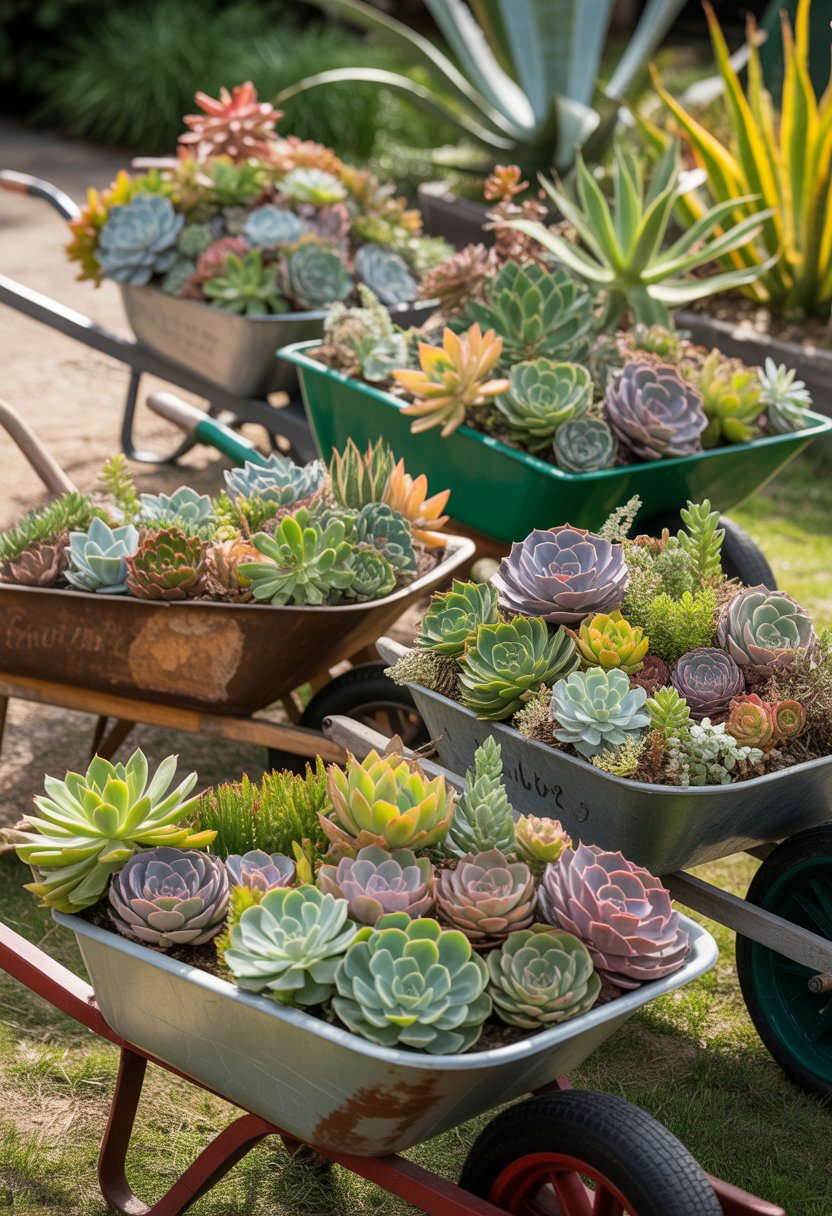
Old wheelbarrows make perfect planters for your succulent garden. These containers add rustic charm to any outdoor space.
You can find wheelbarrows at flea markets, antique shops, or garage sales. Look for ones with interesting wear patterns or unique colors.
The drainage in wheelbarrows works well for succulents. Most have small holes or rust spots that let excess water escape.
Fill your wheelbarrow with a mix of different succulent varieties. Try combining tall and short plants for visual interest.
Place your wheelbarrow planter on gravel, concrete pavers, or directly on the ground. You can move it around your garden as needed.
For a modern look, use a sleek metal wheelbarrow with architectural succulents. Ornamental grasses can add height and texture.
The large size of wheelbarrows lets you create a mini succulent landscape. Add small decorative rocks or sand between plants.
Your wheelbarrow garden needs the same care as other succulent containers. Water only when the soil feels dry.
How To Choose The Right Succulents
The secret to a great succulent garden lies in picking plants that match your space and work well together. Focus on understanding what light and weather your area gets, then mix different colors and textures for the best look.
Understanding Light and Climate Needs
Your climate and light conditions determine which succulents will thrive in your garden. Most succulents need at least 6 hours of sunlight daily to maintain their shape and color.
Check your local weather patterns before choosing plants. Some succulents handle cold better than others. Sedum varieties can survive freezing temperatures, while tropical types like Echeveria need protection from frost.
Cold-Hardy Options:
- Sedum varieties
- Hens and Chicks (Sempervivum)
- Stonecrop
Heat-Loving Choices:
- Agave
- Jade plants
- Aloe vera
Consider your garden’s sun exposure throughout the day. Full sun areas work great for most succulents. Partial shade spots need different varieties that won’t stretch or lose color in lower light.
Mixing Colors and Textures
Smart color and texture combinations create visual interest without looking messy. Start with one main color as your base, then add accent colors that complement it.
Green succulents work as great foundation plants. Add purple, red, or blue varieties for contrast. Silver and gray plants help tie different colors together.
Texture Combinations That Work:
- Smooth jade plants with spiky agave
- Rosette-shaped Echeveria with trailing Sedum
- Round barrel cacti with flat paddle plants
Plan your layout with larger plants as focal points. Arrange medium-sized rosette succulents around them. Fill in gaps with smaller, spreading varieties.
Avoid putting too many bold colors together. Three main colors usually work better than five or six competing shades.
Design Essentials For Succulent Gardens
Getting the basics right makes the difference between a thriving succulent garden and one that struggles. Proper drainage and smart planting choices form the foundation of any successful design.
Soil and Drainage Tips
Succulents hate wet feet more than anything else. Regular garden soil holds too much water and will kill your plants fast.
You need well-draining soil that lets water flow through quickly. Mix regular potting soil with coarse sand, perlite, or pumice. A good ratio is 50% potting soil and 50% drainage materials.
Cactus and succulent soil mix from the store works great too. It’s already made with the right ingredients. Just check that it feels gritty, not smooth like regular dirt.
Test your drainage by watering a small area. The water should soak in within a few minutes, not sit on top. If it pools, add more sand or perlite to improve the mix.
Never use clay soil for succulents. It holds water too long and causes root rot. Even sandy soil might need extra drainage materials mixed in.
Container Versus In-Ground Planting
Containers give you more control over soil and drainage. You can move plants around and bring tender varieties indoors when it gets cold.
Use pots with drainage holes in the bottom. Add a layer of small rocks or gravel before adding soil. This helps water flow out faster.
In-ground planting works well in dry climates with good natural drainage. You’ll need to improve heavy soils by mixing in sand and gravel. Raised beds make this easier and give better drainage than planting at ground level.
Container plants dry out faster and need more frequent watering. In-ground succulents develop deeper roots and handle drought better once established.
Choose containers based on your plant size. Small succulents do fine in shallow pots, while larger varieties need deeper containers for their root systems.