Succulents are some of the easiest plants to grow and care for. They work great in any room of your home or outside in your garden. The best part is that you can plant them in almost anything.
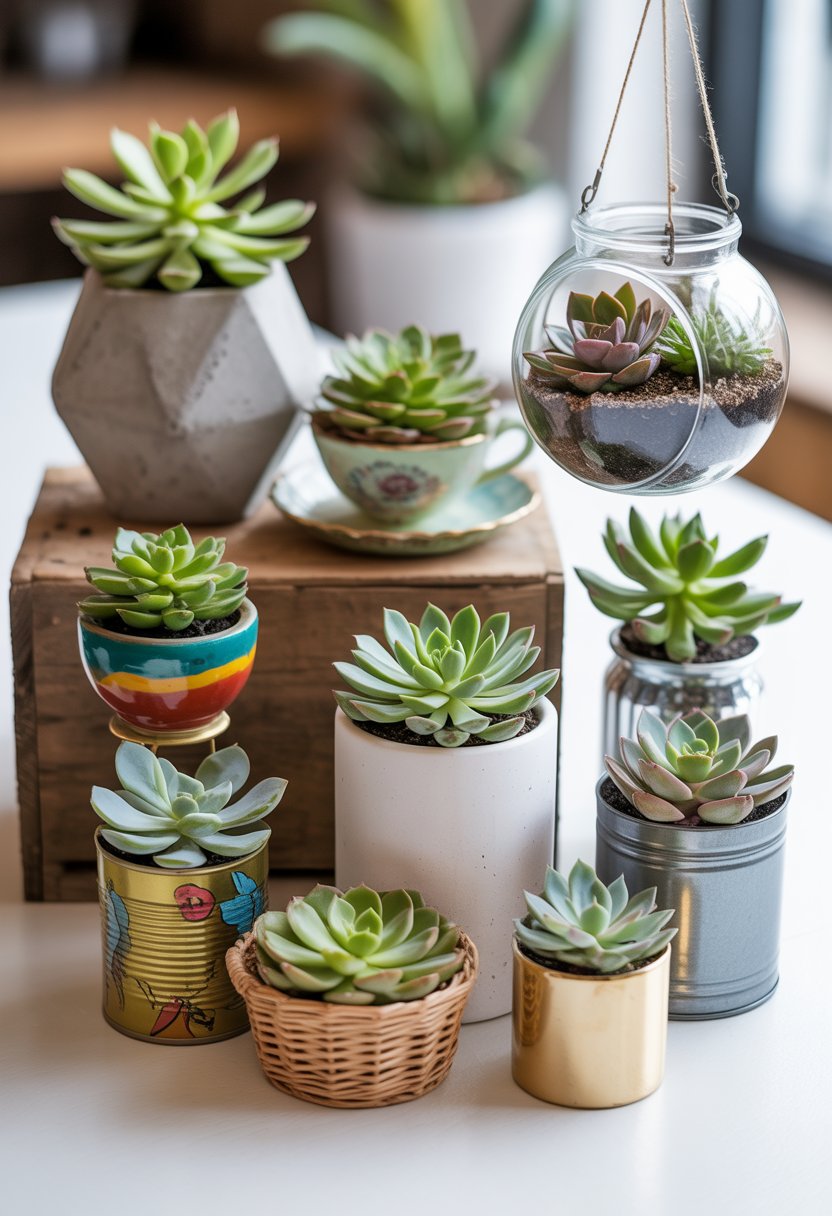
Using creative and unique planters can turn your simple succulents into amazing decorative pieces that show off your personal style. You can make these planters from things you already have at home or find cheap items at thrift stores. From old shoes to vintage teacups, the options are endless for creating something special.
1) Old Roller Skate Planter
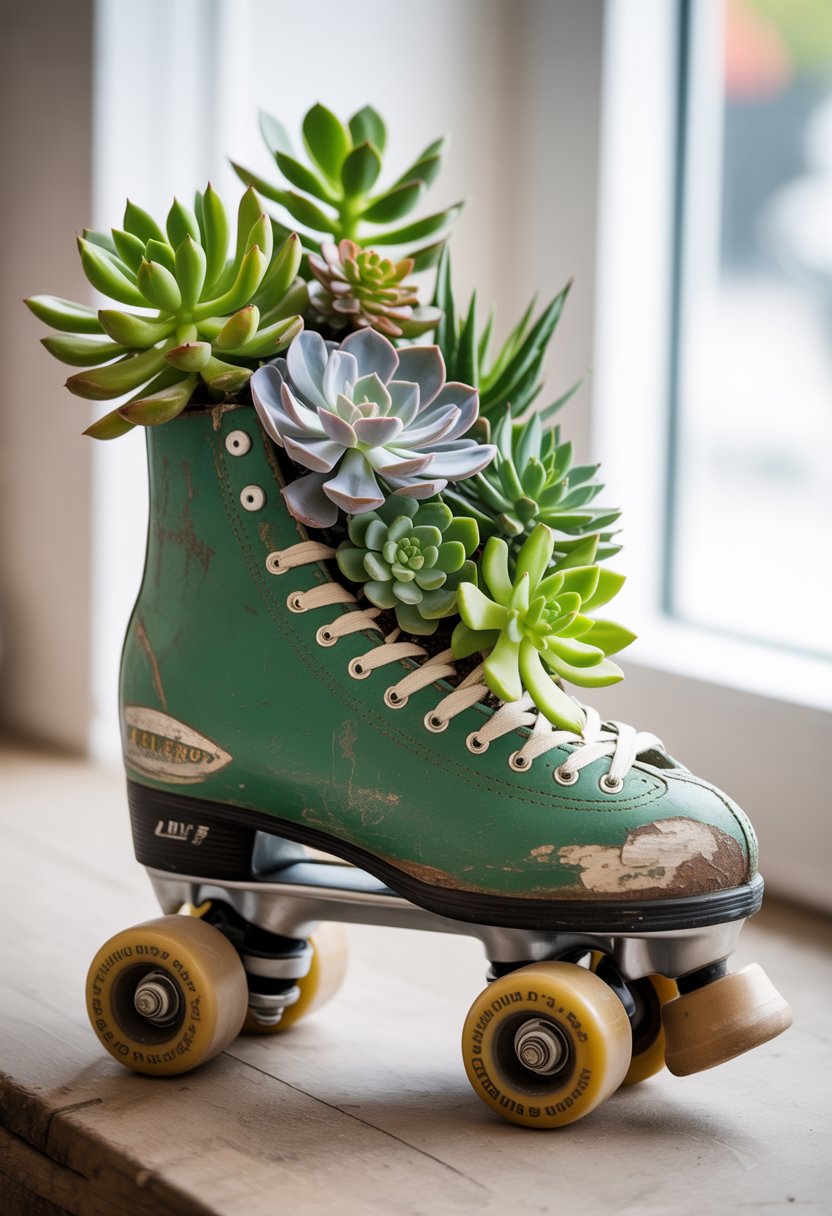
Turn your old roller skates into fun succulent planters. This idea works great for vintage skates that no longer roll well.
Start by cleaning out the inside of the skate. Remove any old padding or liner material.
Drill a few small holes in the bottom for drainage. This stops water from sitting inside and hurting your plants.
Fill the skate with potting soil made for succulents. These plants need soil that drains fast.
Pick small succulents that fit the skate size. Tiny varieties work best in this space.
You can put your skate planter anywhere. Try your garden, patio, or near your front door.
The boot shape holds soil well and looks unique. Your guests will love this creative touch.
Make sure to check the drainage holes stay clear. Clean them out if soil blocks them up.
This planter idea costs almost nothing if you have old skates. It gives new life to something you might throw away.
2) Vintage Teacup Succulent Pot
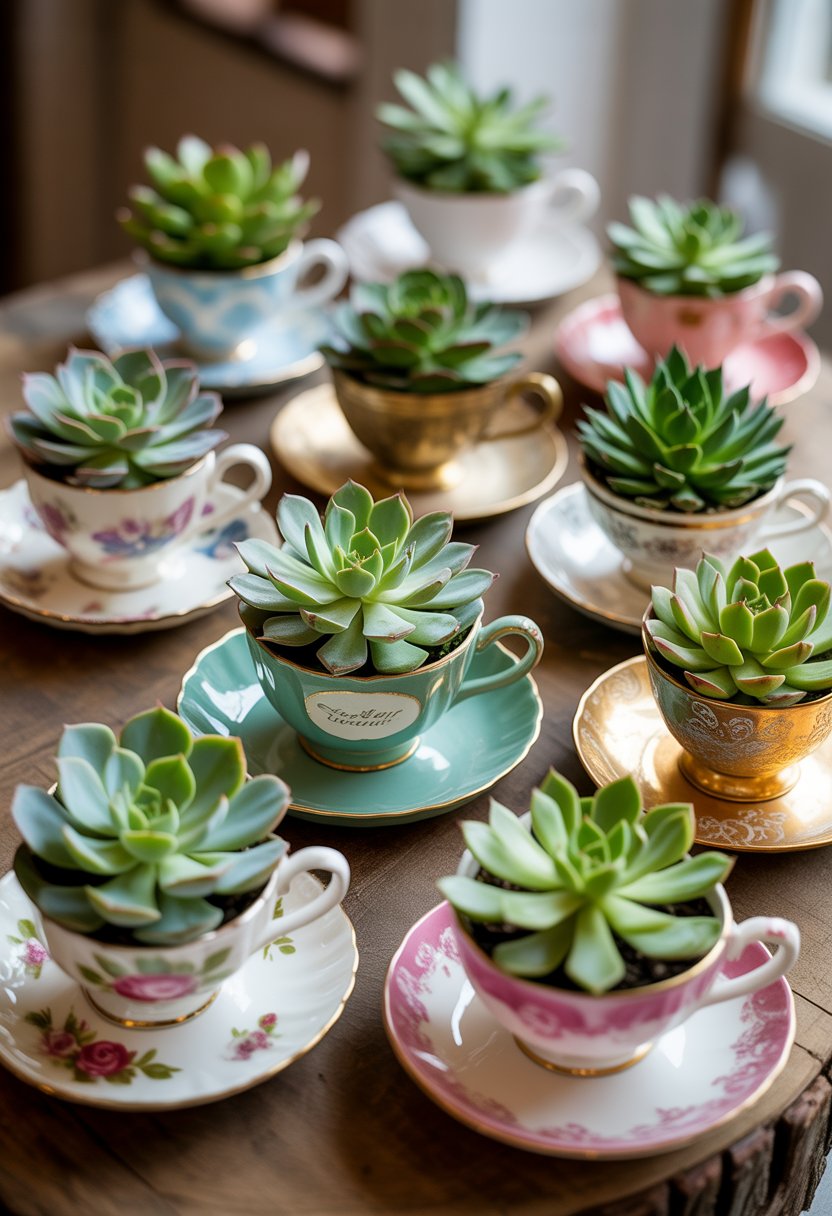
Vintage teacups make perfect tiny homes for your succulents. These small containers are just the right size for mini plants like jade or echeveria.
You can find old teacups at thrift stores, garage sales, or antique shops. Look for cups with chips or cracks since they’ll work great as planters.
The key is drainage. Most teacups don’t have holes, so you’ll need to drill one in the bottom. Use a ceramic drill bit and go slowly to avoid cracking.
Fill your teacup with cactus soil mix. This special soil drains well and won’t make your succulent’s roots too wet.
Plant your small succulent and place it on a windowsill or desk. The vintage charm adds character to any room.
These teacup planters make great gifts too. You can create several at once for friends or family members who love plants.
Remember to water sparingly. Succulents in small containers like teacups need very little water to stay healthy.
3) Concrete Geometric Planter
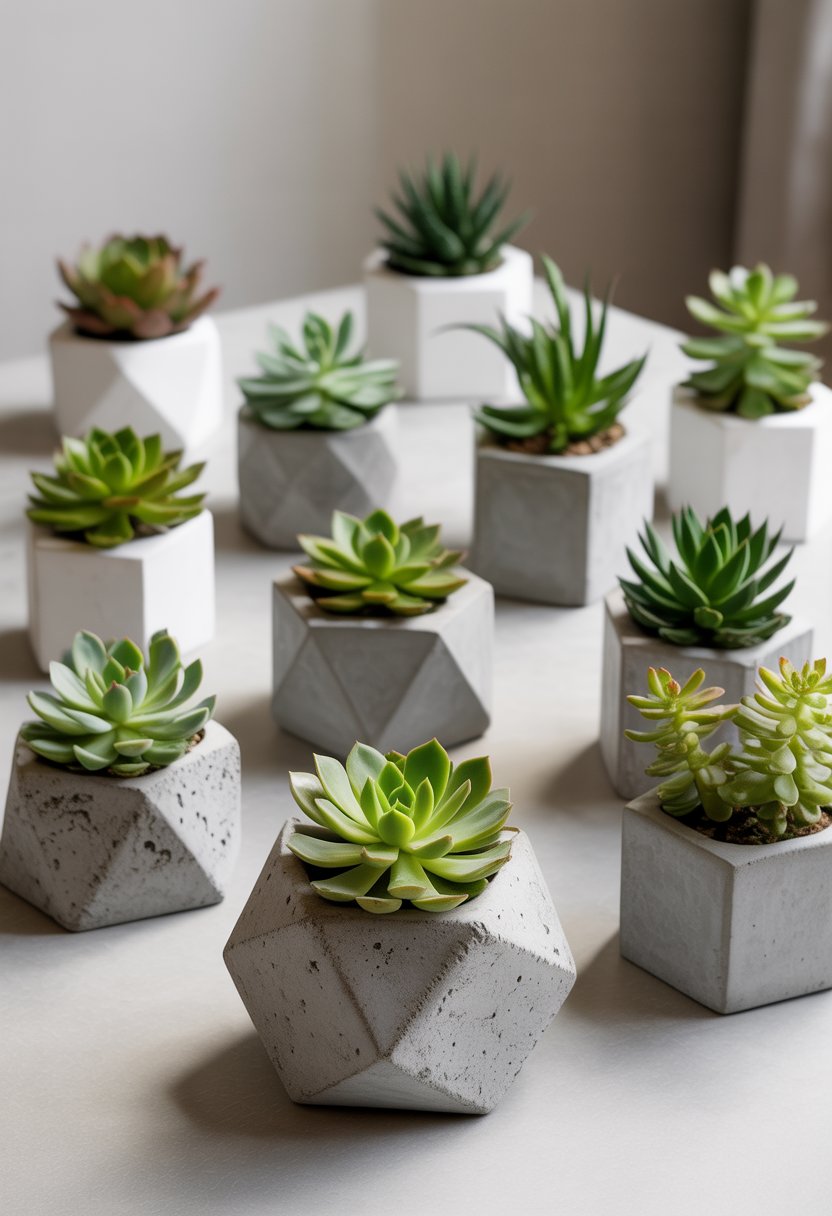
You can make stylish concrete planters with sharp geometric shapes. These modern containers look great with succulents and add a clean, contemporary feel to any space.
Mix concrete using a 3:1 ratio of sand to cement. This creates a strong and smooth finish for your planter.
Use cardboard, scissors, and tape to build molds in triangle, hexagon, or cube shapes. The angular lines make your succulents stand out more.
Concrete planters work perfectly for succulents because they drain well. The material soaks up extra water, which helps prevent root rot.
You can make these planters for under $5 using basic supplies from craft stores. They last much longer than regular plastic pots.
The geometric shapes come in many different styles. You can try pyramid forms, diamond patterns, or simple rectangular designs.
These planters look good both indoors and outdoors. Place them on windowsills, desks, or patios for instant modern style.
Concrete geometric planters pair especially well with small succulents and air plants. The neutral gray color lets your plants be the main focus.
4) Mini Birdcage Planter
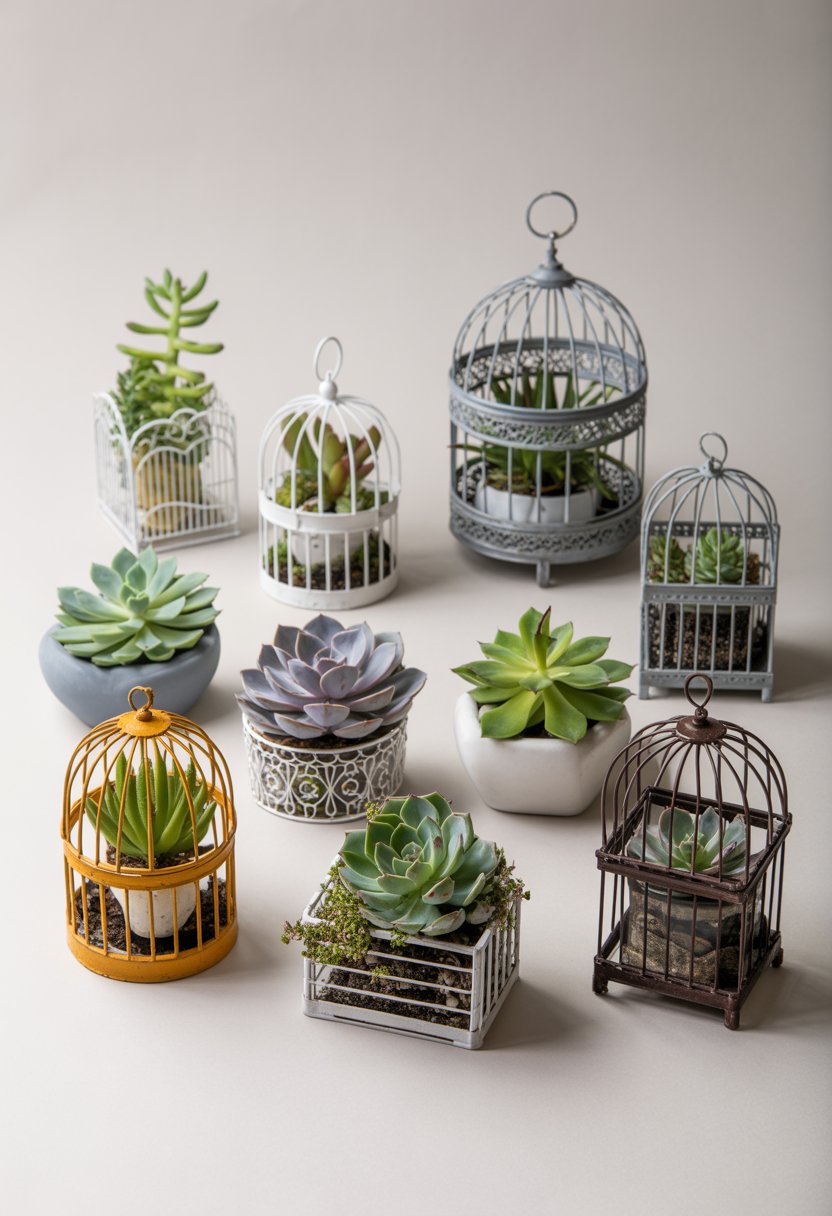
A mini birdcage makes a perfect home for your succulents. You can find these charming cages at thrift stores or craft shops.
The cage design adds texture and visual interest to your space. It creates a unique focal point that guests will notice right away.
You’ll need a small metal birdcage, succulent cuttings, and cactus potting mix. Sheet moss and landscape fabric help hold everything in place.
Start by lining the bottom of the cage with landscape fabric. This prevents soil from falling through the bars. Add your cactus mix next.
Plant small succulents through the cage openings. Hens and chicks work great because they stay compact. You can also try small jade plants or string of pearls.
Cover any exposed soil with moss for a finished look. The moss also helps keep moisture in the soil.
Hang your birdcage planter from a hook or shepherd’s crook. You can also place it on a table or plant stand. The cage protects your succulents while showing them off beautifully.
This project takes just a few hours to complete. Your drought-tolerant succulents will thrive in their new decorative home.
5) Upcycled Thermos Planter
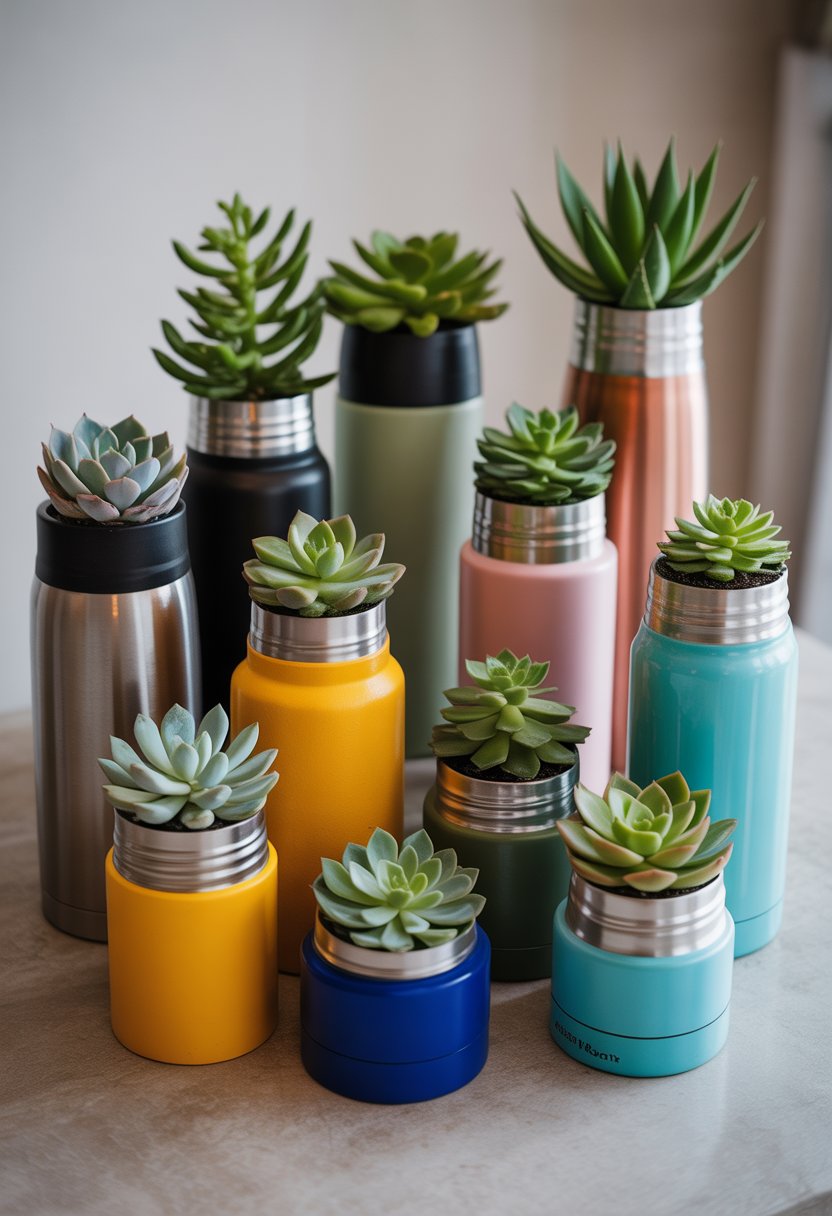
Old thermoses make perfect succulent planters. Their metal shine gives your plants a retro look that stands out.
You can use the whole thermos or just parts of it. Even the lid works as a small planter for tiny succulents.
Start by cleaning out your old thermos completely. Make sure there’s no leftover liquid or smell inside.
Add small rocks to the bottom for drainage. This keeps water from sitting at the roots and causing problems.
Fill the thermos with cactus soil mix. This type of soil drains well and works best for succulents.
Plant your succulent and place it where it gets bright light. The metal sides will reflect light and help your plant grow.
Thermoses work great for both indoor and outdoor spaces. Their sturdy build means they last a long time as planters.
6) Broken Typewriter Planter
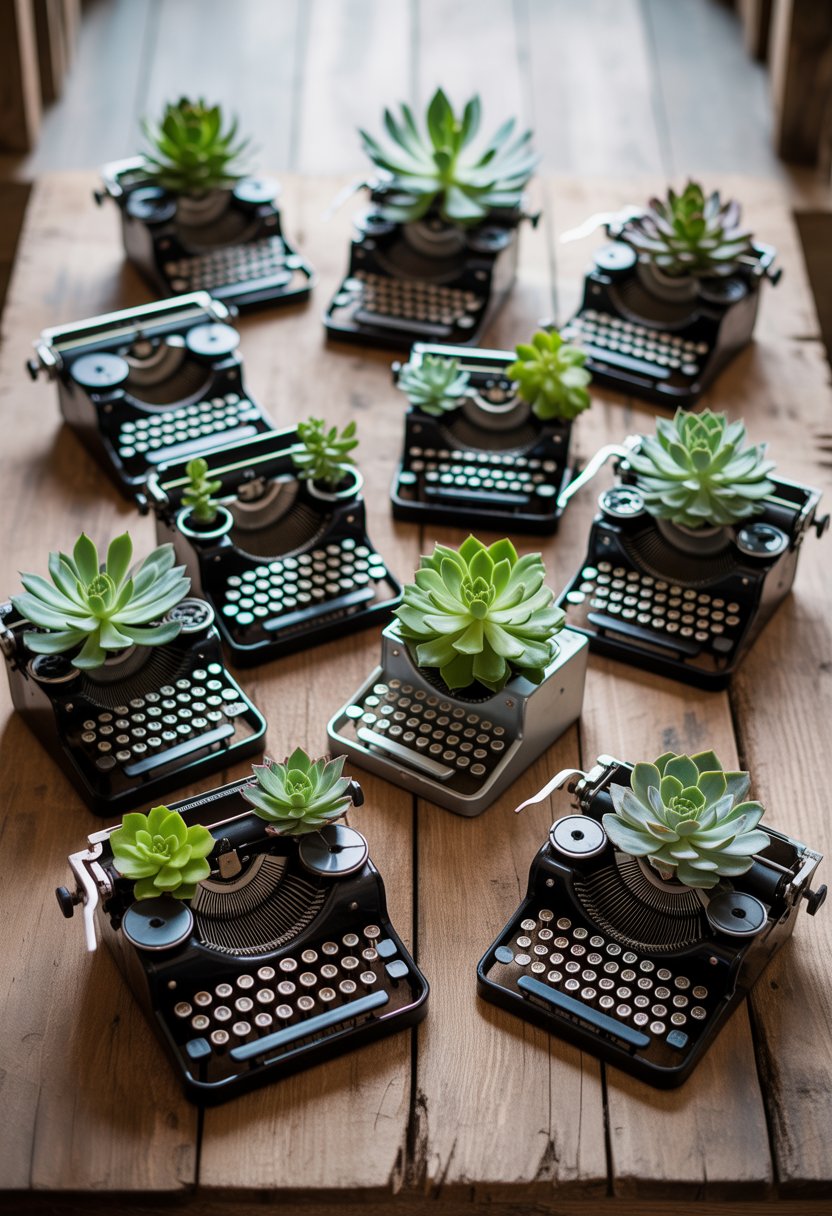
Old typewriters make amazing succulent planters. You can find them at flea markets, antique shops, or thrift stores for cheap prices.
The broken keys and vintage look give your garden a unique style. You don’t need to fix the typewriter to make it work as a planter.
Start by cleaning the typewriter well. Remove any old ribbon or paper that might be stuck inside. Make sure to get all the dust out.
Line the inside area with plastic or a small container. This keeps the soil from falling through the gaps. You can use an old plastic container that fits inside.
Add potting soil made for succulents. Regular dirt won’t work as well since succulents need good drainage.
Plant small succulents like jade plants or tiny cacti. These plants fit well in the typewriter’s space and don’t need much water.
Put your typewriter planter somewhere it gets plenty of sun. A porch or sunroom works great.
This planter gets lots of compliments from visitors. It’s a fun way to recycle something old into garden art.
7) Wall-Mounted Succulent Garden
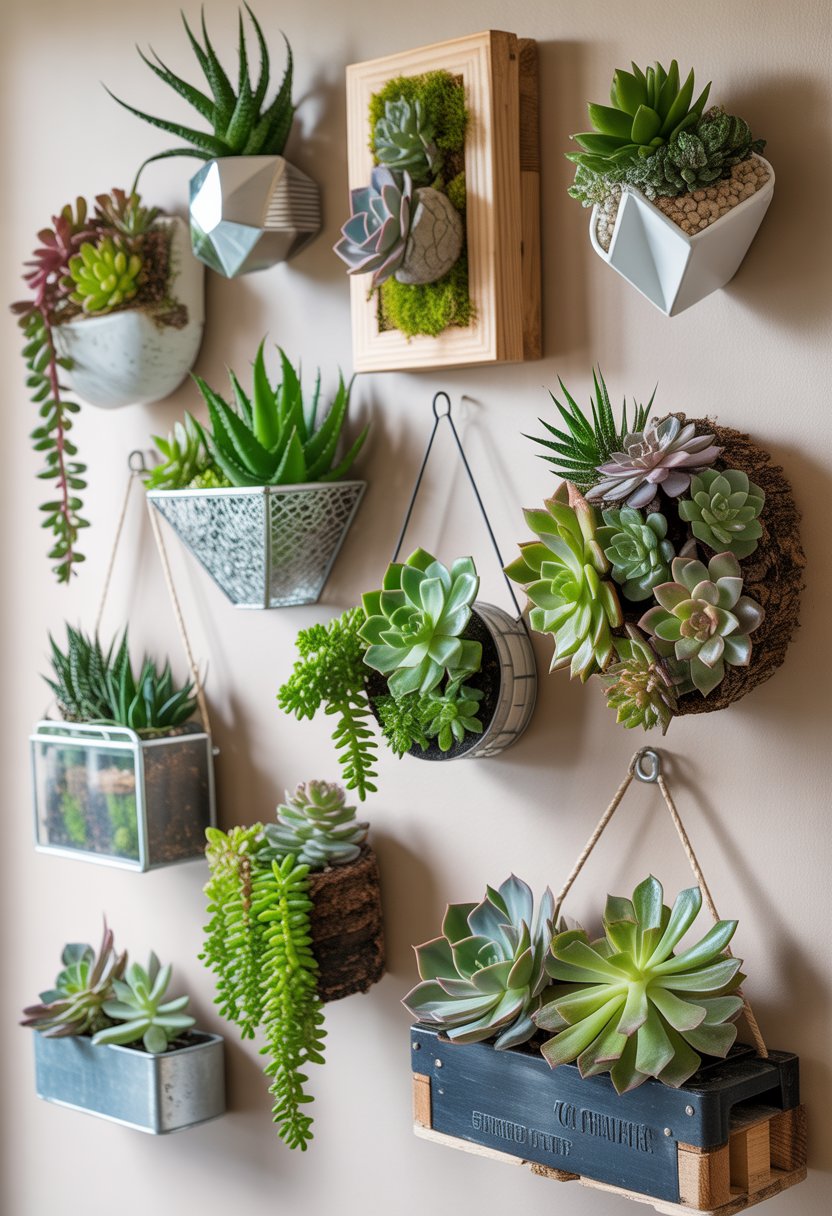
Turn your blank wall into a living piece of art with a wall-mounted succulent garden. This idea works great for small spaces where floor room is limited.
You can use wooden frames or metal grids to hold your succulents. Old picture frames work well too. Just add some mesh backing and fill with soil.
Wall gardens look best when you mix different succulent types together. Try combining trailing varieties like string of pearls with compact ones like echeveria.
Mount your garden at eye level so you can enjoy it up close. Make sure the wall gets enough light for your plants to thrive.
This setup makes watering easy since everything is at a comfortable height. You won’t need to bend down or reach up high.
Consider creating a gallery wall with multiple small planters. Space them out evenly for a clean, modern look that adds character to any room.
8) Pumpkin Succulent Bowl
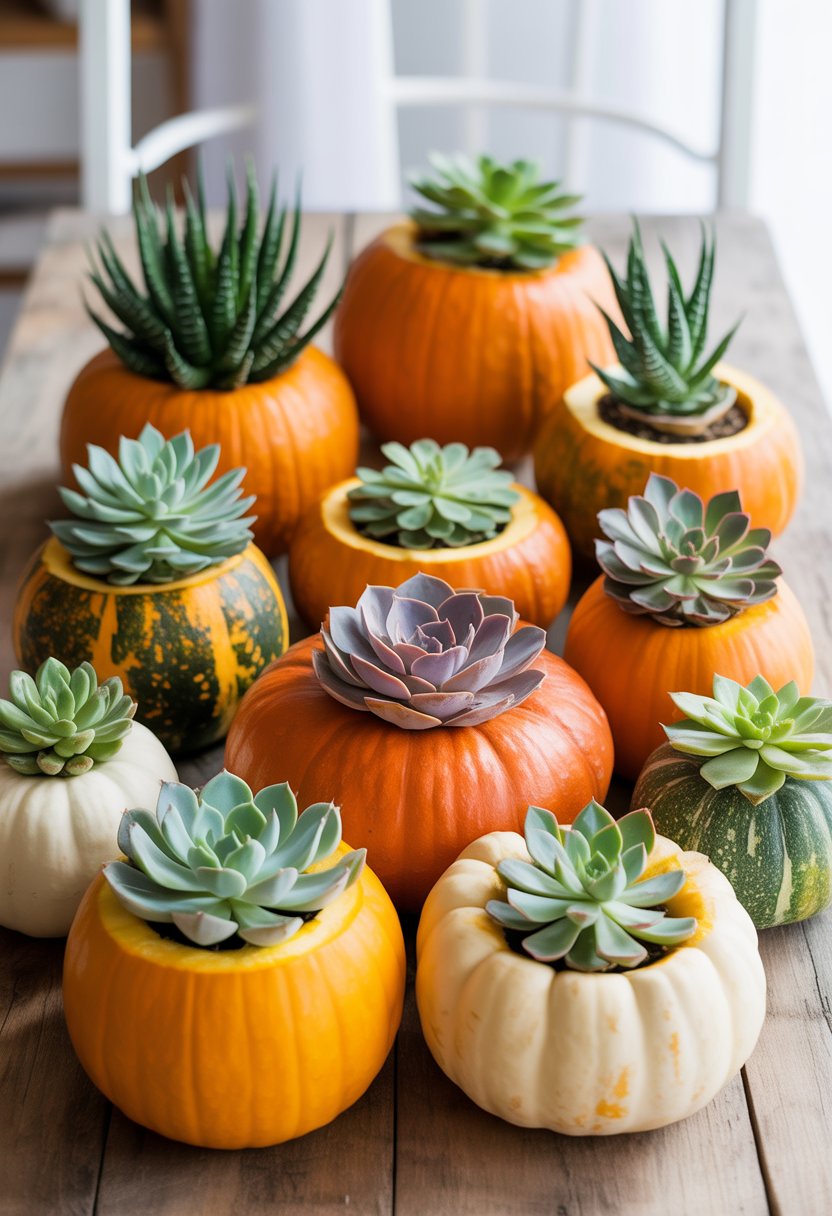
A pumpkin makes a perfect fall planter for your succulents. You can use either a real pumpkin or a fake one that lasts longer.
Start by cutting out the top of your pumpkin. Scoop out all the inside parts to make room for soil.
Drill a few small holes in the bottom for drainage. This keeps your succulents from getting too much water.
Fill the pumpkin with cactus soil mix. This special soil helps succulents grow better than regular dirt.
Pick small succulents that fit well together. Different colors and shapes make your pumpkin bowl look more interesting.
Plant your succulents in the soil. Leave some space between each plant so they can grow.
You can customize this project by making different sized openings. Cut small holes in the sides for a unique look.
Place your pumpkin succulent bowl on your porch or dining table. It makes great fall decoration that brings nature indoors.
This project works well for Halloween
9) Living Succulent Wreath
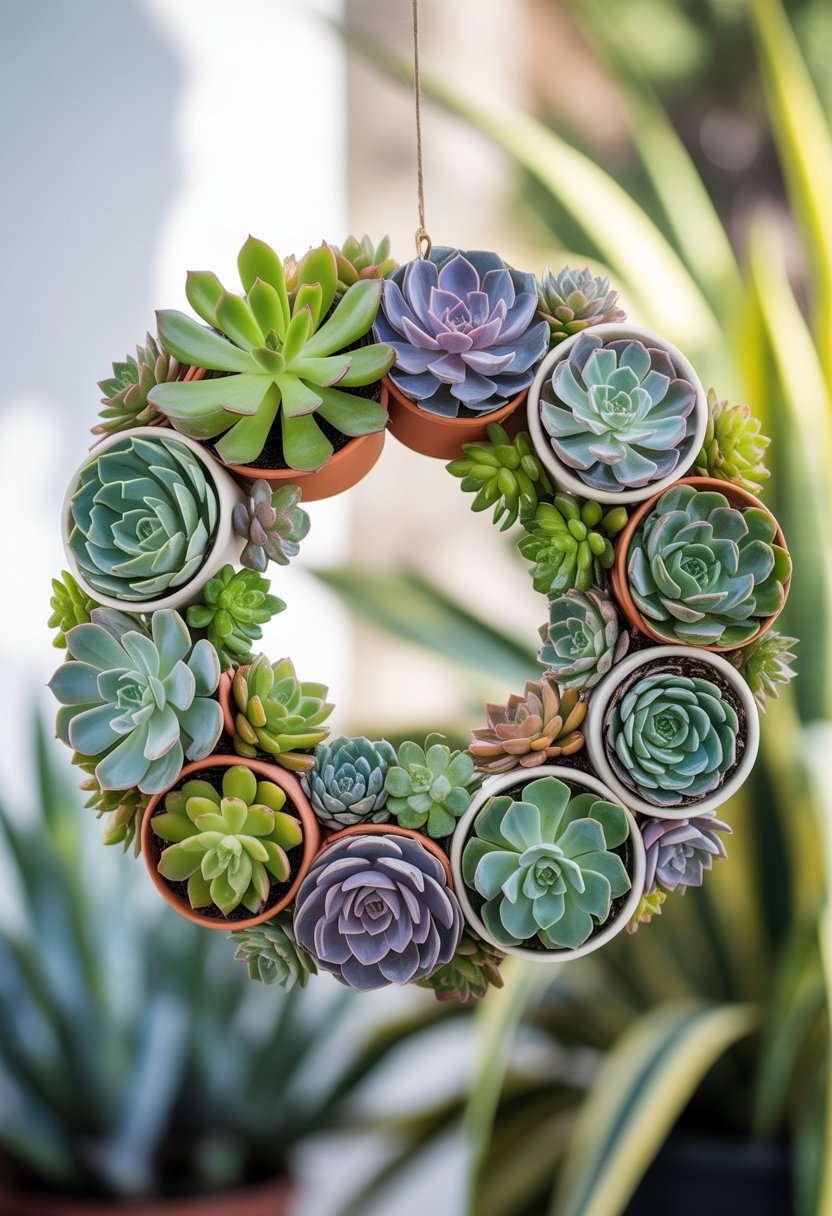
A living succulent wreath brings natural beauty to your front door or wall. You can make one using a wire wreath frame and sphagnum moss.
Start by wrapping the frame with moss to create a base. Secure it with floral wire so it stays in place.
Choose small succulents like hens and chicks or sedums. These plants work well because they don’t need much soil or water.
Poke holes in the moss and gently insert the succulent roots. Pack more moss around each plant to hold them steady.
Your wreath needs time to establish before hanging. Lay it flat for 2-3 weeks so the roots can grow into the moss.
Water lightly with a spray bottle when the moss feels dry. Too much water will make the plants rot.
Hang your finished wreath on a door or fence where it gets bright light. It will stay beautiful for months with minimal care.
You can change out plants seasonally or add small decorations for holidays.
10) Ice Skate Succulent Planter
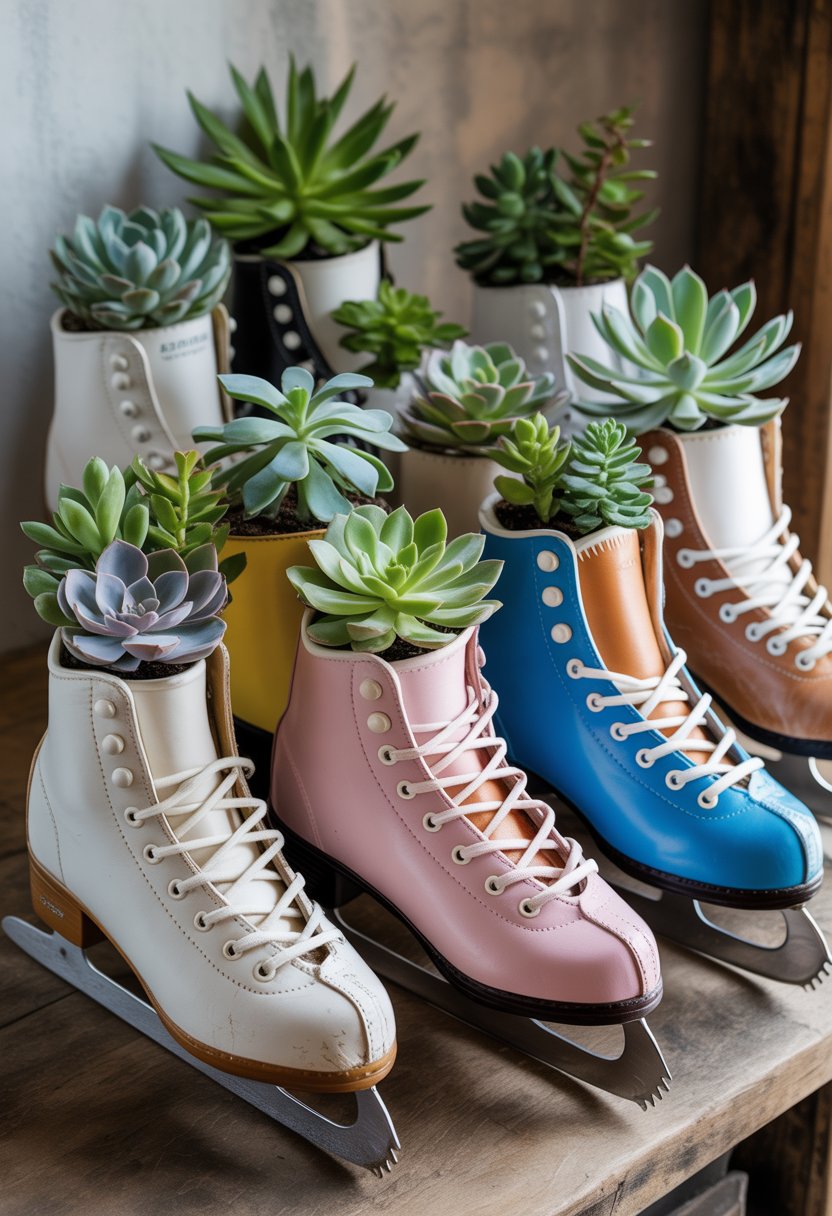
Old ice skates make perfect planters for your succulents. The boot shape holds soil well and adds a fun touch to any garden.
You can place these planters directly in your garden or on your patio. They also look great around your mailbox or front porch.
Make sure your ice skate has proper drainage holes. Most skates already come with holes or plugs you can remove to let water drain out.
Small succulents work best in ice skate planters. Try using tiny varieties that won’t outgrow the space quickly.
The leather or synthetic material of ice skates can handle outdoor weather. This means you can leave your planter outside year-round without worry.
Fill the skate with well-draining soil mix made for succulents. Regular potting soil holds too much water and can harm your plants.
This unique planter idea gives your garden personality. Your guests will love seeing this creative use for old sports equipment.
How to Choose the Perfect Planter for Your Space
The right planter depends on your space’s light conditions and climate, plus finding the perfect size and shape for your succulents to thrive.
Considering Light and Climate
Your space’s lighting tells you what type of planter will work best. If you have bright, direct sunlight, you can use darker planters without worrying about overheating. These absorb more heat but work fine in cooler spots.
For low-light areas, choose lighter-colored planters. They reflect light back to your plants and help them get the brightness they need.
Indoor spaces need planters with good drainage since there’s no natural rain to wash away excess water. Look for planters with built-in saucers to protect your furniture.
Outdoor planters face weather changes. Pick materials that handle temperature swings well. Ceramic and thick plastic work better than thin metal in hot climates.
If you live somewhere with freezing winters, avoid planters that crack when water inside them freezes. Terra cotta breaks easily in cold weather.
Finding the Right Size and Shape
Small succulents need planters that are 2-3 inches wider than the plant itself. This gives roots room to grow without too much extra soil that stays wet.
Shallow planters work great for most succulents since their roots don’t go deep. A depth of 3-4 inches works for small varieties. Larger succulents need 6-8 inches of depth.
Wide, flat planters let you create arrangements with multiple plants. They’re perfect for coffee tables or outdoor displays.
Tall planters work best for trailing succulents like string of pearls. The height lets the stems hang down naturally.
Consider your space’s size too. A tiny planter gets lost on a big patio. A huge planter crowds a small windowsill.
Caring for Succulents in Creative Planters
Creative planters can present unique watering challenges and drainage issues that regular pots don’t have. Getting these basics right will keep your succulents healthy and thriving in their new homes.
Watering Tips for Unique Containers
Check the material of your creative planter before watering. Metal containers heat up quickly and can dry out soil faster than ceramic or plastic ones.
Glass containers without drainage holes need extra care. Water very slowly and use about half the amount you normally would.
Test the soil with your finger before watering. Stick it about an inch down into the soil. If it feels dry, it’s time to water.
Repurposed items like teacups or small decorative bowls hold less soil. This means they dry out faster than big pots. You might need to water more often.
Water early morning when possible. This gives plants time to absorb moisture before the heat of the day.
For hanging planters or wall-mounted containers, water can drip out quickly. Place a towel underneath while watering to catch any excess.
Ensuring Proper Drainage
Drill holes in containers that don’t have them. Use a drill bit that matches your container material. Start with small holes – you can always make them bigger.
Add a layer of small rocks or pebbles at the bottom of containers without drainage. This creates space for excess water to collect away from roots.
Use well-draining soil made for succulents and cacti. Regular potting soil holds too much water and can cause root rot.
For containers you can’t drill into, like antique items, use them as decorative covers. Keep your succulent in a smaller pot with drainage inside the decorative container.
Remove standing water from saucers or decorative containers within 30 minutes of watering. Succulents hate wet feet.